About
A brief introduction to me and why I have become a wildlife photographer, as well as why I chose the pelican as a logo.
Introduction
My name is Jonathan Steinbeck and I am a wildlife and nature photographer. Until the start of 2025 I served for 30 years in the Australian Army. Then I retired from the Army to immerse myself full-time in two years of photography study at the Canberra Institute of Technology.
I am now pursuing my passion for photographing Australia’s wonderful wildlife, especially its birds. I spend most of my time in Australia’s bush capital, Canberra, and the beautiful NSW South Coast.
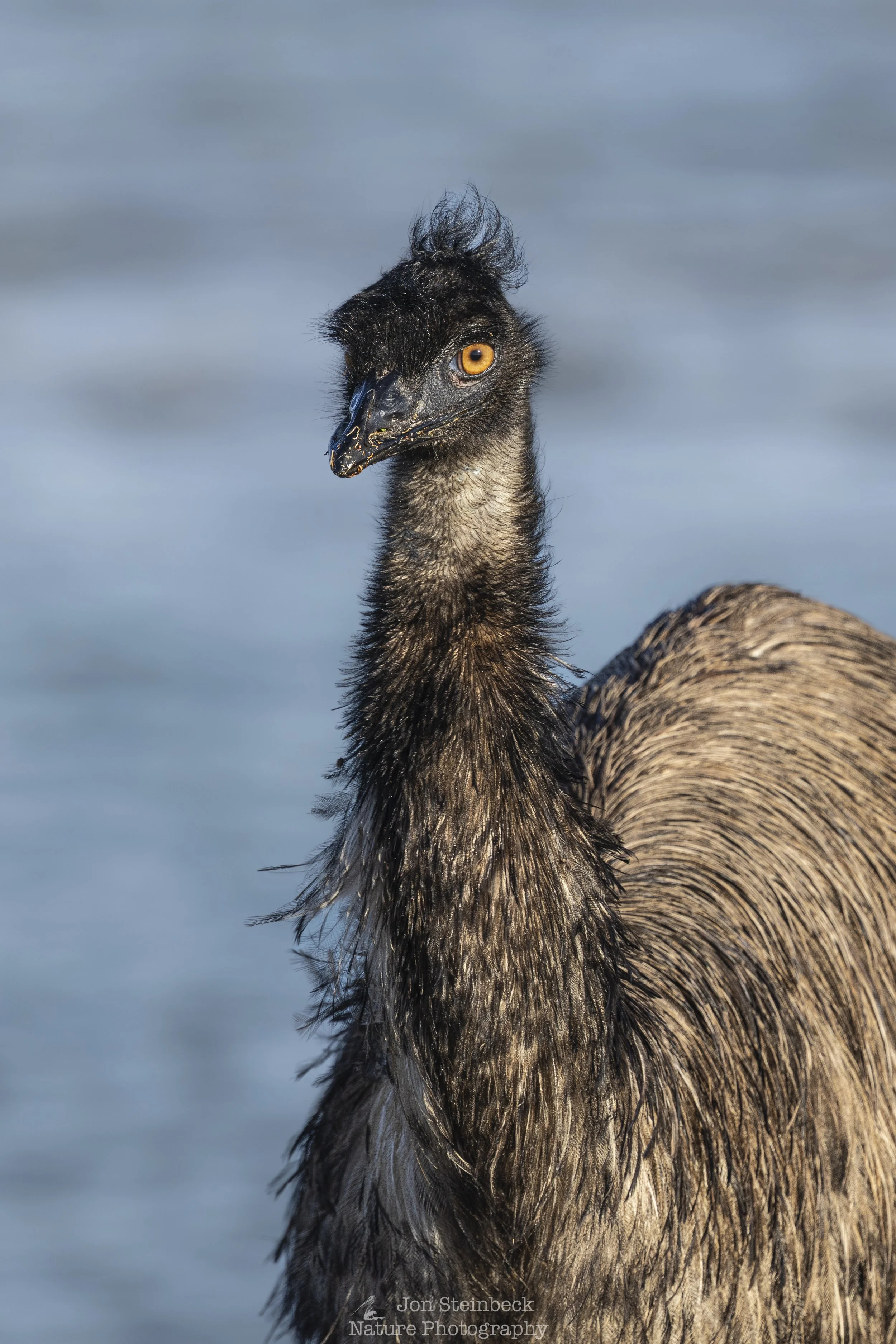
From the bush to the sea, Australia is lucky to have amazing animals that I love to observe through my camera lens, and then to share those images more widely.
Values Statement
My photography aims to ethically capture the splendour of nature. That means that I do not place baits to attract animals and I try to minimise my disturbance of both wildlife and their habitats. I also ensure that my photography is in compliance with national parks and wildlife regulations.
My photography aims to ethically showcase nature to help humans appreciate how important it is for us. I want humans to see the story of nature so that we understand how it all connects. I want to inspire people to see nature’s splendour through photography so that we all want to protect our shared environment.
Why the Pelican?
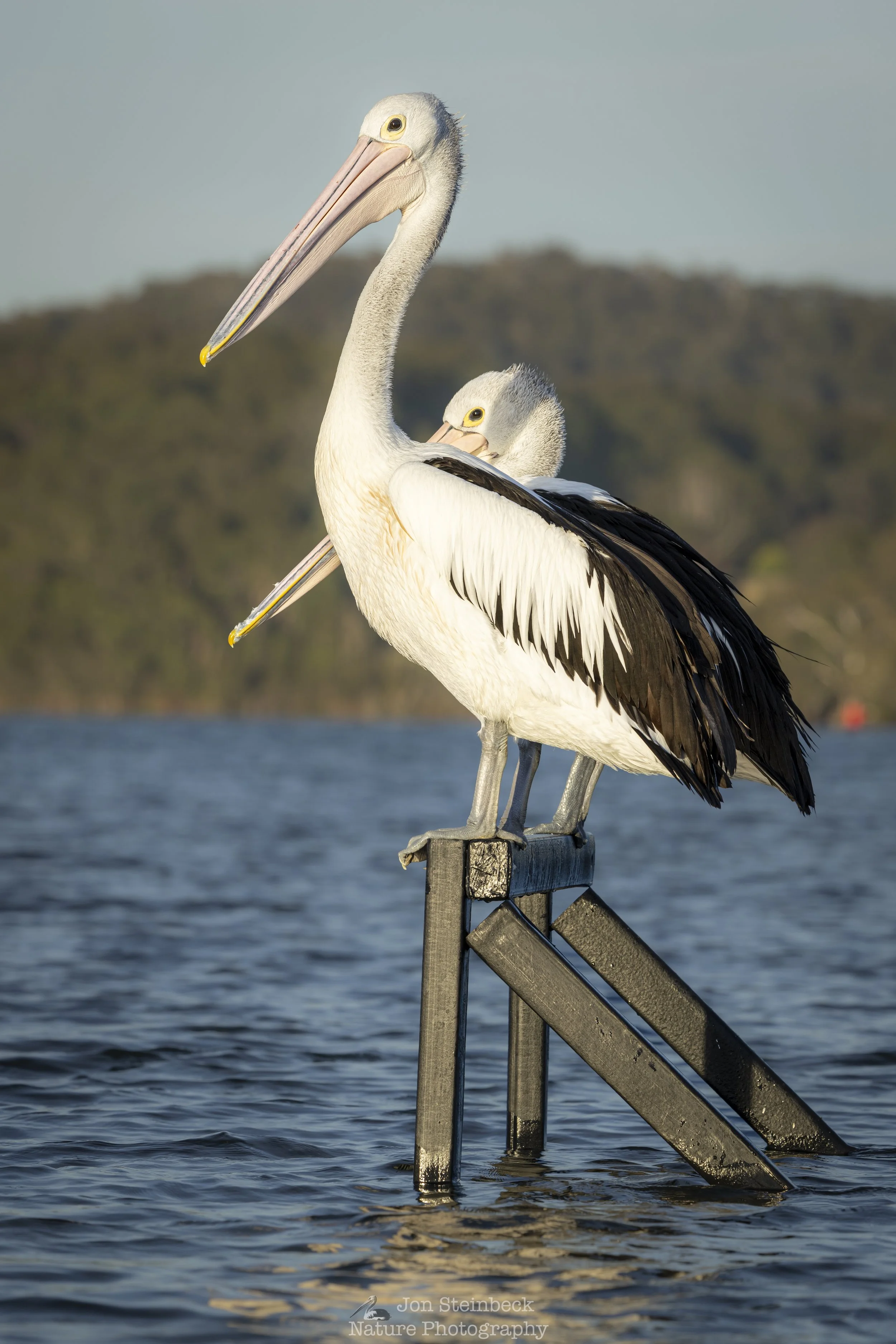
We chose the Australian Pelican (Pelecanus conspicillatus) as our symbol because we think it is an amazing animal. This is the only species of pelican naturally occurring in Australia and it has a range basically across the whole continent. While it is regularly associated with the coast, it also occurs inland. For us it means it links the areas that we spend most time in, Canberra and the NSW South Coast.
We never get tired of photographing these wonderful birds and we hope that people never get tired of seeing those photographs. We hope that through showing the beauty and splendour of pelicans, and nature, that people will want to preserve the environment in its entirety for future generations to appreciate.
Because of our fascination with the Australian Pelican, we have a gallery dedicated to this wonderful bird.
Published work
My work has been in Birdlife Magazine, the Australian Geographic website, UNSW website, The Radavist, The Conversation and the ABC website.
Awards
2026 - Three of my photographs were Highly Commended in the Animals category and one was Commended in the Places category of the Mono Awards 2026
2026 - Both of my entries were Commended in the Animals category of Australasia’s Top Emerging Photographers 2026
2025 - Two of my photographs Commended in the Animals category of the Mono Awards 2025
Education
2026 - Studying a Diploma in Photography and Digital Imaging at the Canberra Institute of Technology
2025 - Certificate IV, Photography and Digital Imaging (CUA41120) at the Canberra Institute of Technology, with the Outstanding Achievement Award
Equipment
Cameras - Prior to 2025 I used DSLRs but in January I made the switch to mirrorless and I have loved the features, especially the electronic view finder, since then.
Canon EOS R5 Mk II - my first mirrorless camera and still my go-to camera. I love the electronic view finder, which helps to make sure that I get the shot with the exposure that I want. In addition, the 45MP sensor produces great images.
Canon EOS R1 - if I am photographing birds in flight this is the camera that I will take. The only down-side to the camera is that it only has a 24MP sensor meaning that you have to get the bird large in the frame because there aren’t enough pixels to crop in a lot. However, its auto tracking is very effective.
Lenses - I use a variety of lenses depending on the situation.
Canon RF 100-500mm f/4.5-7.1 L IS USM Zoom - This is my go to lens and the one that I use the most. It is a very versatile lens given its focal length out to 500mm but also that it has a minimum focus distance of 0.9m. I can use it across its full focal range for a variety of subjects.
Canon RF 200-800mm f/6.3-9 IS USM Lens - This is often on my R1, but only in good conditions. I think the lens is a bit soft in anything but the best conditions. Also, at its maximum focal length of 800mm the aperture is f/9, meaning it is not letting much light in. This becomes more challenging when trying to capture birds in flight with shutter speeds of 1/2500 or faster; I often have to increase the ISO above 2000. I am glad that Adobe Lightroom Classic now has a good denoise funtion.
Canon RF 100mm f/2.8L Macro IS USM - My macro lens, and also a good lens for portraits. This lens if often on my R5 MK II because it is just a great prime lens, even if I am not shooting macro.
Canon RF 24-70mm f/2.8L IS USM - I bought this for my studies at CIT and I have grown to love it. Just a great standard zoom to carry when I am not sure what I might be doing. Not good for wildlife but for general photography, this is a great lens.
Canon RF 50mm f/1.8 STM - I like this lens because it is a ‘nifty-fifty’, the closest focal length to the human eye. It is small and so less obtrusive, making it a great lens to carry for everyday. It is great for travel and for location food photography, although being a prime, I do have to zoom with my feet.
Canon RF 70-200mm f/4L IS USM - I have mixed feelings about this lens. It is cheap and light, so I take it on the bike with me and I am less worried about it getting broken than one of my more capable lenses. That said, I think the glass is soft, so the images are not always pin sharp. That said, it is small and light, so great for throwing in a small bag, when there is no option for a longer lens.
Other Equipment - There are other bits of kit that I find very useful as well.
Canon Speedlite EL-5 flash
EDGE Pro Water Housing Canon R5 MKII
Raynox DCR-250 Super Macro Lens
Cygnustech Diffuser
Peak Design camera strap