
Book Review - Oyster, The Amazing Story of a Unique Australian Mollusc by Nicolette Stasko
Sourced from QBD Books
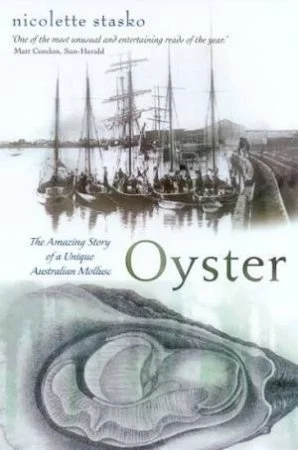
A summer break in Narooma was the perfect time and place to read this wonderfull book about the oyster. The focus of the book is about Australia, covering all aspects of the oyster, from its natural history to how is the best way to consume it. The book is also the tale of three species of oysters, the Sydney Rock Oyster, the Pacific Oyster and the Southern Mud or Australian Native Oyster. If the last oyster type is not one that is well recognised it is probably because it is now locally extinct across much of its natural range.
Nicolette Stasko has written a book that is as much a love letter to a food that she enjoyed consuming as it is a primer on the fragility of the natural world. The book understandably covers a lot of ground about the Australian oyster industry. It explains how oysters are grown, including about how they are moved to different waters at different times of their life cycle to get the best result for the consumer by the time the mollusc is eaten. This part of the book gave me great insights as I looked out over the oyster leases throughout Wagonga Inlet at Narooma. Stasko appears to have made good connections among the oyster farmers and weaves in refreshing insights from a number of them - including the challenges of trying to harvest oysters just before they spawn. The difficulties of oyster farming were important for us consumers to understand, and she provided detailed information about the diseases and pollution scares that have hit the industry hard.
However, it was the environmental aspects of the book that I found most interesting, especially reading about how the Southern Mud Oyster became locally extinct across most of its natural range. I would not have thought that a saltwater shellfish could have faced extinction but that was the case. In a short period of time about 100 years after European settlement of Australia, the oyster faced the challenges of over-fishing, its use as a source of lime for constructing buildings in the colonies and the accidental introduction of the mudworm into Australia’s coastal waters. Eventually, oyster farmers found that the Sydney Rock Oyster could be removed from the water to ‘dry’ for about ten days, killing the mudworm that needed ongoing access to damp conditions to survive. However, the Southern Mud Oyster lived below the low tide mark on sand and mud, meaning that extended exposure to air would also kill it. In more recent times, oyster farmers are trying to grow that oyster commercially due to its large size, but it requires more work than the other two species so its economic viability as a production species is not assured.
Unfortunately, the book was published in 2000 making its information now 25 years old, as of when I read it, so its contents may not be up to date. Despite the age of some of the information in the book the natural history of the oysters and the history of the Australian oyster industry is probably still unchanged. Stasko was also someone who wrote very well, making the book a true pleasure to read. While there was a lot of informaton contained within its pages her writing style made the words flow smoothly. Her time as an editor and her background as a poet were nicely balanced between the covers leading to an engaging read that was very infromative. If you have ever eaten a juicy Australian oyster and wondered more about what your tastebuds were savouring, this is the go to book for you. Thoroughly recommended, especially as a summer read.
