
Looking for Emus in Eurobodalla
Emu head looking at me
Canon EOS R5 Mk II with a Canon RF 100-500mm f/4.5-7.1 L IS USM Zoom [ISO 400, 500mm, f/8.0 and 1/500])
The Emus of Potato Point are local celebrities, even if they are imported celebrities. They are actually from Western Australia and were brought to the region by the late Trevor Kennedy, a Sydney business identity who, along with his wife, owned Horse Island, which is located in the Tuross River estuary, and has a stunning mansion on it. Unfortunately for him, his prized garden pets soon realised that they could easily swim across the shallow water surrounding the island and made it to Potato Point where they are thriving. Only at the start of February, I was reminded of the Emus and so in mid-February I went to try to find them, with the intent to take some photos of these famous birds. I hope that you like the photographs below.
Potato Point is a small town in Eurobodalla Shire with approximately 160 permanent residents. It is about 15 minutes north of Narooma by car, by turning east at Bodalla along Potato Point Road.
Once at Potato Point I followed Blackfellows Point road north to go around the back of the Beachcomber Holiday Park so that I could access the Eurobodalla National Park at South Tuross Beach. The holiday park was still well patronised on that February weekend, with a number of people trying their luck with beach fishing. Once I arrived at the end of the dirt trail, I parked my car to continue on foot along the back of South Tuross Beach. I was hoping to find some emus but I couldn’t even see their prints in the sand, despite their being plenty of wallaby and kangaroo prints. Not surprisingly, the first animal I photographed that morning was a Swamp Wallaby.
Fishing in front of the Beachcomber Holiday Park at Potato Point
Canon EOS R5 Mk II with a Canon RF 100-500mm f/4.5-7.1 L IS USM Zoom [ISO 400, 100mm, f/8.0 and 1/500])
A small group of Swamp Wallabies (Wallabia bicolor) were feeding on the low coastal scrub and were not too concerned at my my presence. I was even able to sit down and snap a few photos of one that took a particular interest in me. They are also called Black Wallabies because of their dark fur, especially when seen momentarily as they dart across roads in the low light of dawn and dusk. This species tends to eat shrubs rather than graze on grass like other kangaroos and wallabies.
Swamp Wallaby
Canon EOS R5 Mk II with a Canon RF 100-500mm f/4.5-7.1 L IS USM Zoom [ISO 500, 500mm, f/8.0 and 1/500])
I was enjoying my Saturday morning walk but I was worried that I wasn’t going to find any Emus in that area but then I saw the distinctive shape further along the sandspit. I walked on, but travelled up the middle of the spit so that I would not box the Emu in. I was almost caught by surprise when I topped a low rise in the ground and the Emu was in front of me, just near the water’s edge.
I followed it while it walked along feeding. Emus eat plants and this one was taking leaves and also bending right down to eat the low shrubs. It would open its beak wide, exposing a red mouth, before snapping shut on the leaves and pulling back. It would then open its beak again, and the leaves would be in mid-air within its beak, almost like it was using that opening motion to throw the leaves further back down its throat. At one stage, it came across an Eastern Grey joey that must have been out of the pouch for a while but the joey didn’t move far enough away from the Emu that was moving through the long grass and the Emu attacked it. I could see the Emu leaping in the air while the joey flailed around the in the long grass. I thought I heard hissing but I am not sure. Much later, once the Emu was on the wide South Tuross Beach proper, it walked across to the oceanside, where a group of Australian Pelicans were already resting. The pelicans looked a little uncertain when the Emu got nearer and some started to move to make room for the larger bird. Then some of the smaller pelicans must have become spooked and took off, in turn frightening the Emu, which turned and started running with the remnants of its wings giving it balance. When the Emu realised that it wasn’t being threatened and most of the pelicans had flown off, it turned and charged at some the remaining pelicans who took to the sky, easily escaping the flightless bird.
It was also on that sand, almost at the end of South Tuross Beach, that I noticed a number of Emu tracks, including what looked like two parallel Emu tracks, potentially meaning that two birds had crossed that sand at some stage recently.
Later, when I was driving out, I saw another Emu, on the southern side of the holiday camp, and I have included head photos of both birds below as comparisons.
Emu walking along the sand
Canon EOS R5 Mk II with a Canon RF 100-500mm f/4.5-7.1 L IS USM Zoom [ISO 1000, 500mm, f/8.0 and 1/2500])
Feeding
Canon EOS R5 Mk II with a Canon RF 100-500mm f/4.5-7.1 L IS USM Zoom [ISO 1250, 500mm, f/8.0 and 1/2500])
Emu-pelican interaction
Canon EOS R5 Mk II with a Canon RF 100-500mm f/4.5-7.1 L IS USM Zoom [ISO 400, 223mm, f/8.0 and 1/1000])
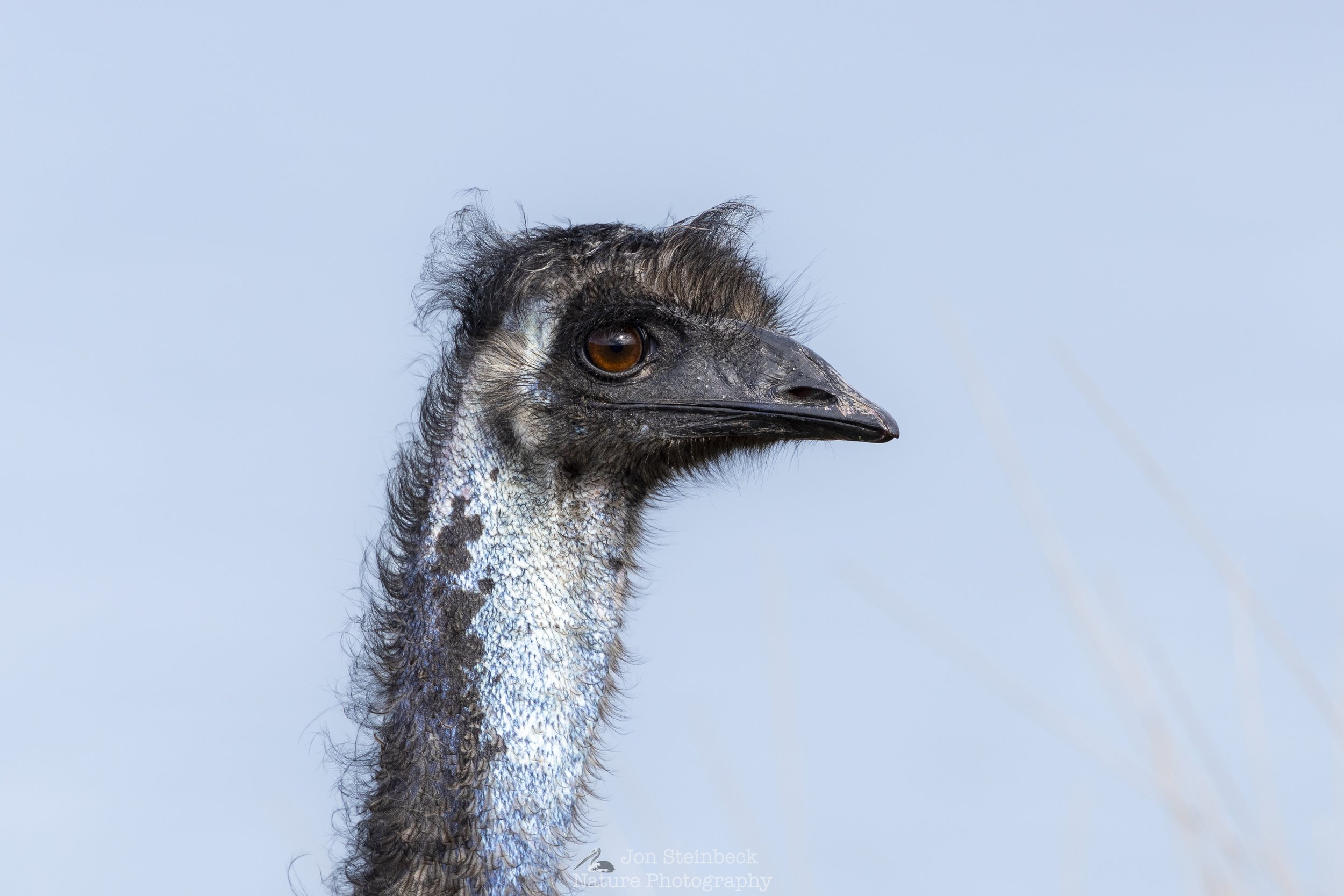
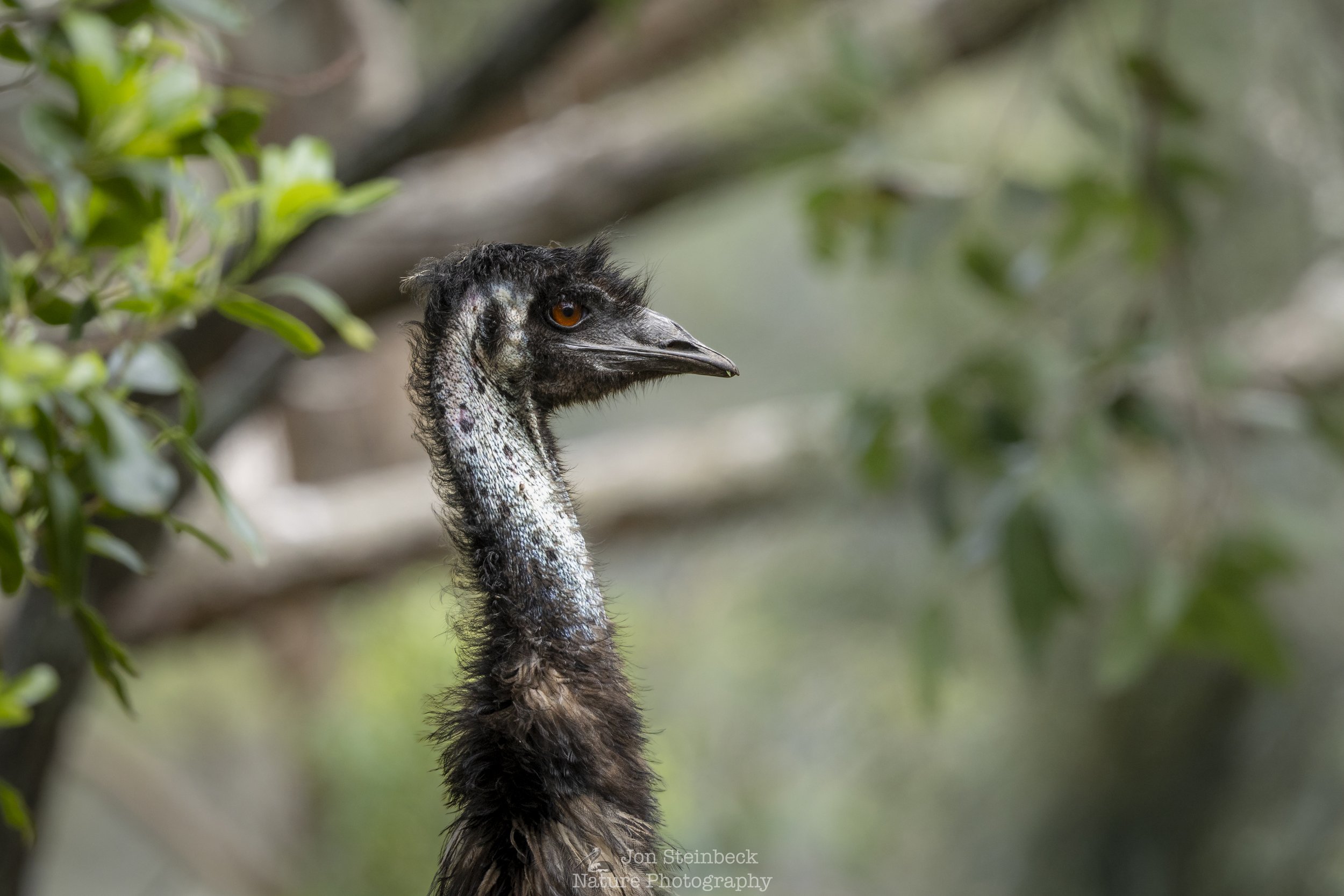
The heads of the two emus that I saw
These were the Australian Pelicans (Pelecanus conspicillatus) that the Emu took a disliking to. There were a few more of them on either side of the photograph frame but I preferred this crop. Also, I like how One Tree Point, with its famous lone Norfolk Pine of Tuross Head, is visible in the background.
Australian Pelicans with One Tree Point of Tuross Head in the background
Canon EOS R5 Mk II with a Canon RF 100-500mm f/4.5-7.1 L IS USM Zoom [ISO 320, 500mm, f/8.0 and 1/1000])
I was so happy with finding the Emus but I decided against returning the next day because the weather forecast was that it would be cloudy, so I thought that the light wouldn’t have been better than on my first day. I therefore decided it would be nice to go touring on my bike around the region. That morning, I went south from Narooma, first to Tilba and then to some of the beaches south of Mystery Bay. I also rode along a stretch called Sunnyside Road, which I thought was an apt description for how I was feeling. The weather actually turned out to be better than the previous day but I saw a number of lyrebirds and some Wonga Pigeons, so it was still a wonderful morning.
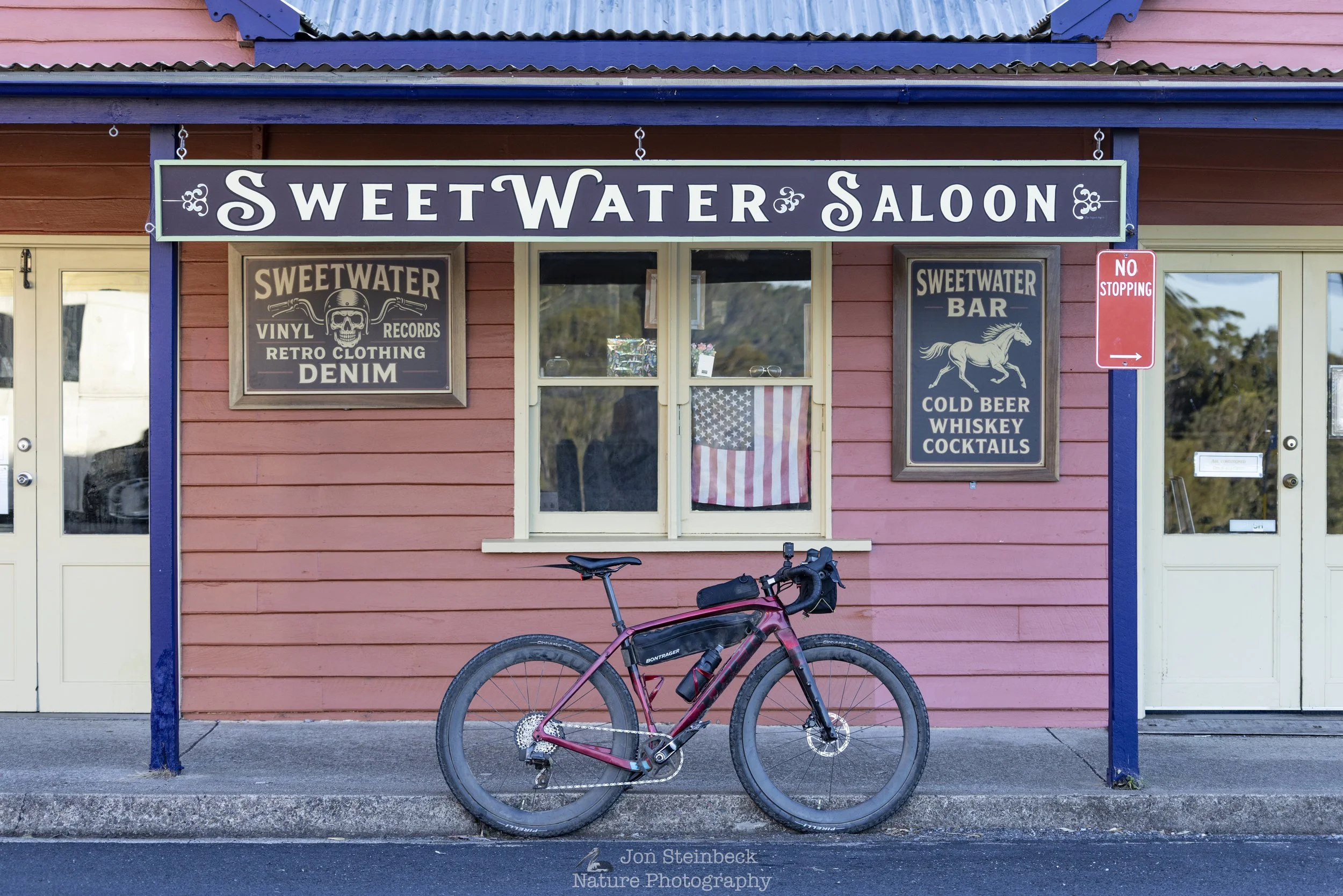
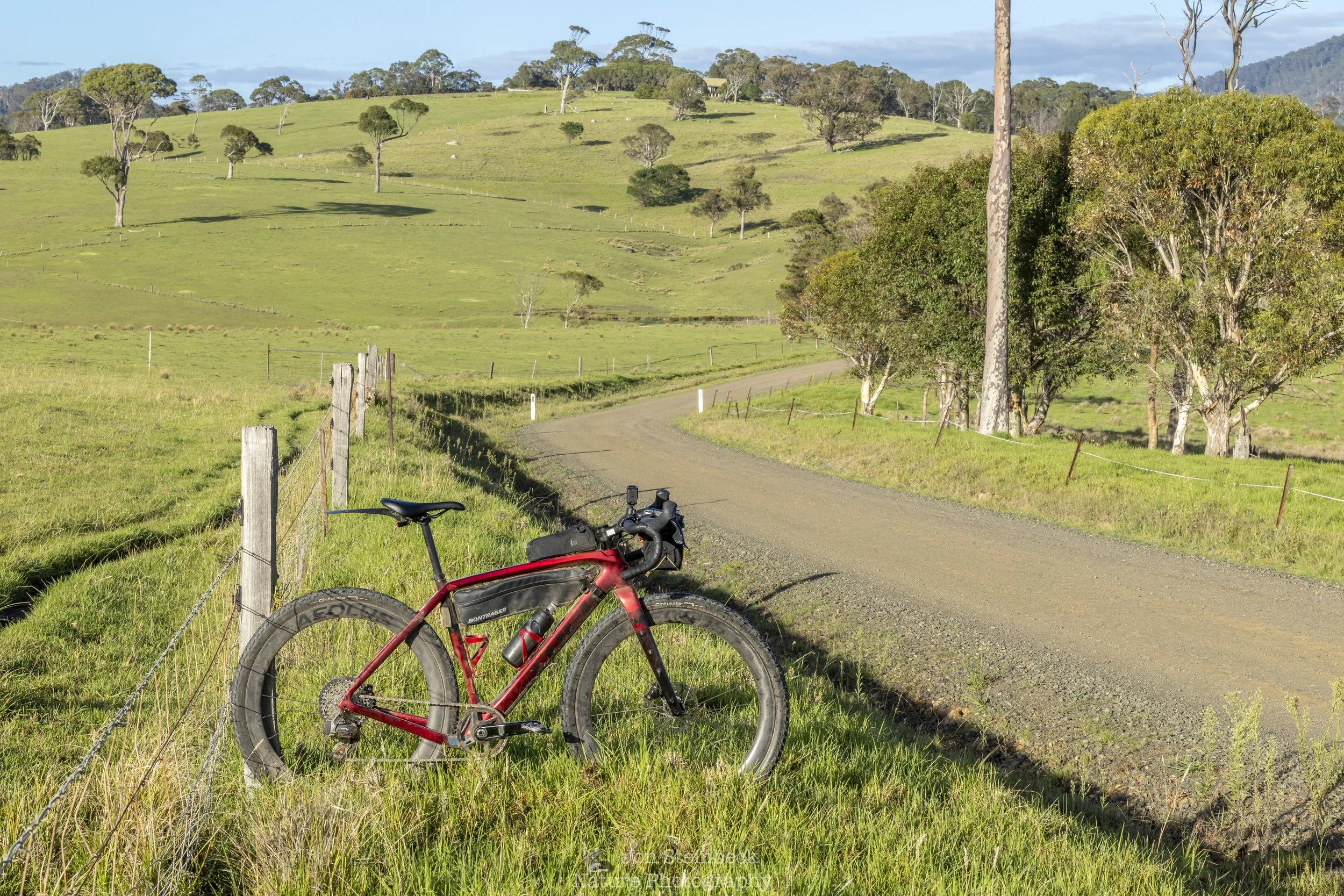
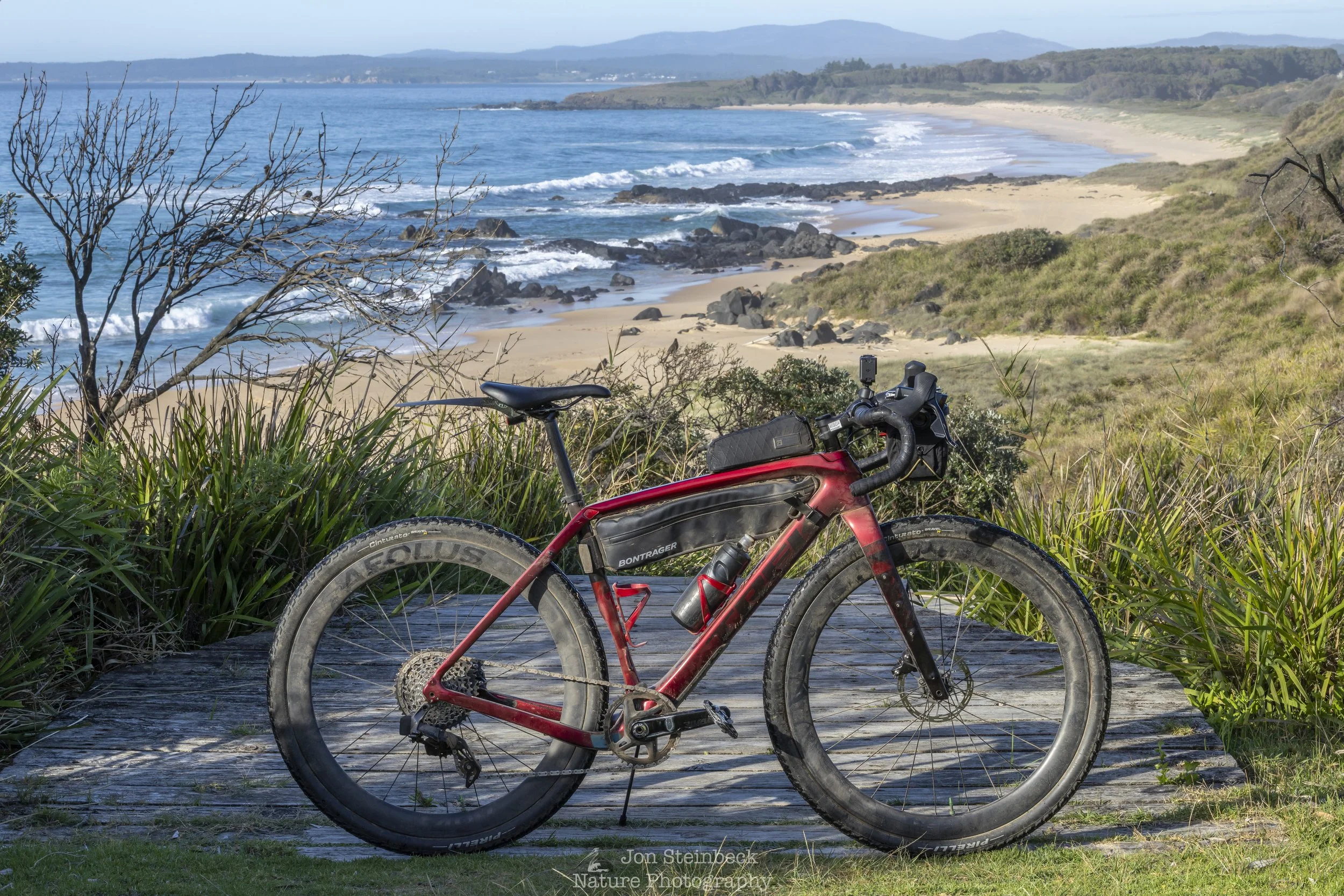
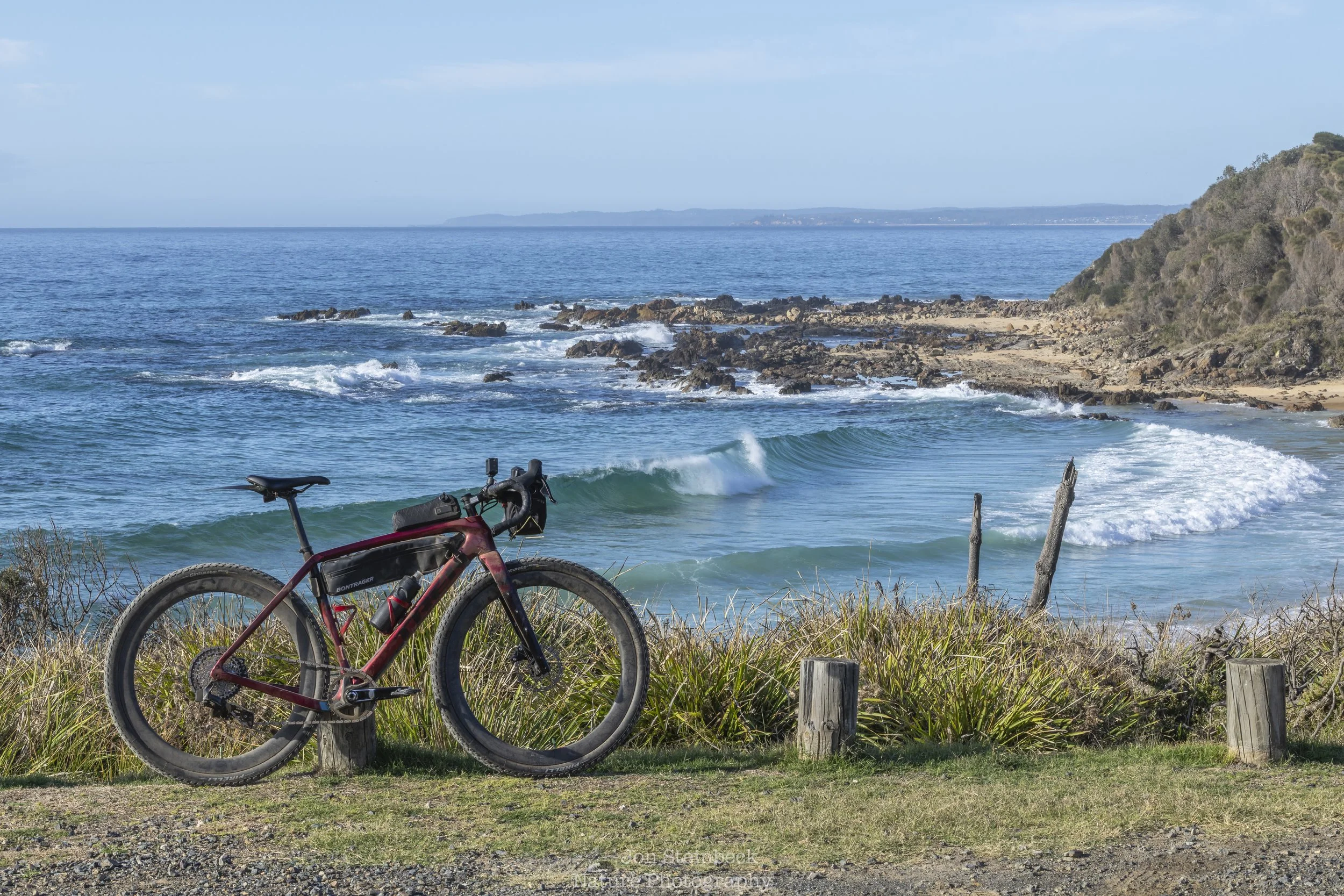
Back in Narooma I came across this White-faced Heron that was resting on a picnic table. The tide was high in the inlet so it was probably using the table as a convenient location to wait for the tide to drop before it could head to the shallows and look for food.
White-faced Heron
Canon EOS R5 Mk II with a Canon RF 70-200mm f/4L IS USM [ISO 100, 200mm, f/4.0 and 1/1600])
I was so happy to have found an Emu and to have spent time photographing Australia’s largest bird. It was wonderful to see that one person’s folly had actually been of benefit to the community. The residents of Potato Point are well aware of the Emus and enjoy being in close proximity to them. They also try to warn residents and visitors to be careful when driving so as not to injure these wonderful birds. I am glad that the Emus feel comfortable staying around the area so that we can continue to experience them in a natural environment.
