
The Big Hole and Marble Arch Walk
12 km out and back track ( around 3.5 to 4 hours) NSW National Parks and Wildlife Service Grade 4 (mainly moderate but with some steep parts, many steps, limited signage)
Definitely take a torch for the caves in the gully - a smartphone light will help you to navigate through them but a proper torch will allow you to examine them better.
There is no mobile phone coverage so either download maps onto your smartphone or take a proper GPS unit - although the trail is reasonable well marked.
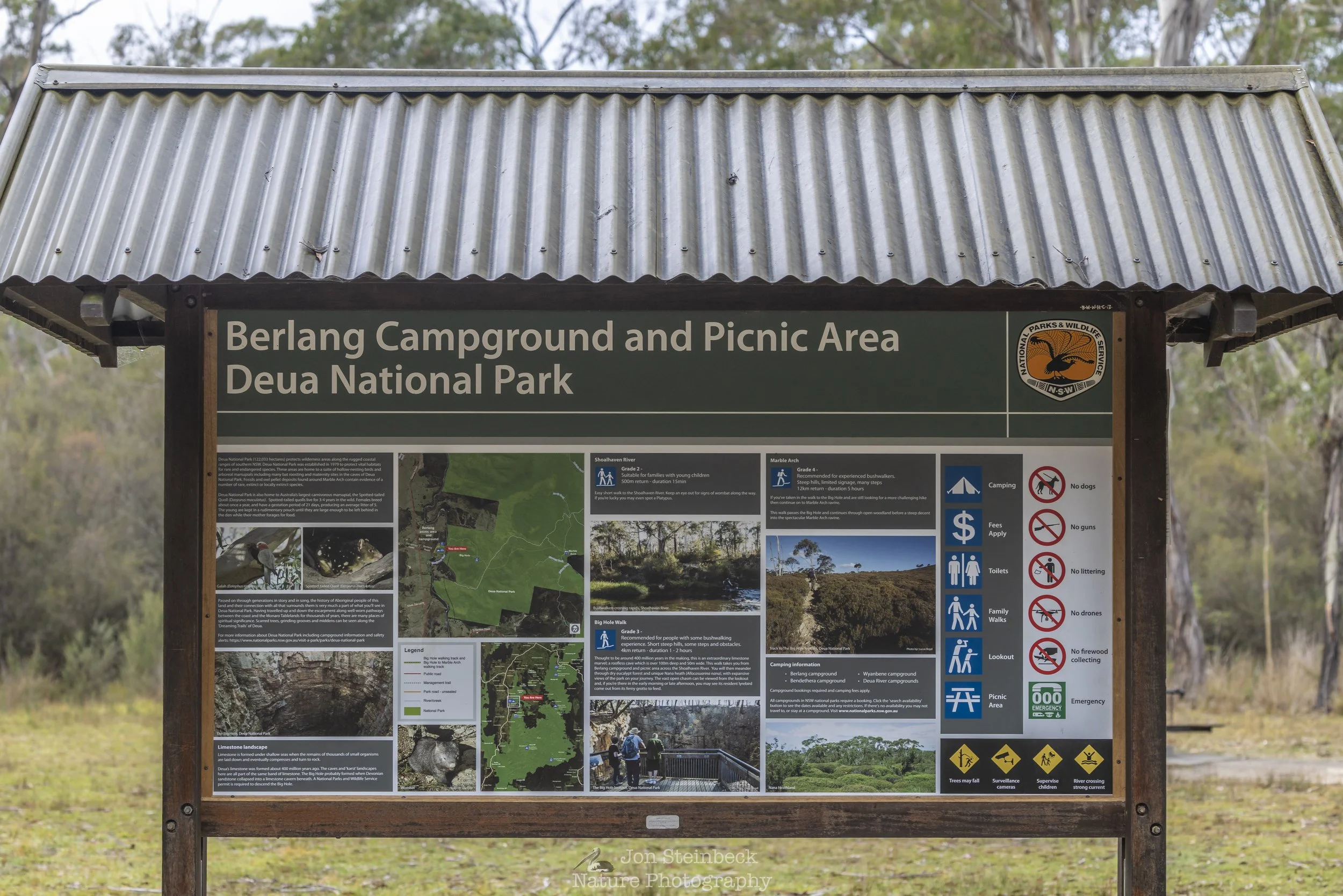
Berlang Campground information board
This is a lovely walk through some beautiful bush. The trail commences at the Berlang Campground where there is sufficient dirt parking and a drop toilet. There are also national parks fire pits if you were planning on a post walk cooking fire. Near the start there is the obstacle of the Shoalhaven River to cross but when I went through in mid-May 2026 the water was not high, and the unofficial rock and branch walkway was sufficiently clear of the water surface to allow for a relatively dry crossing. Other people have certainly waded across but this should be done carefully if the water level is high because there may be a strong current present.
After that crossing there was a slight uphill with some stairs that led to the Big Hole, where there was a very sturdy viewing platform. The cavern is up to 400 million years old, although the the roof probably collapsed about 50 million years ago, creating the large hole that visitors can see. This hole was also the site of a scam in the later 1900s when Alexander Fraser convinced people in Sydney that he had found gold at the bottom of the hole and that they should invest in his mining operation. People eventually realised that it was a scam and Fraser went to jail for his duplicity. The ABC has a 2024 article describing the hole and telling the story of the scam.
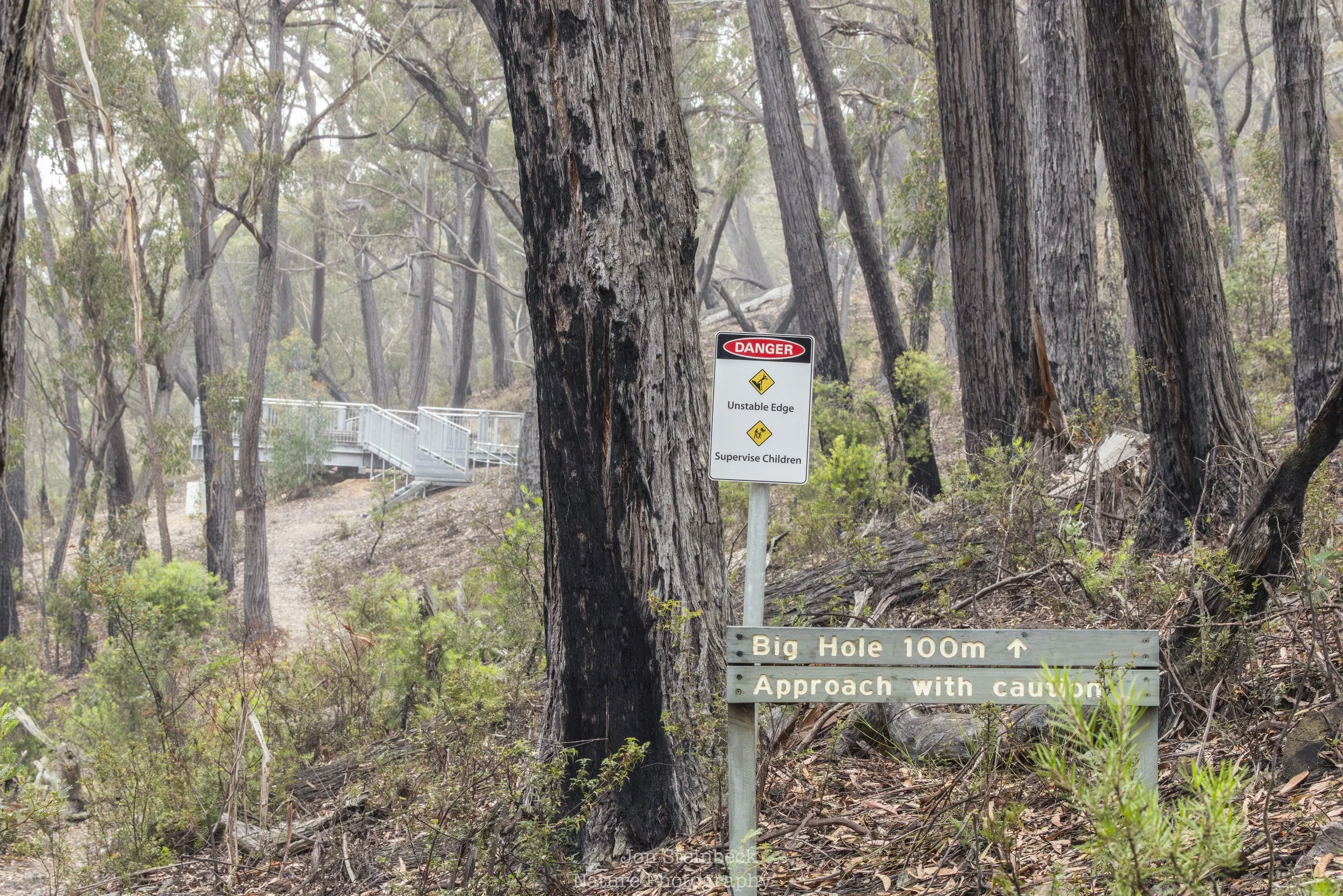
The approach to the Big Hole
Canon EOS R5 Mk II with a Canon RF 100-500mm f/4.5-7.1 L IS USM Zoom [ISO 6400, 100mm, f/16 and 1/100])
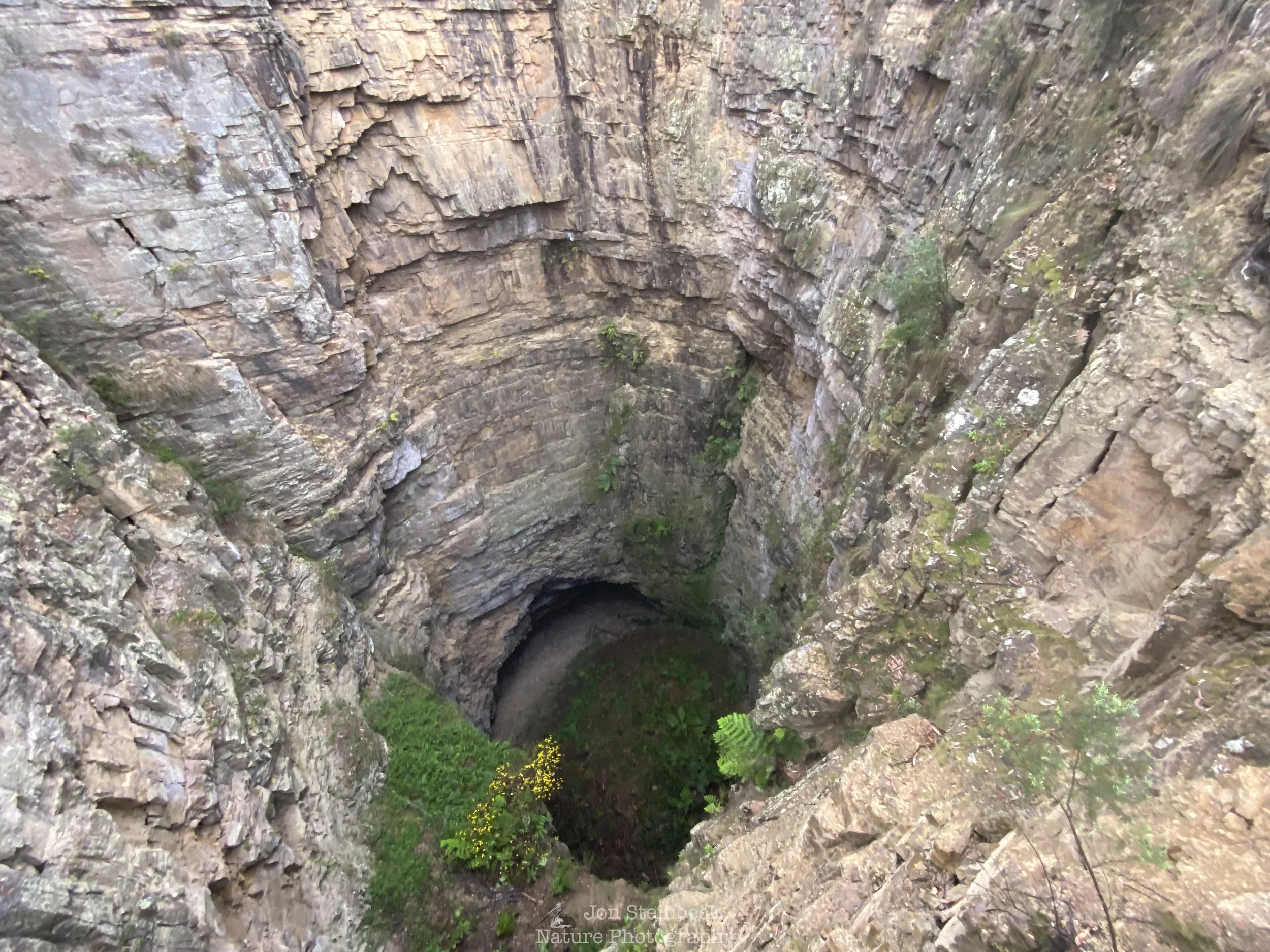
The Big Hole (iPhone photo)
After the Big Hole, the trail dropped down a hill but then flattened out again with some gentle undulations. This section was all through a nice wooded area with regular Candlestick Banksias (Banksia spinulosa).
This is a common Banksia along the eastern states, from the coast inland to the ranges. It is often seen in a shrub form, although it can grow to be a tree of 6 m. There is a colour variety of the cobs, even on the same tree and there are a few sub-species, along with a debate about whether some should be there own species.
Candlestick Banksias (Banksia spinulosa)
Canon EOS R5 Mk II with a Canon RF 100-500mm f/4.5-7.1 L IS USM Zoom [ISO 400, 500mm, f/8.0 and 1/320])
The walking trail went past several termite mounds that looked like they had been targeted on a couple of sides by determined echidnas, hollowing them out.
Hollowed out termite mound
Canon EOS R5 Mk II with a Canon RF 100-500mm f/4.5-7.1 L IS USM Zoom [ISO 800, 100mm, f/8.0 and 1/500])
The track crossed the Bettowynd Fire Trail and then continued on through nice bush, before coming to a sign that pointed towards Marble Arch
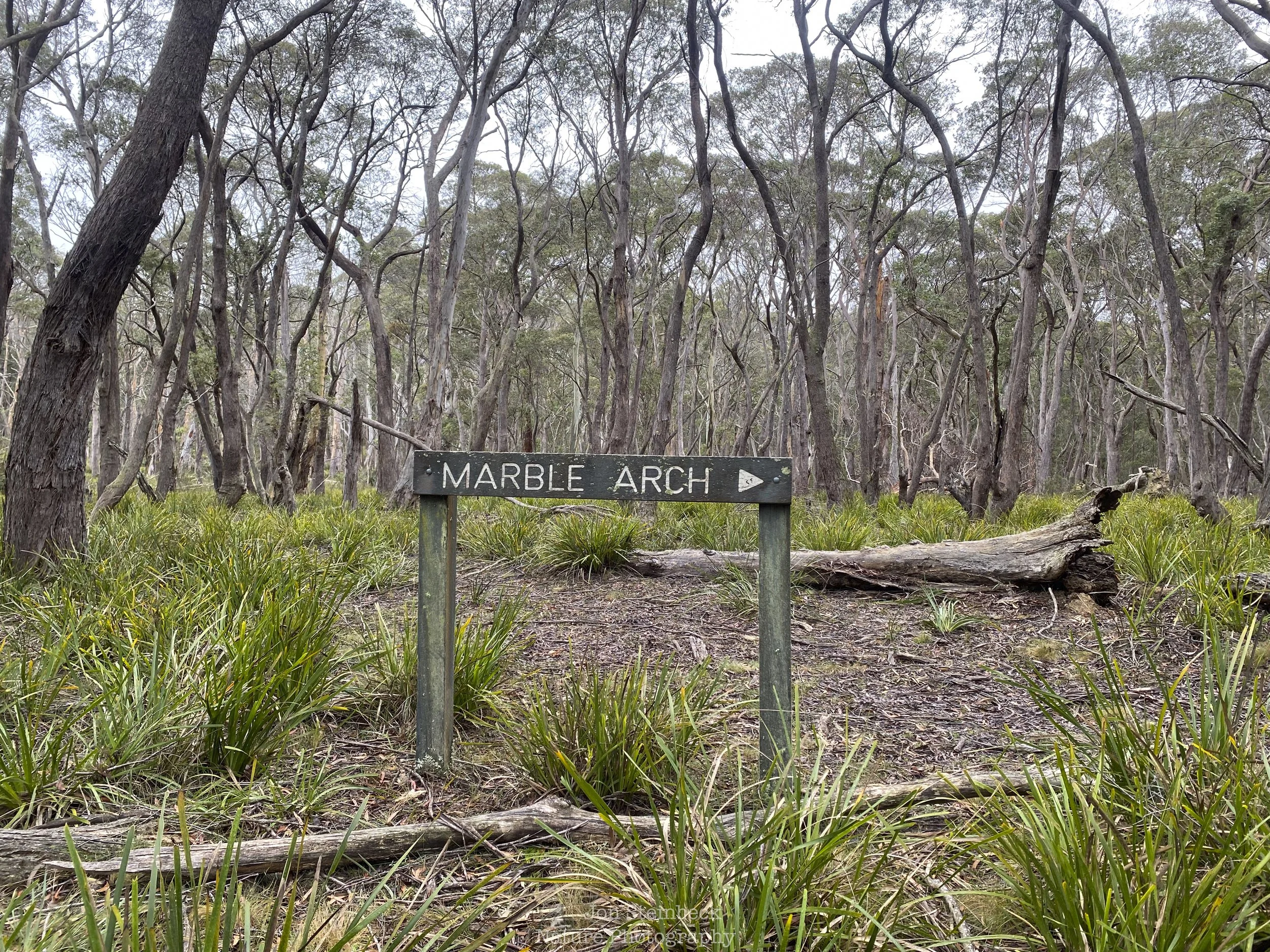
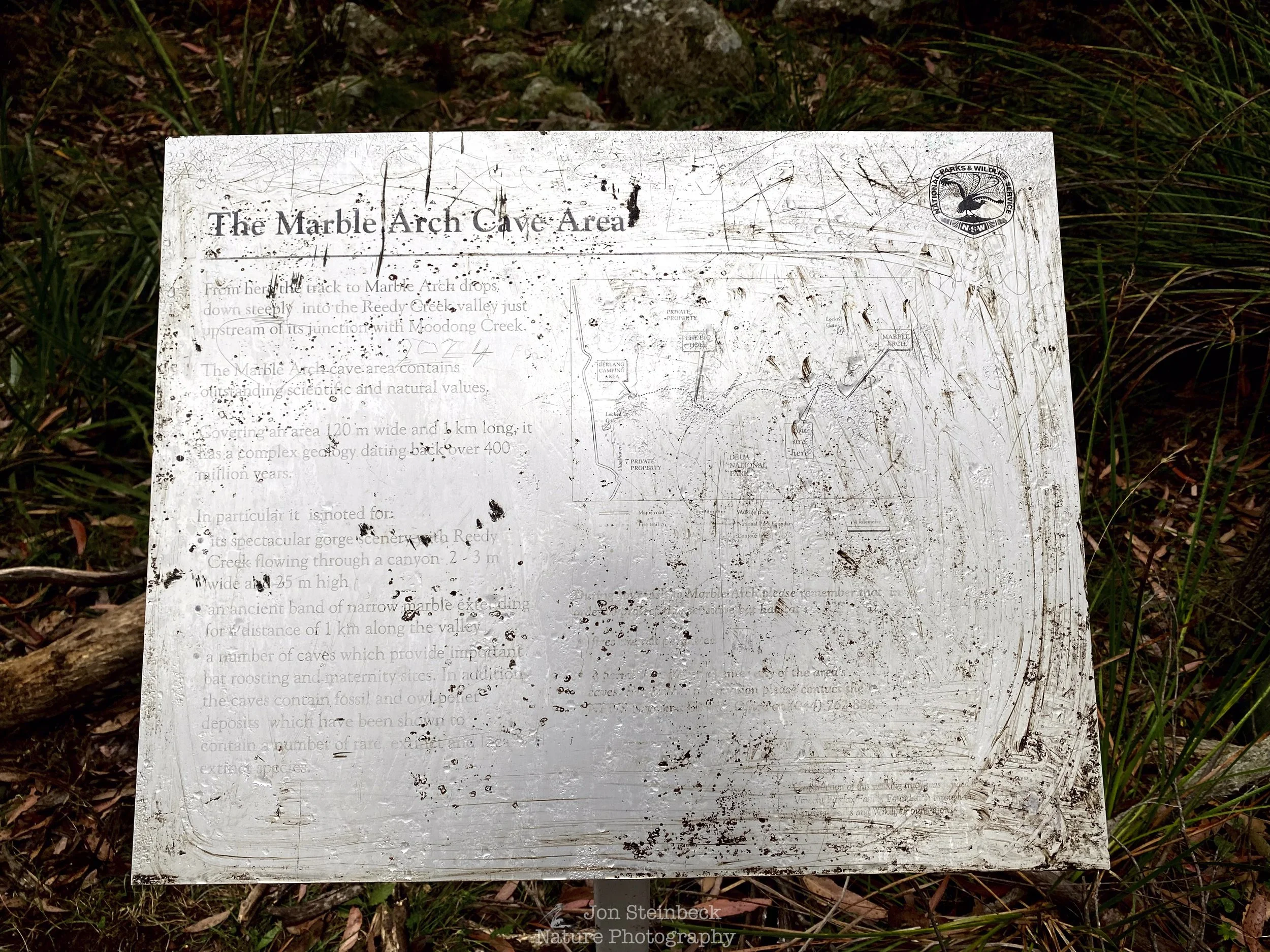
A little further on there was a worn out information board about the Marble Arch area.
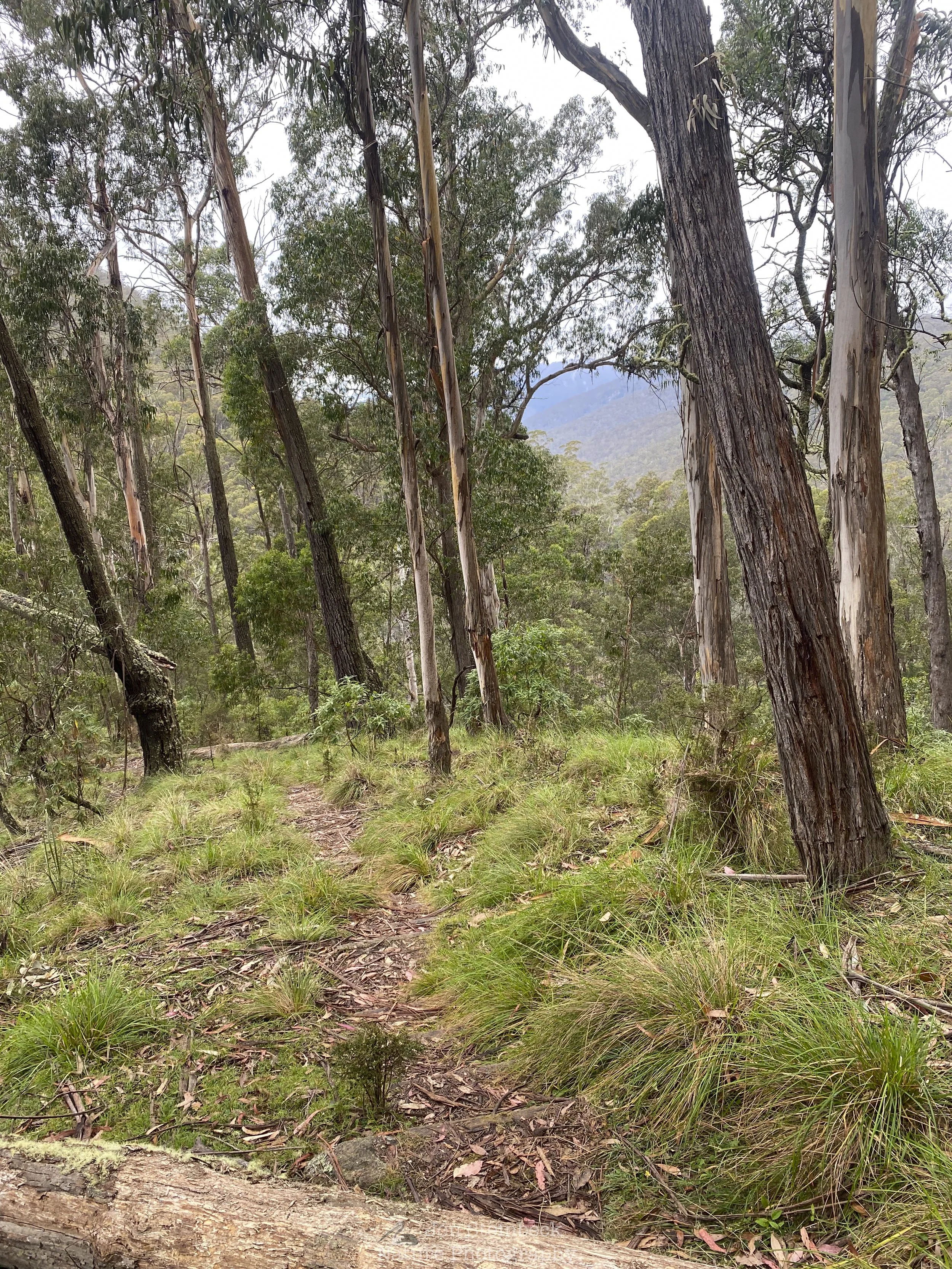
Just to the right of this sign the trail continued and started to descend, with views through the trees that showed the steepness of the area that was ahead, although the below iPhone image doesn’t do the scenery justice.
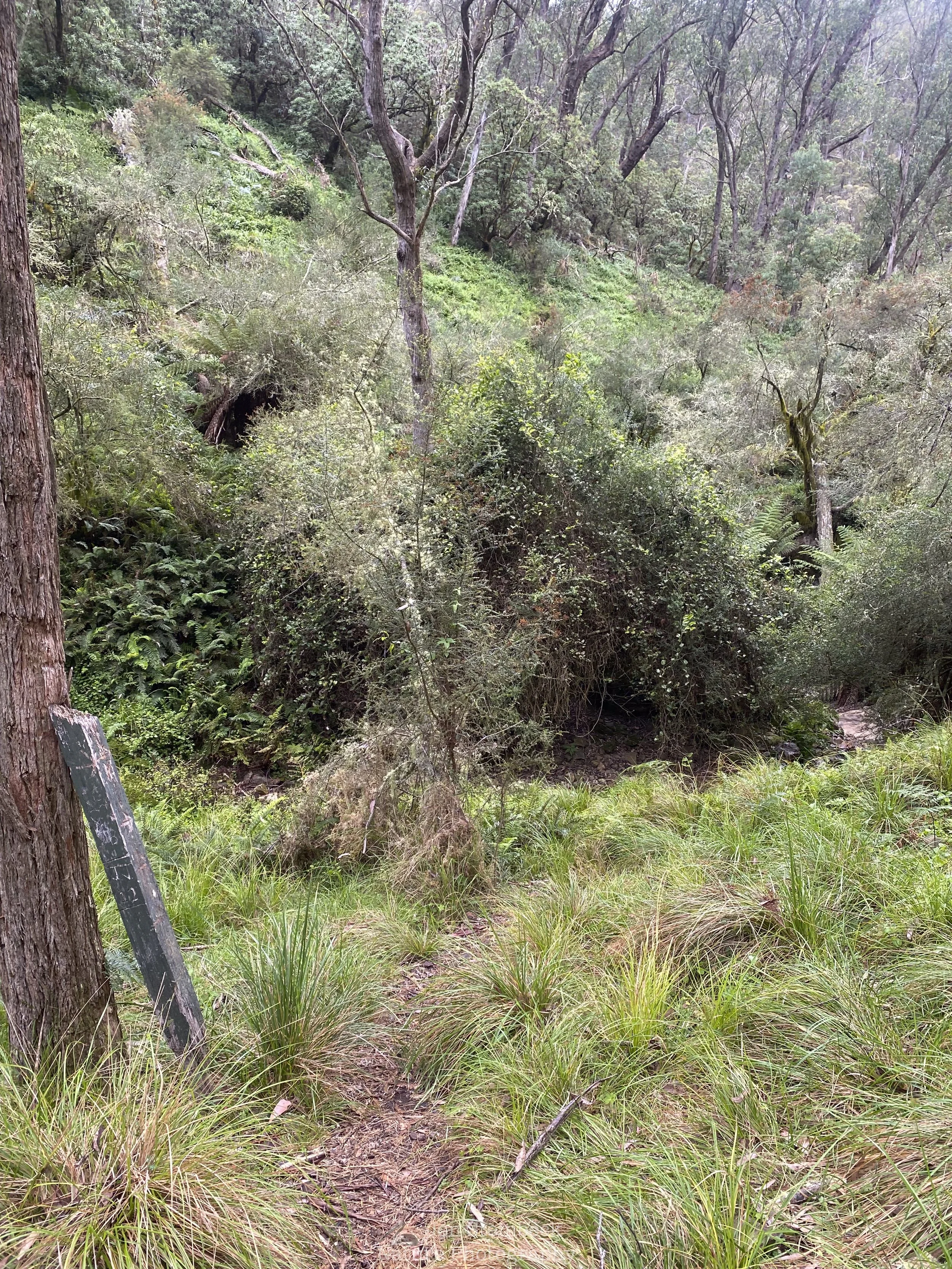
This is where there were a lot of steps as the trail descended sharply into the gorge. At the bottom of the stairs there was a marker propped up beside a tree pointing out the way to go.
From there the magic of the gully opened up. There was some scrambling over fallen trees and rocks, as well as crouching under low rock ceilings but it was worth it. I didn’t take a torch with me, but I will take one next time. While my iPhone light helped me navigate through some of the darker parts of the cave, having a torch would have allowed me to examine the interior so much better.
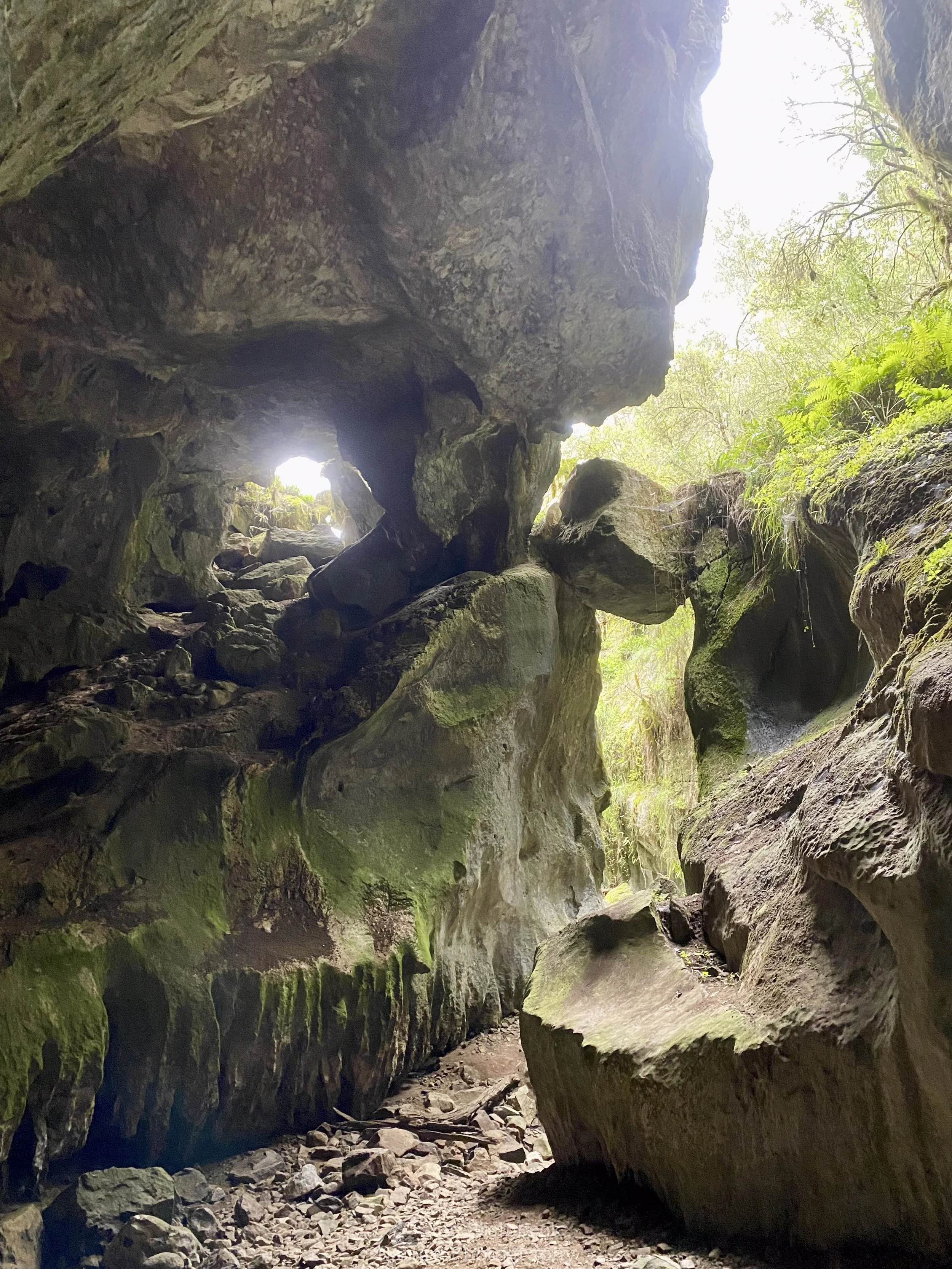
Looking back from a cave entrance towards the entry into the gully (iPhone)
Two images below from my R5 at 100mm
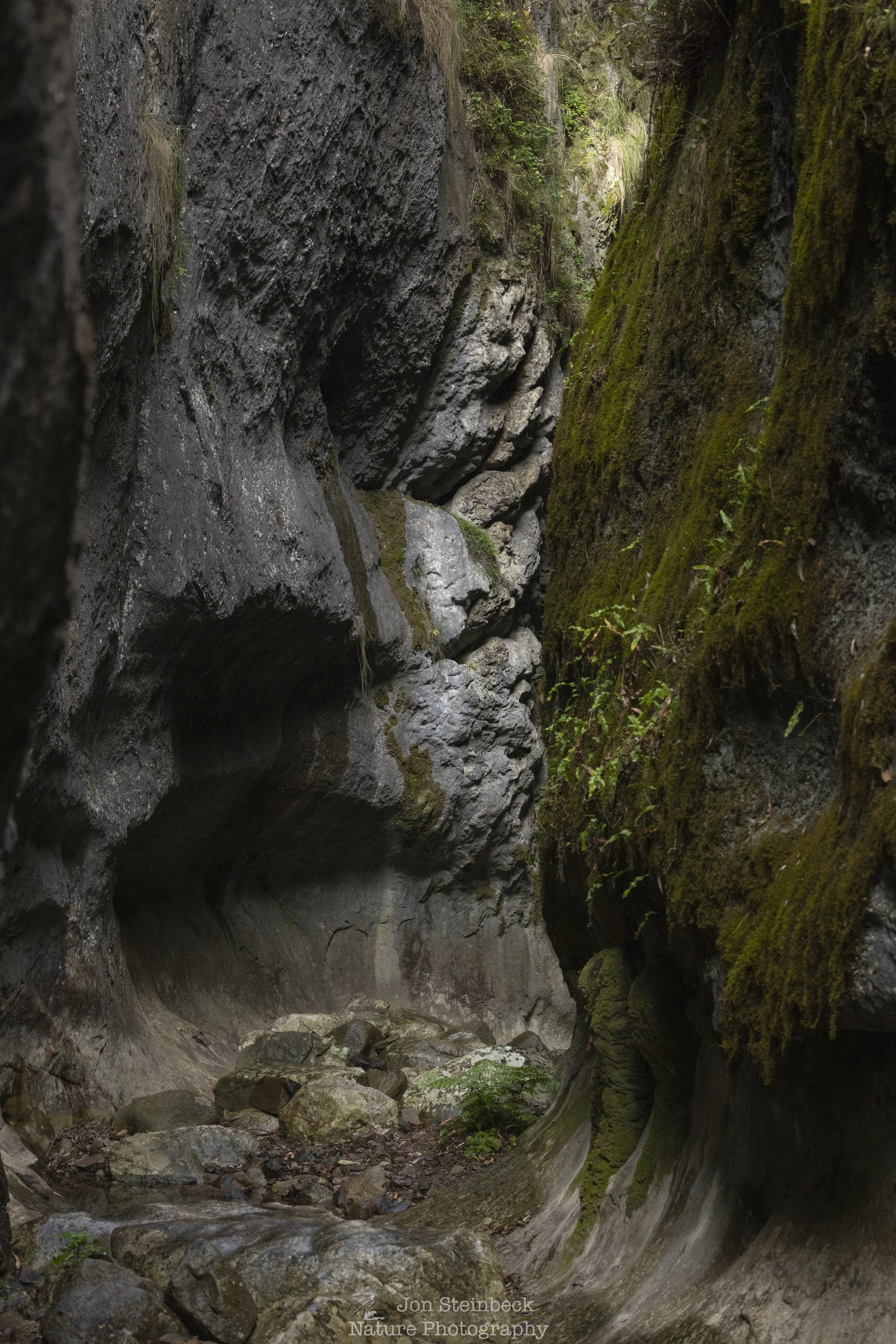
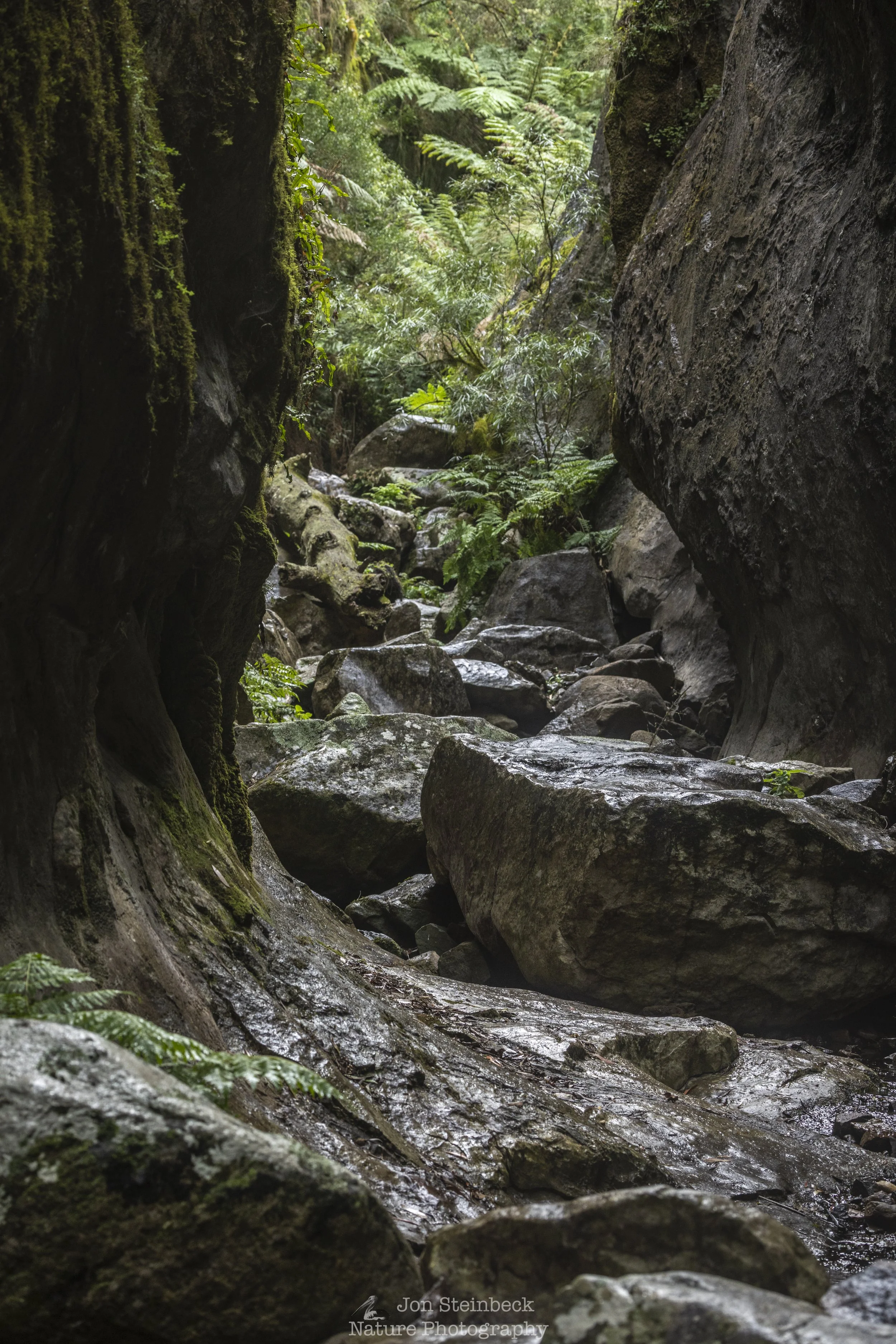
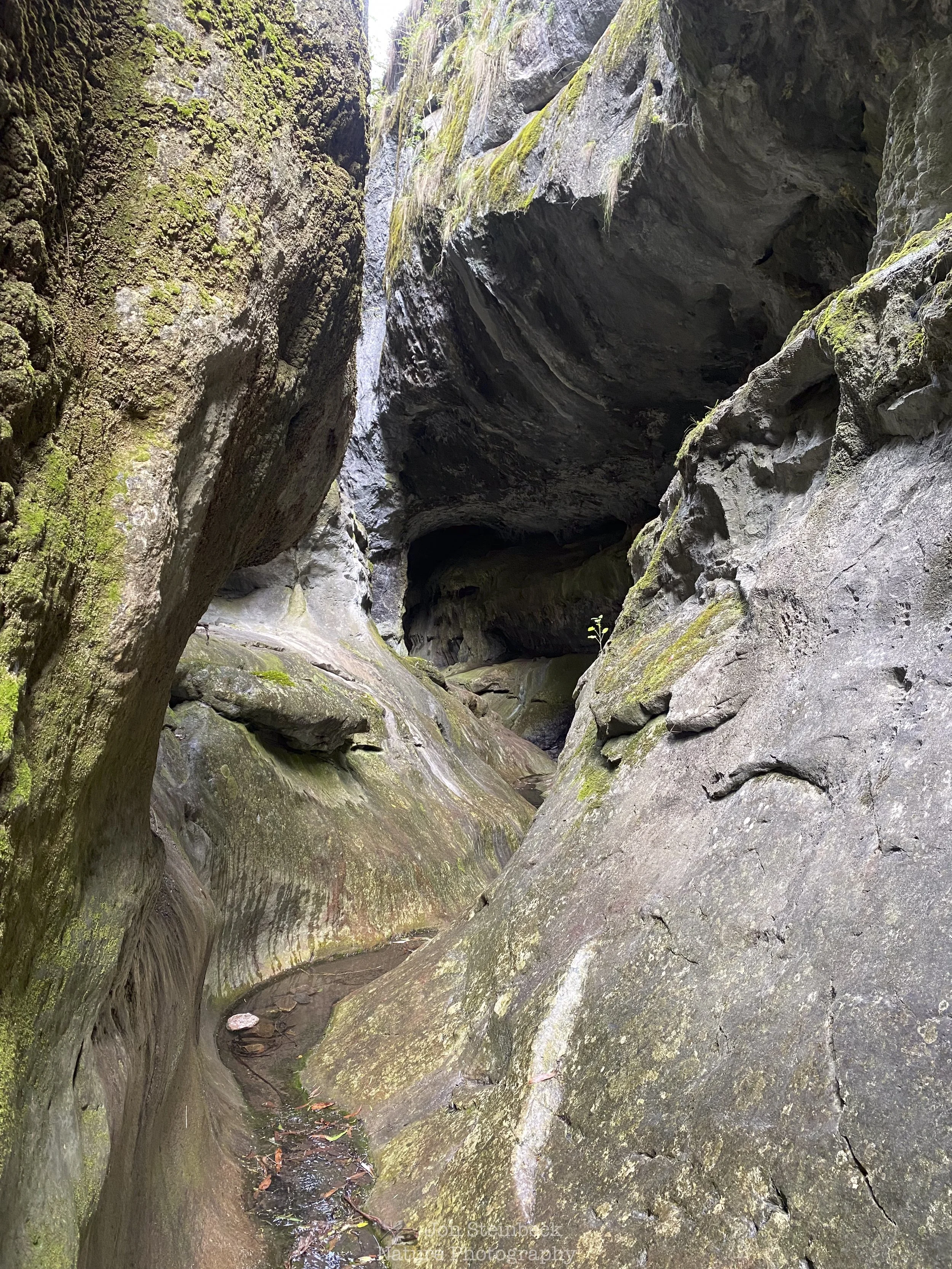
I walked along the canyon base for a little bit, being very careful because it was damp and the rocks were slippery. I decided to turn around when I came to an area where the path become pools of water. I understand that it is possible to continue through those shallow ponds but I will leave that for a day when I don’t mind getting my feet wet. The iPhone shot below shows the view onwards from where I turned around. I could hear the sound of what I thought was a waterfall at that location and I would have liked to have found it, but I know I will be back again.
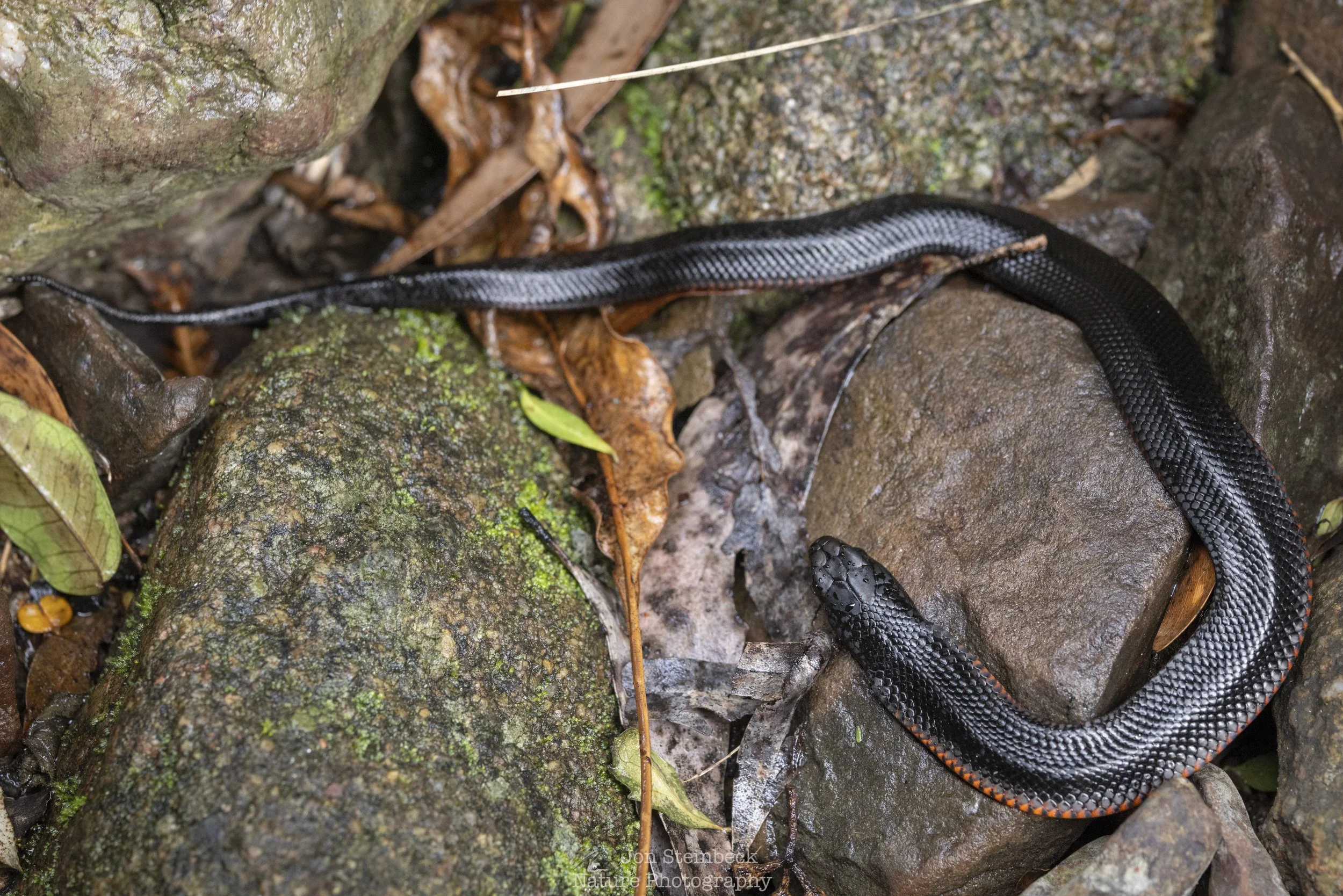
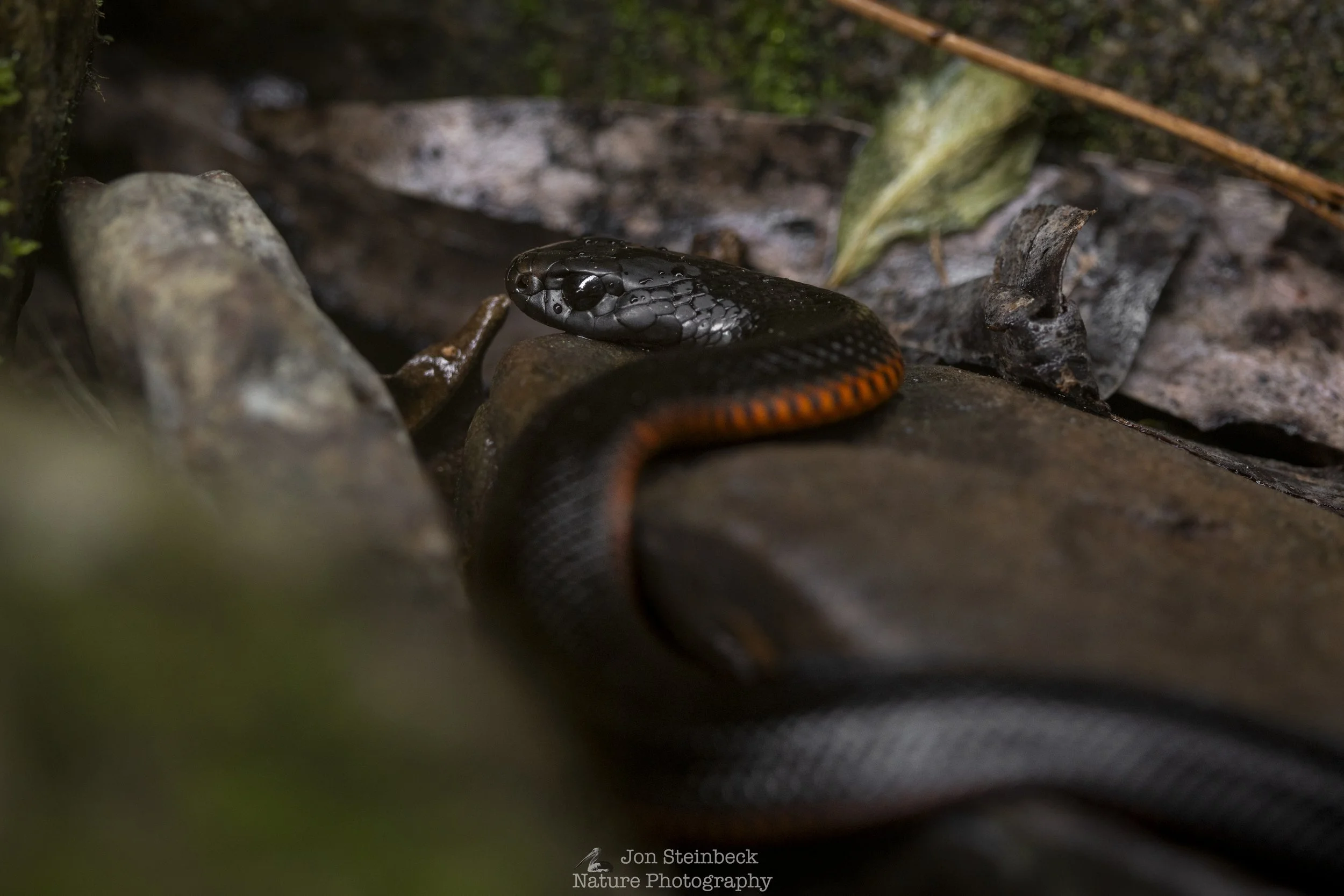
While walking along the base of the canyon I came across a juvenile Red-bellied Black Snake (Pseudechis porphyriacus). I walked past it initially and only saw it when I looked back. It was not very big and looked liked a sodden bit of vegetation. The left shot shows how it was lying flattened on a rock, probably tying to get some warmth. However, the morning was misty, and no sun was really warming up the canyon. The small snake was so slow that I could even use a stick to lift two very small twigs from it to make a better photograph. About ten minutes later, when I returned past the spot, it was still there. I took more photographs and it finally moved while I was shooting it. The photo on the right shows the changed position of the snake, although it only moved its head. I carefully walked around the little reptile so as not to disturb it. Interestingly, a friend, who did this walk a couple of weeks before of me, said that she and her husband had encountered a juvenile Red-bellied Black Snake around this spot as well. Probably best to keep an eye out if you are doing this walk. The snake was very sedate, probably because it was cold, so may not move quickly out of your way. However, in warmer weather, I suspect that it would disappear quickly under some rocks if it was disturbed.
The trail was a simple out and back, so I simply returned along the way that I had come. It was on the return trip that I saw most birdlife, including the two birds below. The sky was overcast, so not much light was getting below the crowns of the trees, making photographing challenging. However, I enjoyed just watching a number of birds going about their day without too much concern over my presence.
Red-browed Treecreeper
Canon EOS R5 Mk II with a Canon RF 100-500mm f/4.5-7.1 L IS USM Zoom [ISO 800, 500mm, f/8.0 and 1/500])
A Red-browed Treecreeper (Climacteris erythrops) was moving between a number of trees. It would generally start about two metres above the ground, then spiral up around the tree looking for insects. This species uses tree hollows to breed, lining them with plant material as well as fur. The female starts to build the nest and the male assists. The male will then feed her while she is incubating eggs, and both adults feed the chicks. Some male adults from the previous year’s brood may stay to help with the chick rearing the next season.
Scarlet Robin
Canon EOS R5 Mk II with a Canon RF 100-500mm f/4.5-7.1 L IS USM Zoom [ISO 800, 500mm, f/8.0 and 1/500])
At least one Scarlet Robin (Petroica boodang) was in the area, its red breast making it easy to track. These birds will probably stay in the area over winter, although they may move to more open areas in winter, and start feeding on the ground. In the spring and summer they prefer being under the eucalyptus forest and feeding in the trees.
I thoroughly enjoyed this walk and I plan to return in spring or summer with an anticipation of more wildlife to photograph. Even if I hadn’t seen any wildlife on that walk, the countryside was beautiful and peaceful, with the gully at Marble Arch being a real treasure. I think exploring further along that gully will be a lot of fun, especially in spring or summer.
