
Laughing Kookaburra don’t care
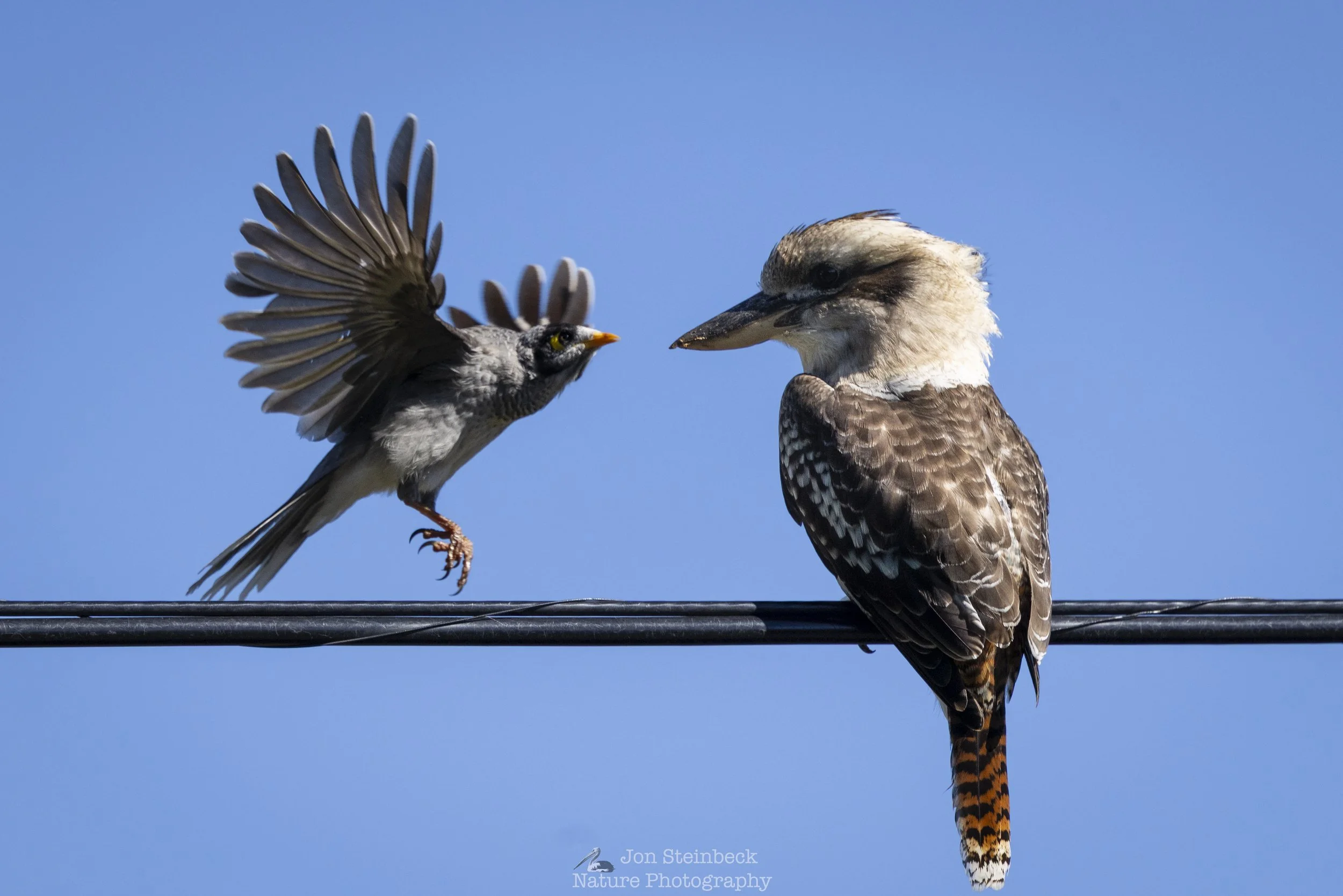
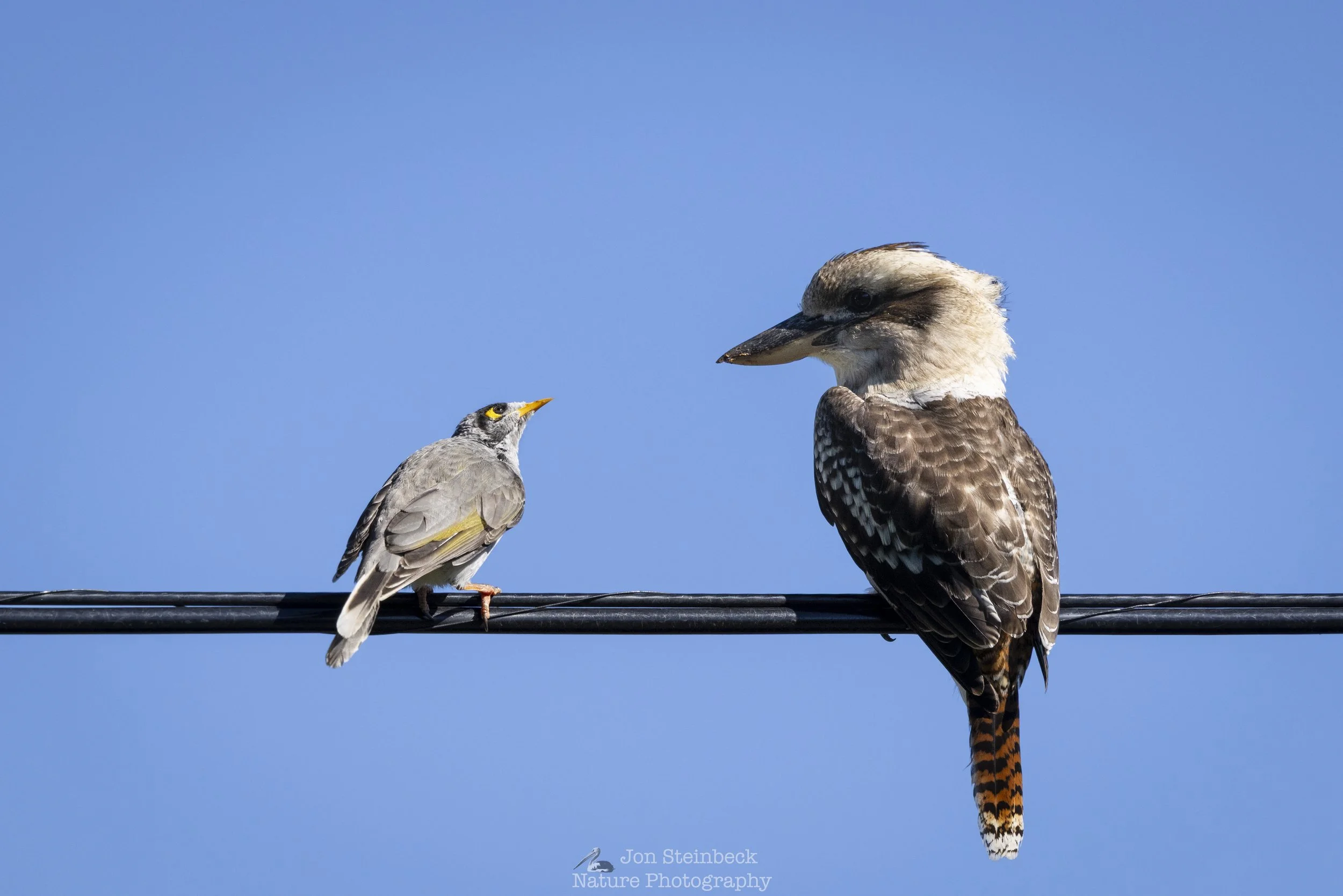
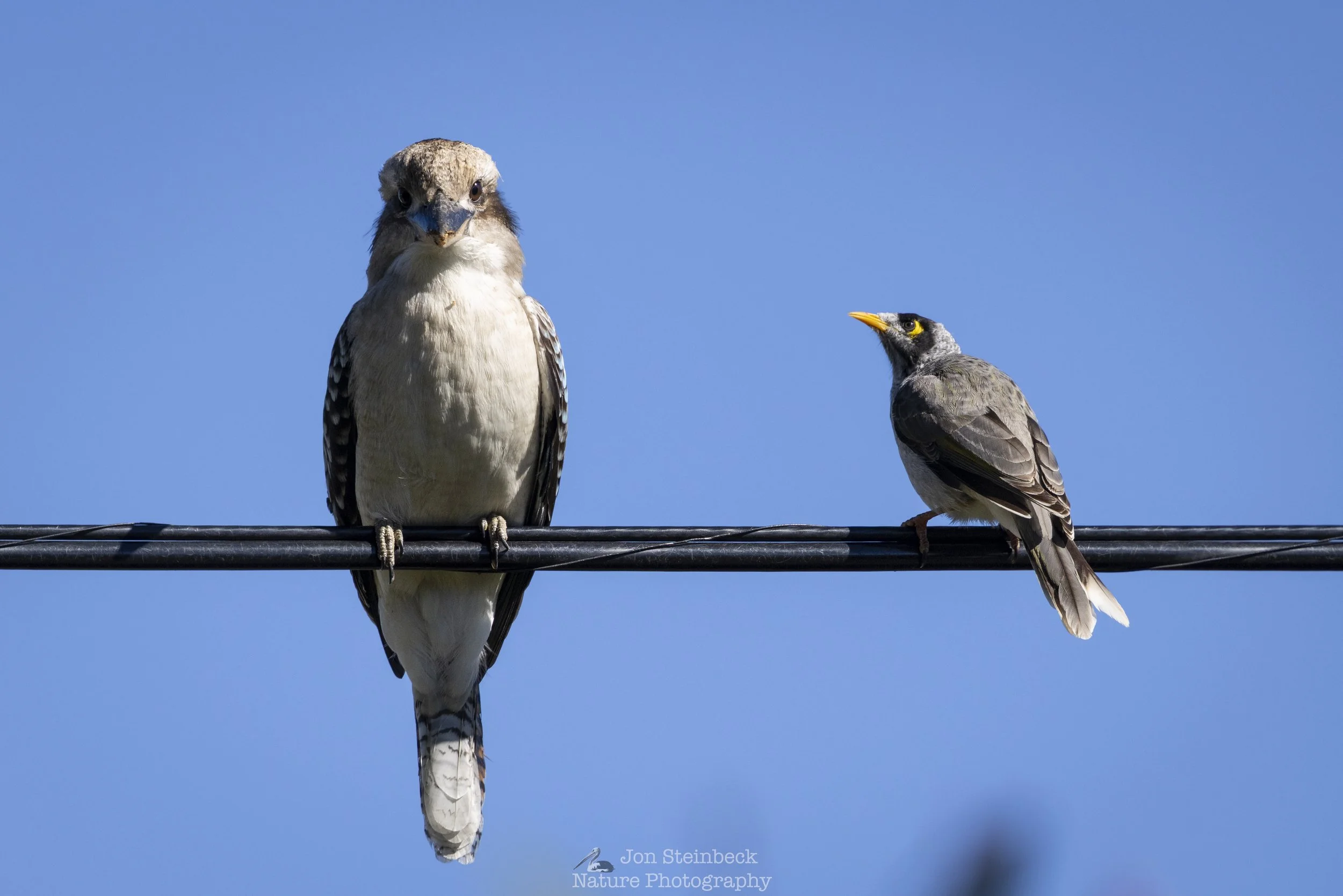
A Laughing Kookaburra not caring about a Noisy Miner trying to intimidate it
Canon EOS R5 Mk II with a Canon RF 100-500mm f/4.5-7.1 L IS USM Zoom [ISO 800, 500mm, f/8.0 and 1/2500])
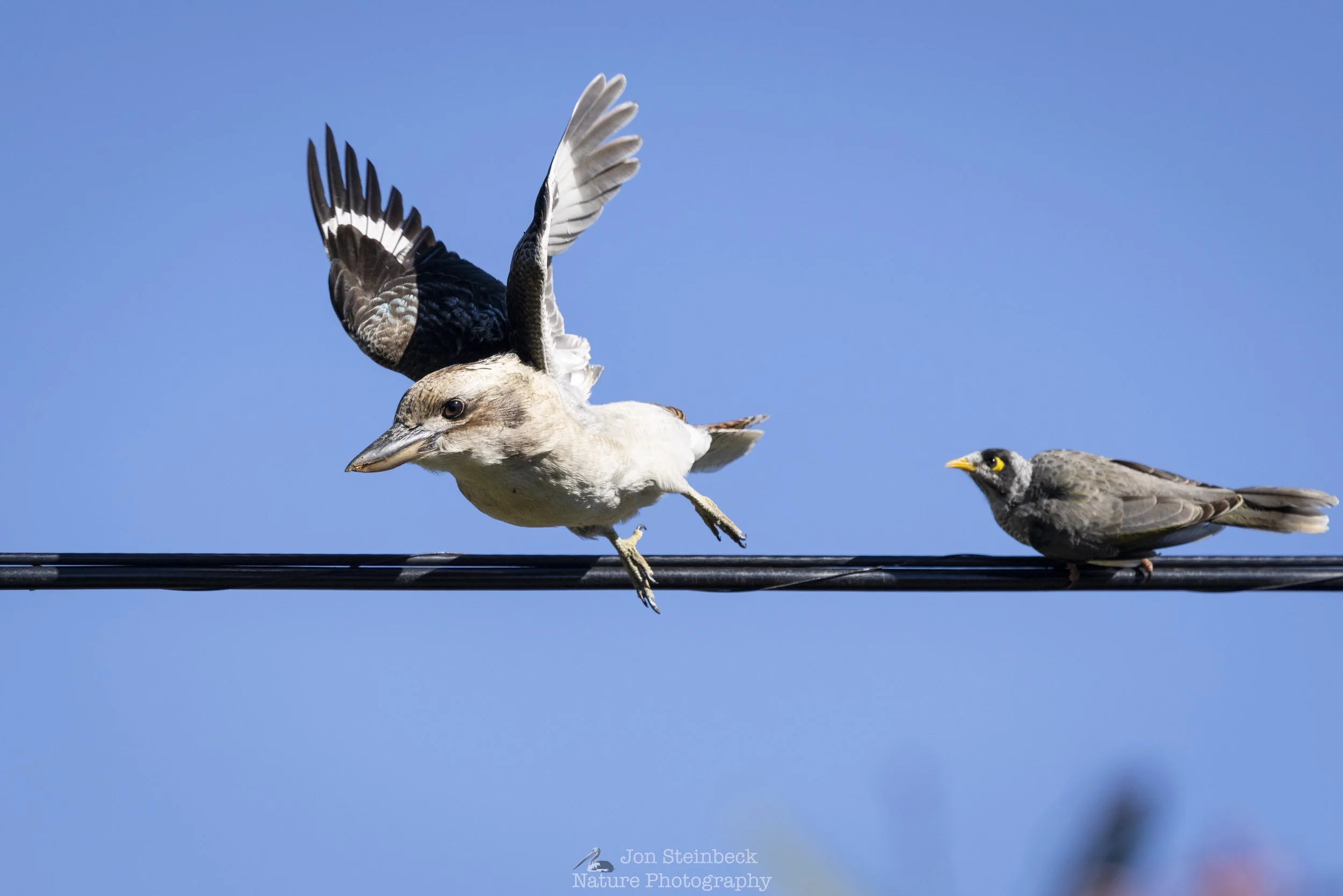
In April, I looked out a window to our back yard and I saw a Laughing Kookaburra (Dacelo novaeguineae) sitting on the power wires that run above our back fence. While it was there a Noisy Miner came along to chase it away. Now, I have seen three miners annoy a kookaburra, but a Laughing Kookaburra doesn’t care about a lone miner. Indeed, the miner started squawking at the kookaburra, and received a blank stare. The miner flapped its wings, flew up above the larger bird, and the kookaburra didn’t even flinch. The miner tried again, landing on the other side of the kookaburra, and still no luck. Then the kookaburra noticed something beneath it, and took off. It landed briefly in the crook of a tree, before it pounced heavily to the ground. I wasn’t close, but I heard the impact on to the leaf litter. A moment later the kookaburra was up again, and flew to a nearby fallen branch. In its mouth was a squirming skink, although after a few snaps of the kookaburra’s long beak, the lizard was gone.
The Laughing Kookaburra is Australia’s largest kingfisher but primarily consumes small land animals. These kookaburras are sedentary, occupying the same territory for life. They also bond for life, with adults from previous broods sometimes sticking around to help with raising newer chicks. A group of kookaburras will make their famous laughing call together, often with one bird starting and other birds joining in. Neighbouring groups will let the first group finish their song before launching into their own laughing call. Kookaburras breed in tree hollows and the oldest two chicks will often kill the youngest chick at some stage, as part of a survival mechanism.
One less skink in our backyard
Canon EOS R5 Mk II with a Canon RF 100-500mm f/4.5-7.1 L IS USM Zoom [ISO 2000, 500mm, f/8.0 and 1/2500])
