Photoshoot with rescued wombats
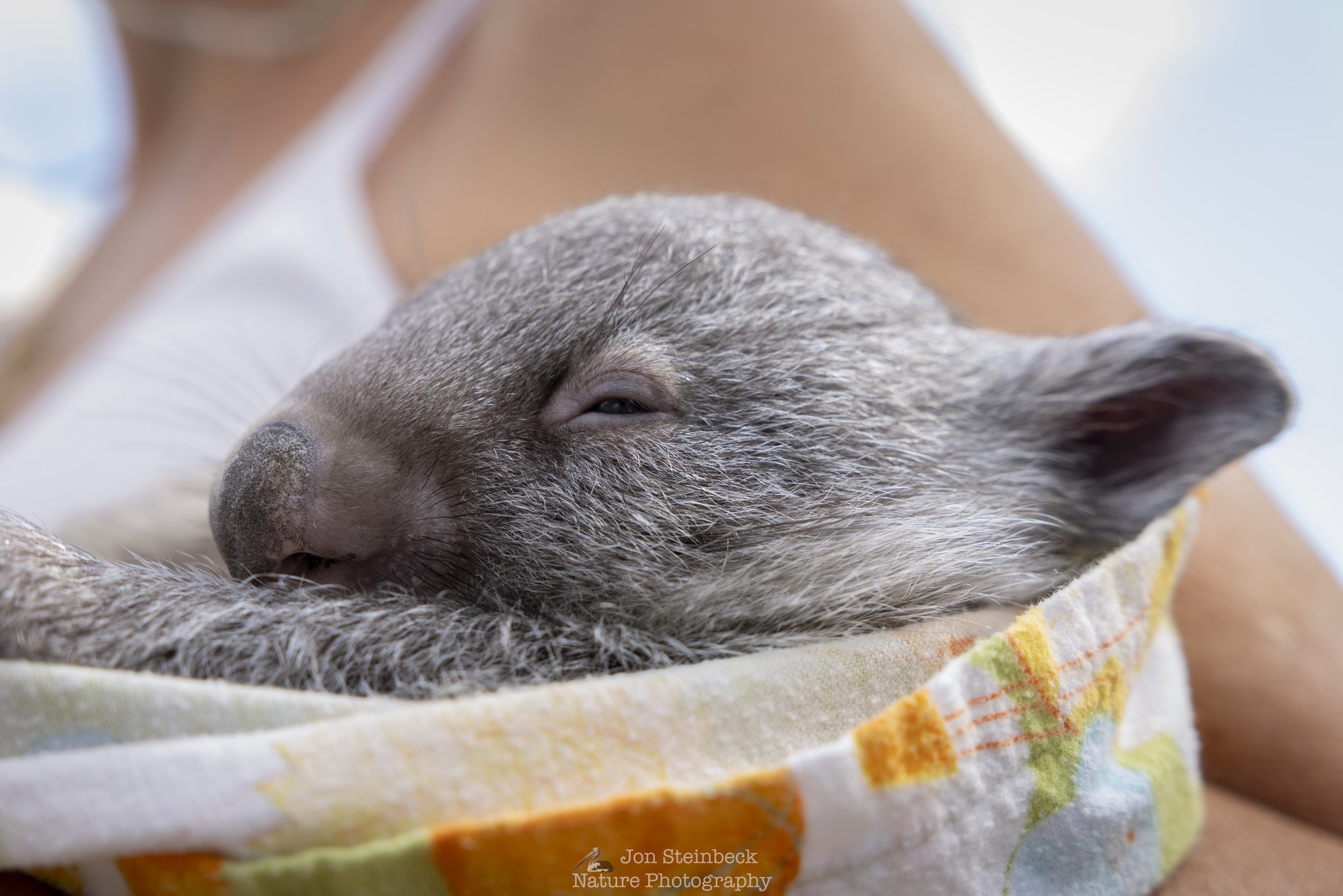
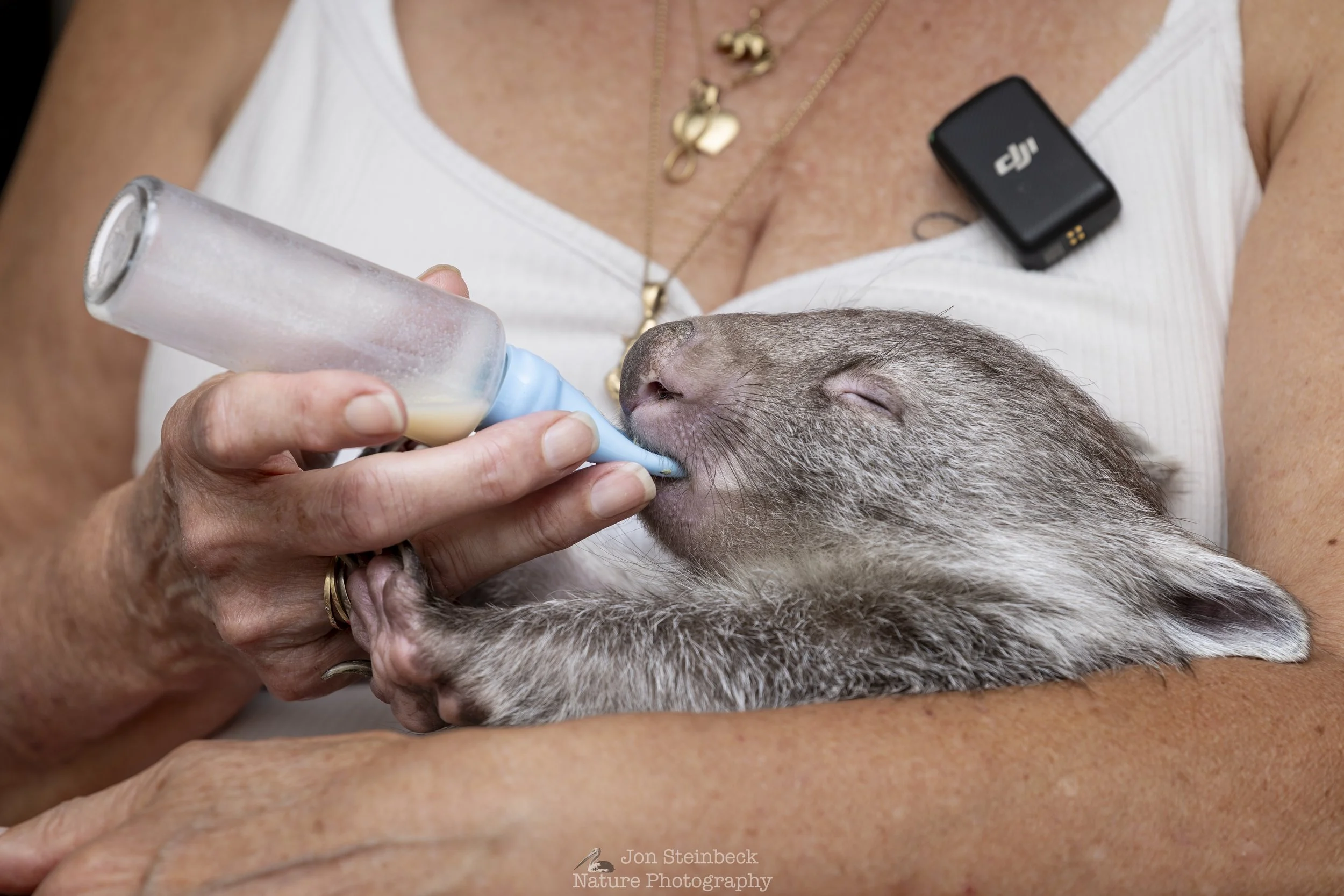
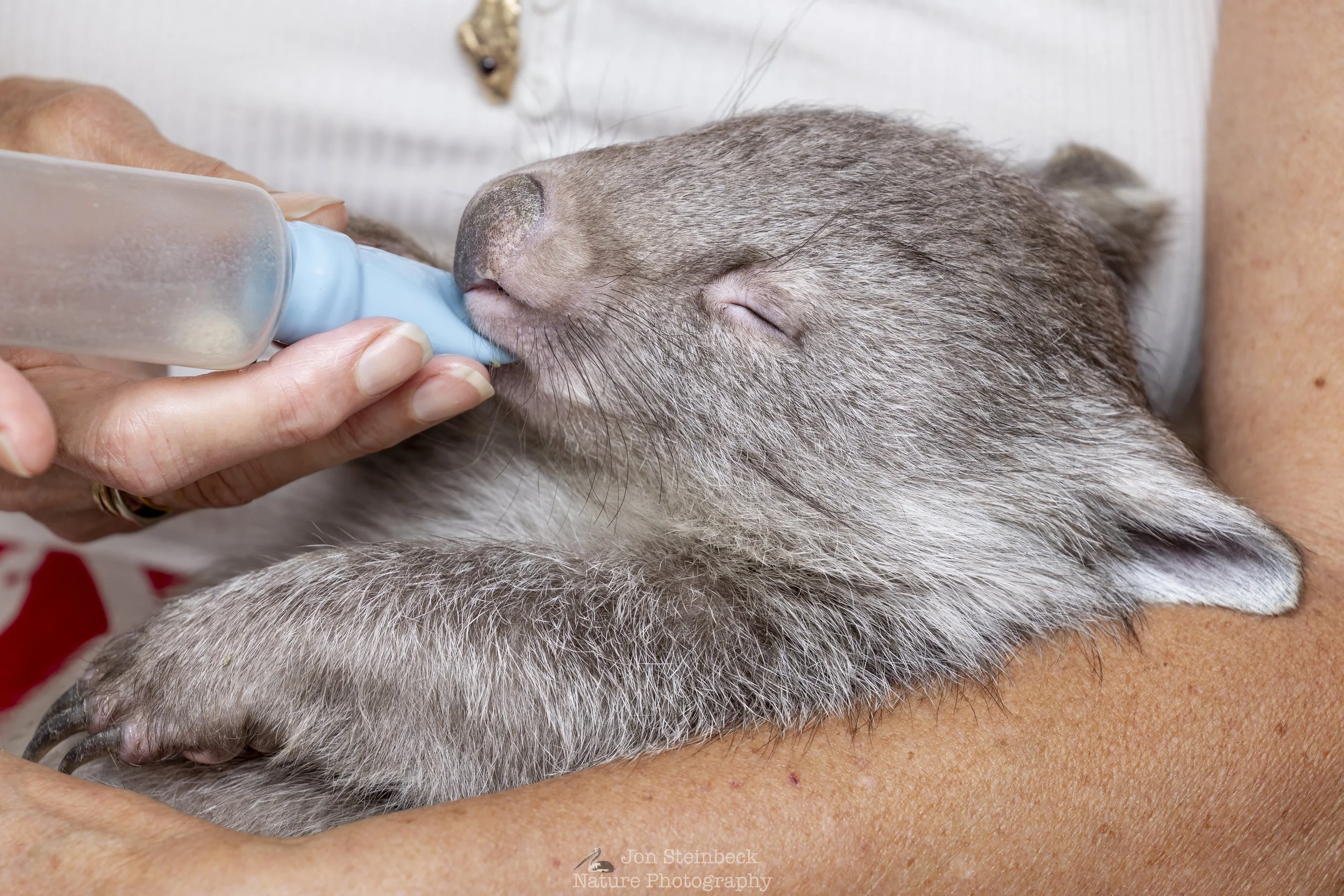
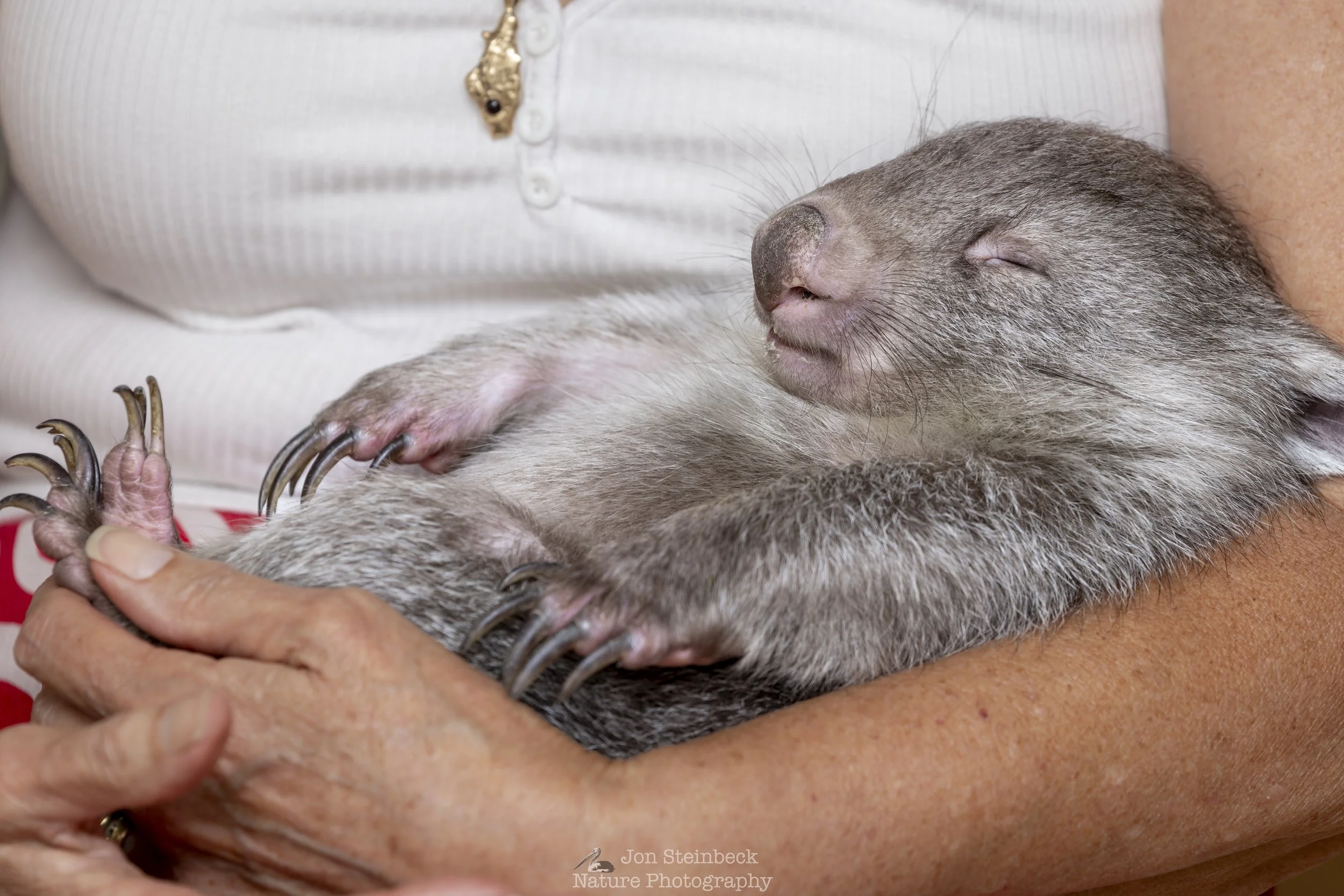
Rescued baby wombat with an ACT Wildlife volunteer
Canon EOS R5 Mk II with a Canon RF 24-70mm f/2.8L IS USM [ISO 50, 70mm, f/8.0 and 1/160])
ACT Wildlife is an organisation that looks after sick, injured and orphaned wildlife. I had an opportunity to meet some of their wonderful volunteers last year when I was doing an assignment for my photography course at CIT. I had to take off-camera flash portraits of people, and I wanted to try to incorporate wildlife into the assignment. One of the groups that bent over backwards to help me was ACT Wildlife. They were very busy at that time of year with orphaned baby wildlife but a number of their incredible volunteers literally opened their homes to help me out. Meeting the volunteers was a wonderful and eye-opening experience. A number of the volunteers had created significant pens and other enclosures in their backyards for the recovering wildlife. It is not easy building a tunnel system that will keep wombats in your backyard. Some those photos are on the ACT Wildlife Instagram page - wombats and possum.
After that experience, at the suggestion of the ACT Wildlife Social Media coordinator, I joined ACT Wildlife and I help out with photography. This week, I had the opportunity to meet up again with Lindy, the Crazy Wombat Lady of Instagram fame - if you haven’t seen her clips of the baby wombats that she cares for you really are missing out on extreme cuteness. She is an amazing person and so caring for her wildlife charges, which include more than just wombats. She is also a font of knowledge on wombats.
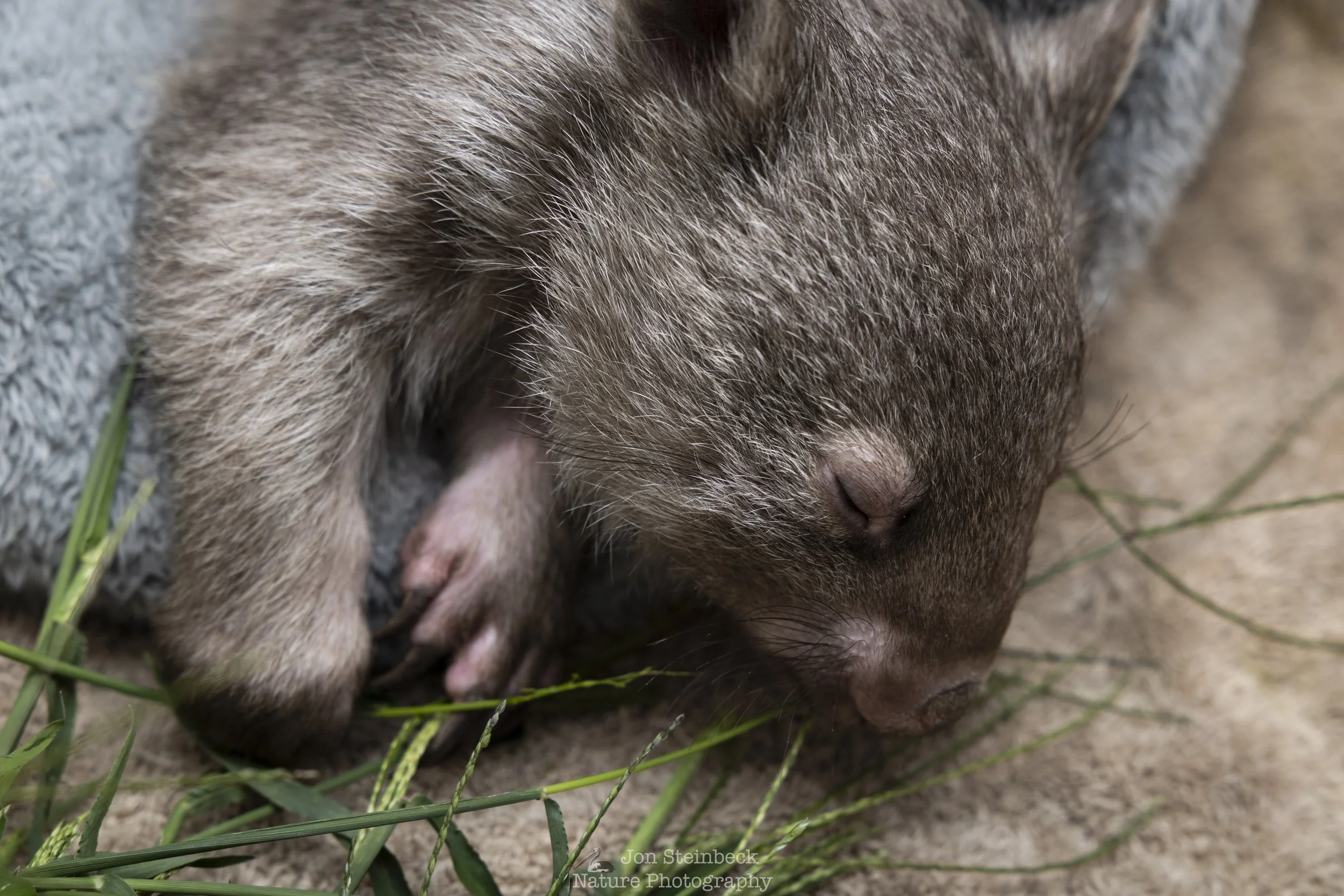
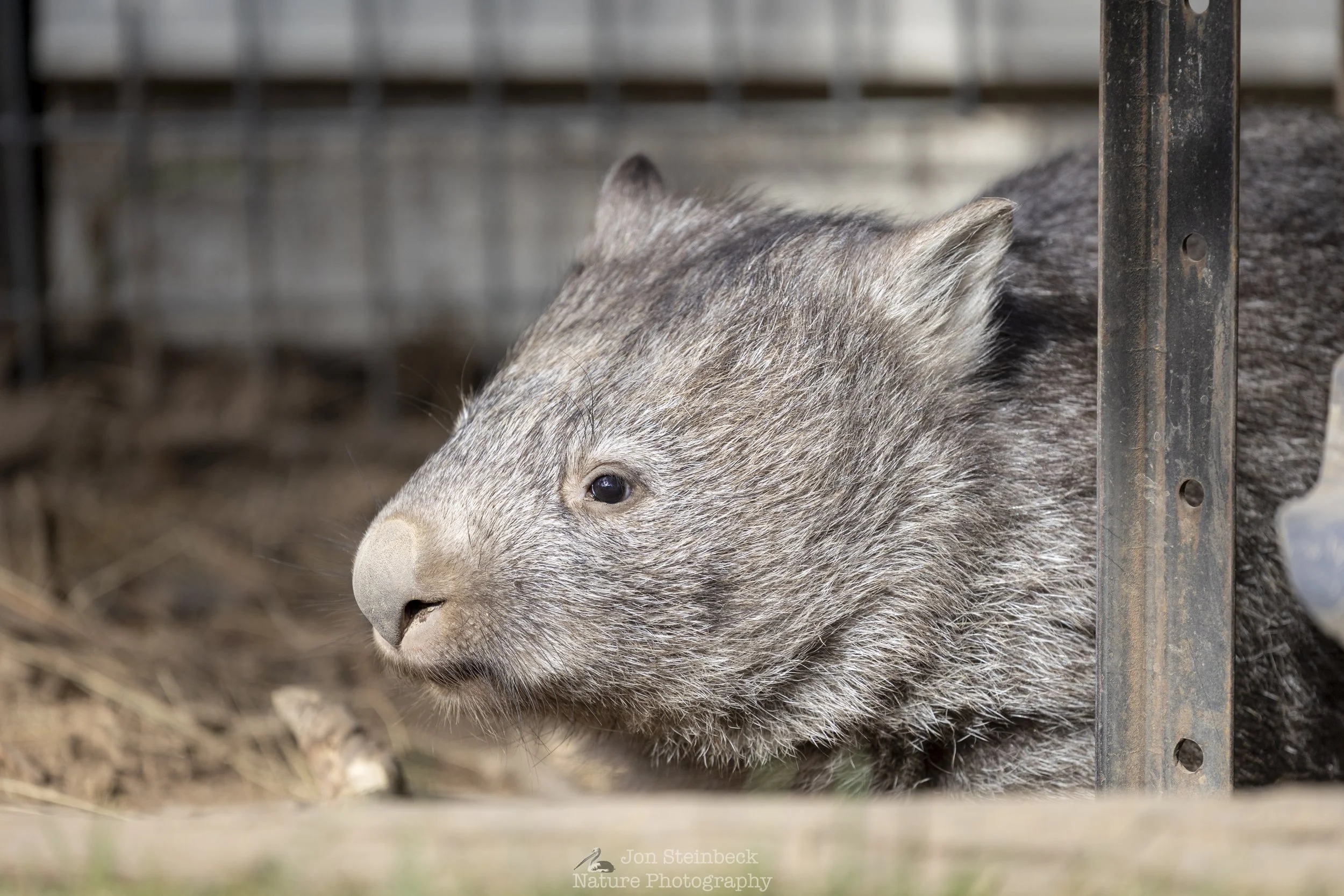
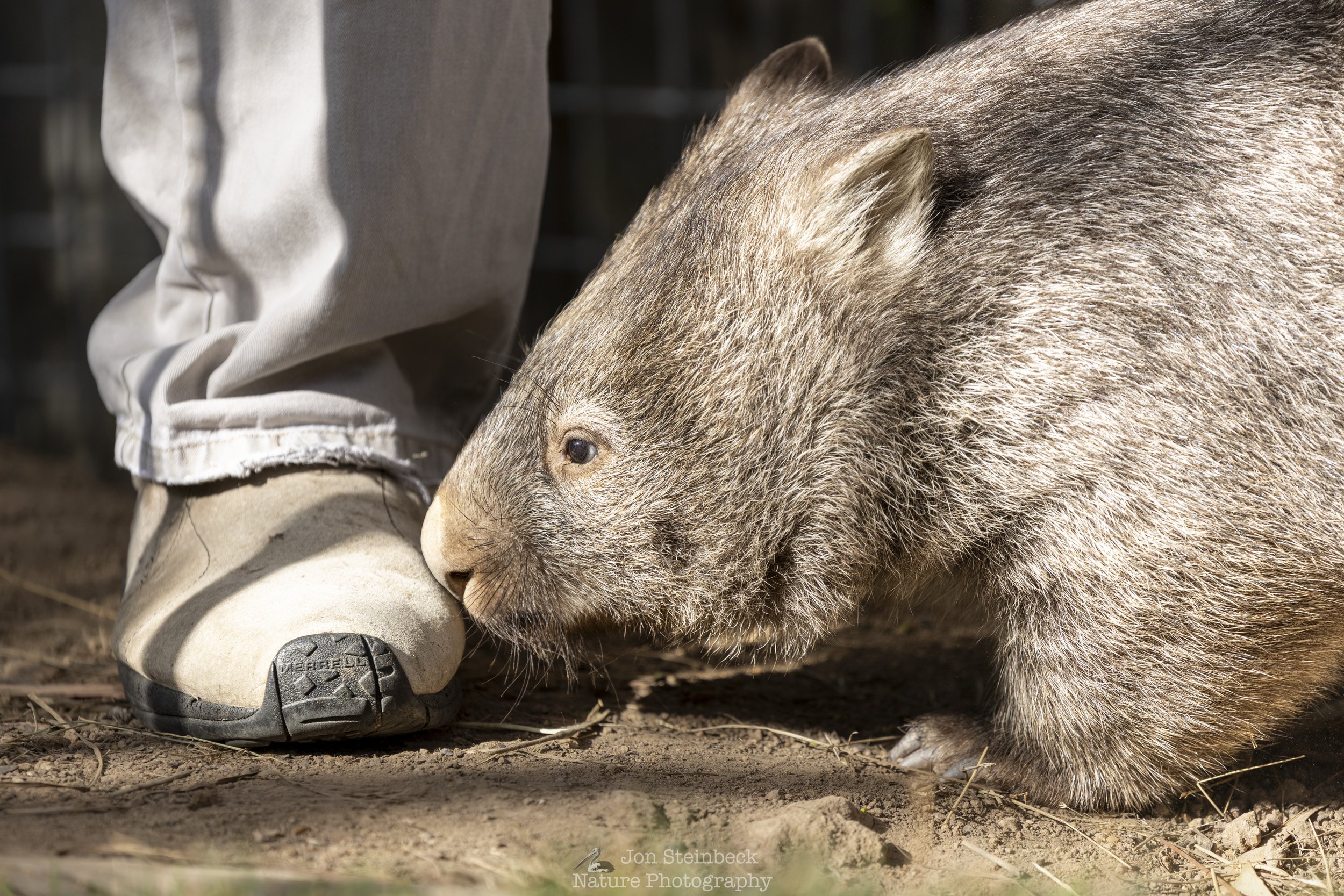
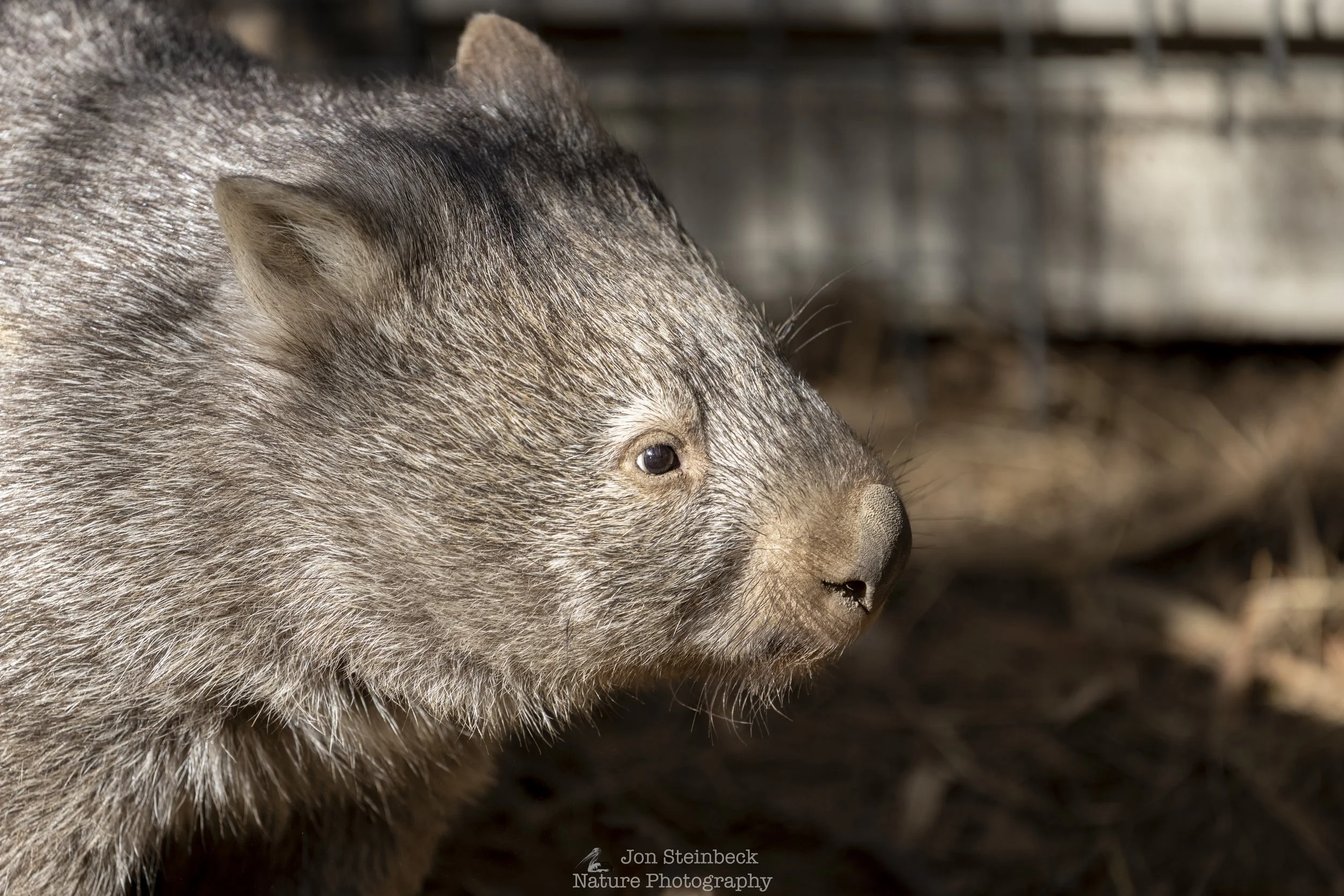
For me, it was one thing to read about wombats, quite another to see them up close. You can see in the photos the claws on the wombat that are useful for digging. In the wild those claws will be shorter because the constant digging helps wear them down. I had also read about the strong hindquarters of the wombat but feeling that solid plate of muscle really brought home why they are so safe from predators once they get their body down into their tunnels. Lindy also pointed out that the wombat mum doesn’t even see her baby because it is in her pouch, which faces backwards, to avoid dirt getting in. It is only when the baby leaves the pouch after several months that they really get to look at each other. The wombat that Lindy is feeding in the pictures would still spend much of its time in the pouch, while the larger wombat would probably occasionally be sticking its head back into the pouch for a drink of milk.
These cute babies have come to Lindy because their mums were killed by cars and somebody had the sense to check to see what was in the pouch. By law, ACT Wildlife must release these animals once the animals can look after themselves. So there are a number of wombats out in the wild that have been cared for by amazing volunteers like Lindy. If you would like to help with this important work, please feel free to head to ACT Wildlife’s webpage to donate or volunteer - https://actwildlife.net/
ACT Wildlife have more photos from the shoot on their Instagram.