Up close with a False Garden Mantis
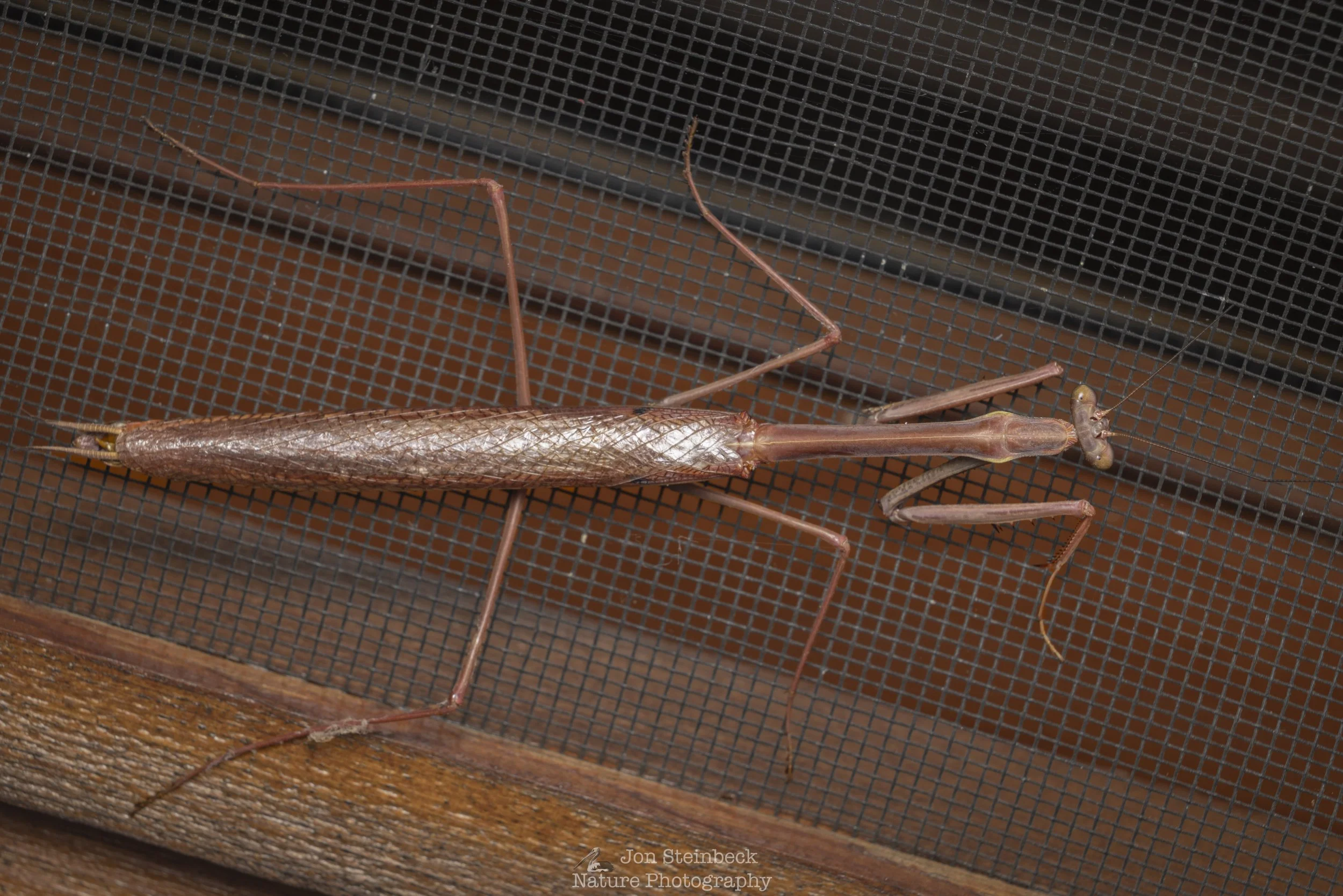
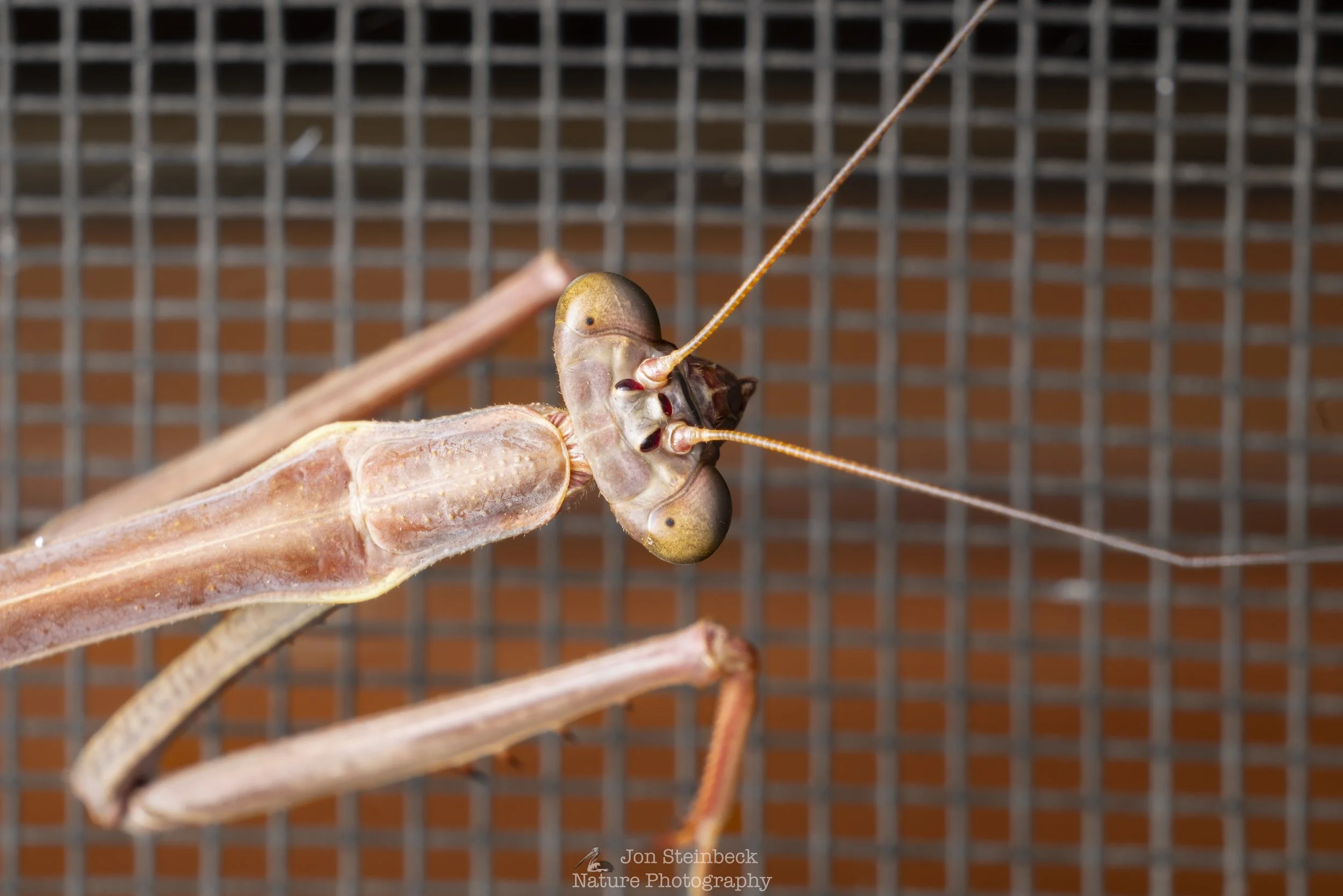
Upper body of a False Garden Mantis
Canon EOS R5 Mk II with a Canon RF 100mm f/2.8L Macro IS USM [ISO 100, 100mm, f/11 and 1/160] with Canon Speedlite EL-5 flash)
In December 2025 this male False Garden Mantis (Pseudomantis albofimbriata) was perched on one of our screen doors in Canberra so I practiced my macrophotography with him. The full wings give him away as a male, the female of this species have much shorter wings, meaning that she can’t really fly. These insects are normally green but also naturally occur as browns. The best way of identifying this species is the black mark on the inside of its intimidating forelegs. Unfortunately, the mark is not obvious in these shots.
Mantids make great subjects for macrophotography because they are normally large insects and they have amazing heads. The two large compound highs with the false or pseudo pupils, it is a trick of the light, creating the black spot among the multitude of lens in the compound eyes. A mantid doesn’t have a pupil, we are just seeing several lens of the compound eye appearing like a pupil because of the way the light is passing through them. Mantids also have a three ocelli, another type of ‘simple’ eye. Scientists believe that these are for monitoring light levels, and keeping insects upright when they are flying. Finally, the overall triangular, alien-looking head, culminating in their ferocious looking mouth parts. All these physical facets combine to make them a brilliant subject for macrophotography.