
Photographing Alpine Dingoes again
Male Alpine Dingo looking at me
Canon EOS R1 with a Canon RF 200-800mm F6.3-9 IS USM Lens [ISO 800, 800mm, f/9.0 and 1/1600])
I couldn’t help myself. I had to go back to Namadgi National Park, to photograph the Alpine Dingoes (Canis lupus dingo) again. I really love these incredible looking animals and on that Friday morning in mid-July, I was hoping to take more photos of these visually stunning animals. I had been out one other time since my first time photographing the dingoes, but that second time, I heard them, but I didn’t see any. This time, I really hoped that I would be more successful.
I arrived at the area just after 7AM and my car thermometer was reading -4° Celsius. There was frost all on the ground and the dirt of the fire trail I walked along, was frozen. I kept walking further up the valley and saw many Eastern Grey Kangaroos and birds. I also thoroughly enjoyed being in the moment and watching the sun’s rays slowly light up different parts of the valley as it rose.
After a little while, I arrived at the spot where I had spent most of my time on my second visit to this area. There was large rock, almost as tall as me, which was convenient for letting me rest my camera for shooting while I was standing. I l also thought that it provided some concealment for me from animals in the valley. While I was standing behind the rock, I saw two to three dingoes across the valley, about 1.5km away. They were headed in a roughly northerly direction, just below the tree line. Two of them were out the front and seemed to be playing, while the third was about 20 metres behind them. I knew that I wouldn’t be able to catch up to them but I decided to head closer to where they had been, just in case that was a common route for dingoes.
I moved down from the position that I had been in, more out into the open valley and immediately, large numbers of kangaroos, started moving away from me. I figured that I was further away from them than the dingoes had been to some other kangaroo mobs but it seemed that my appearance was more concerning to the kangaroos than the movements of the dingoes.
Pied dingo and light coloured dingo across the valley and heading north
Canon EOS R1 with a Canon RF 200-800mm F6.3-9 IS USM Lens [ISO 1250, 800mm, f/9.0 and 1/1600])
While moving across the valley, I saw three more dingoes, including one with black and white fur. They were also heading north. Despite the kangaroos moving from my approach, I used some raised ground between me and the dingoes to mask my approach. When I crested that raised ground, I could still see the dingoes so I moved towards an area with two large groups of rocks. The two groups of rocks were on a slightly raised area and there was about 20 metres seperating the two groups of rocks. The northern group was taller, but the southern group was wider, and both groups, were separately the size of decent three-bedroom houses. The southern group had more vegetation around it than the northern group, but I decided to climb the gentle back slope of the northern group to get some height for observing the dingoes.
From the top of the rocks, I could still see two of the three dingoes. Some of the kangaroos on the wide grassy area in front of the rock, and further up the rising ground from me, started to descend to closer to the rock, possibly because of the dingoes. I then saw the lighter coloured dingo give a half-hearted chase to a Swamp Wallaby, but the wallaby saw the dingo and bounded off with plenty of distance between it and its pursuer. The dingoes eventually disappeared into the bush on a northerly route and I didn’t see them again, despite kangaroos regularly hopping away from that area.
Because there were kangaroos still moving away from that area where the dingoes had headed, I stayed on top of the rock in case dingoes chased an Eastern Grey Kangaroos towards the rock.
While I was waiting for that to happen, I heard, and then saw, two kangaroos hop past the north side of the rock. I turned further around to see what had caused that, and I saw a light-coloured dingo hunting kangaroos behind me. While, it was chasing kangaroos in the opposite direction from where I was, it was roughly on the way that I needed to head to return to my car, so I was hoping that I might see the dingo again on my way back to my vehicle. I descended from the rock only to see a dingo was sitting on the fire trail that I had walked along.
Male Alpine Dingo
Canon EOS R1 with a Canon RF 200-800mm F6.3-9 IS USM Lens [ISO 800, 371mm, f/9.0 and 1/1600])
Once I was on the fire trail as well, the dingo moved away from me. Again, I was fortunate, and I used a rise in the ground to conceal me while I tried to approach closer to it. It appeared again from behind the raised ground and was heading in the general direction of the southern large group of rocks. I was able to approach a bit closer, and the dingo didn’t seem that concerned. It kept walking purposely, but not in a rushed way, and moved into some bush on the southern side of the southern large rock. I realised that I could moved around the northern side of that rock to photograph the dingo when it emerged. So, I moved quickly around the other side of the rock but then I saw that the dingo was already through the bush and was just ahead of me. I wondered how it had done that, because l was sure that I had moved faster than it had.
Head shot of the male
Canon EOS R1 with a Canon RF 200-800mm F6.3-9 IS USM Lens [ISO 800, 800mm, f/9.0 and 1/1600])
This was a male dingo, and it headed north-west away from the large southern group of rocks to several smaller rocks, but it did not re-appear once it gone between a couple of them. I moved closer, but I went around the rocks so as not to spook the dingo if it was waiting there. Moving around the rocks, I could see that the dingo was looking out from between the rocks, and then it looked at me. It moved north of the rocks, and turned to retrace its steps. I noticed that it was often looking past me, making me glance over my shoulder where I saw a second dingo back beside the southern group of rocks. I realised that it was probably the first dingo that I had followed when it went into the bush beside those rocks, and the other dingo was already past the bush, waiting in the clear area when I appeared.
Alpine Dingo pair, showing size comparison - female in front and male behind
Canon EOS R1 with a Canon RF 200-800mm F6.3-9 IS USM Lens [ISO 800, 800mm, f/9.0 and 1/1600])
The male headed back to the other dingo, which was a female, and they were probably a breeding pair. I was worried that the southern rocks might have been their den. The male dingo stayed near the southern rocks, while the female moved forward, roughly along the way that he had just walked forward. She circled the area and howled while out in the open in front of me.
Female Alpine Dingo
Canon EOS R1 with a Canon RF 200-800mm F6.3-9 IS USM Lens [ISO 800, 400mm, f/9.0 and 1/1600])
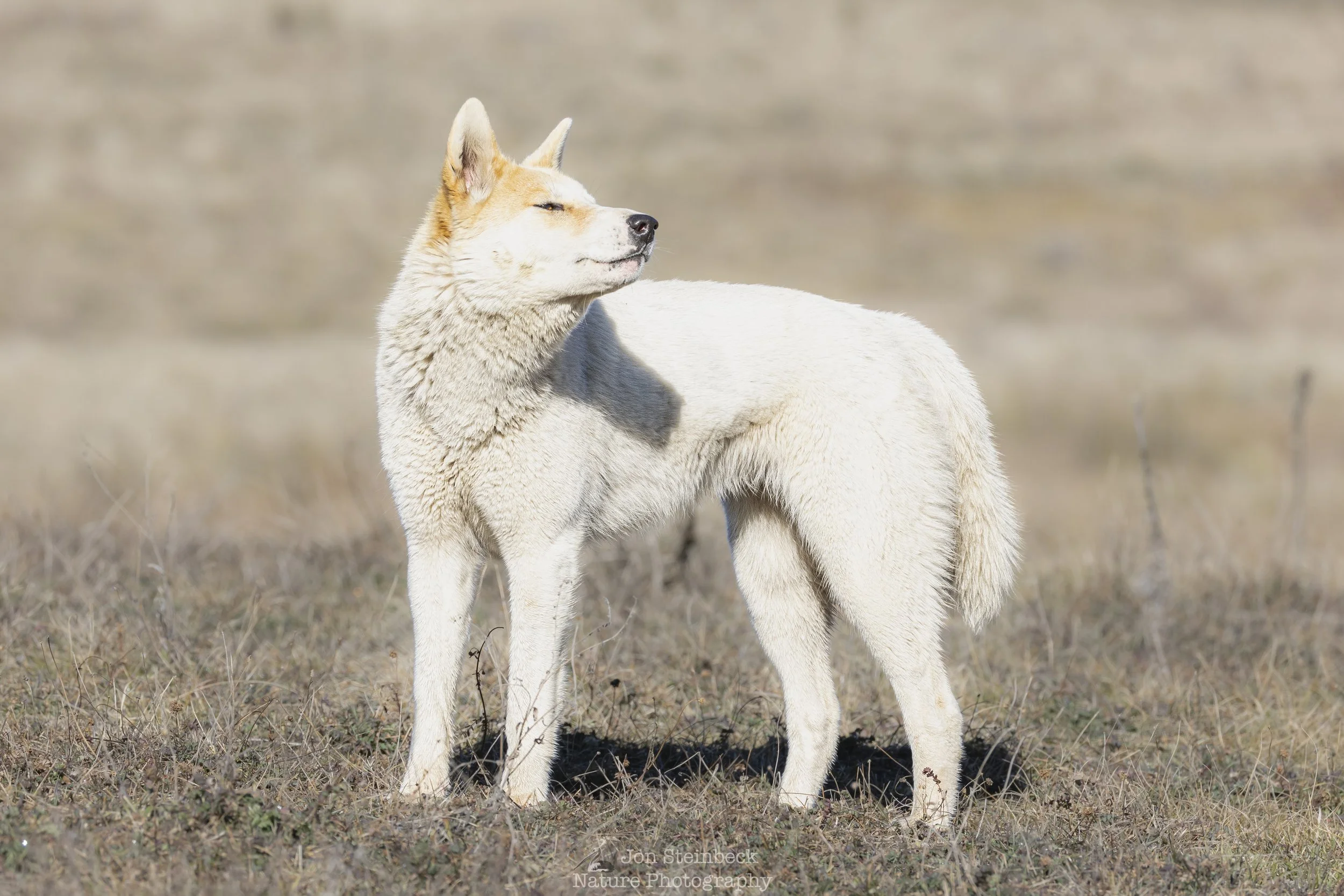
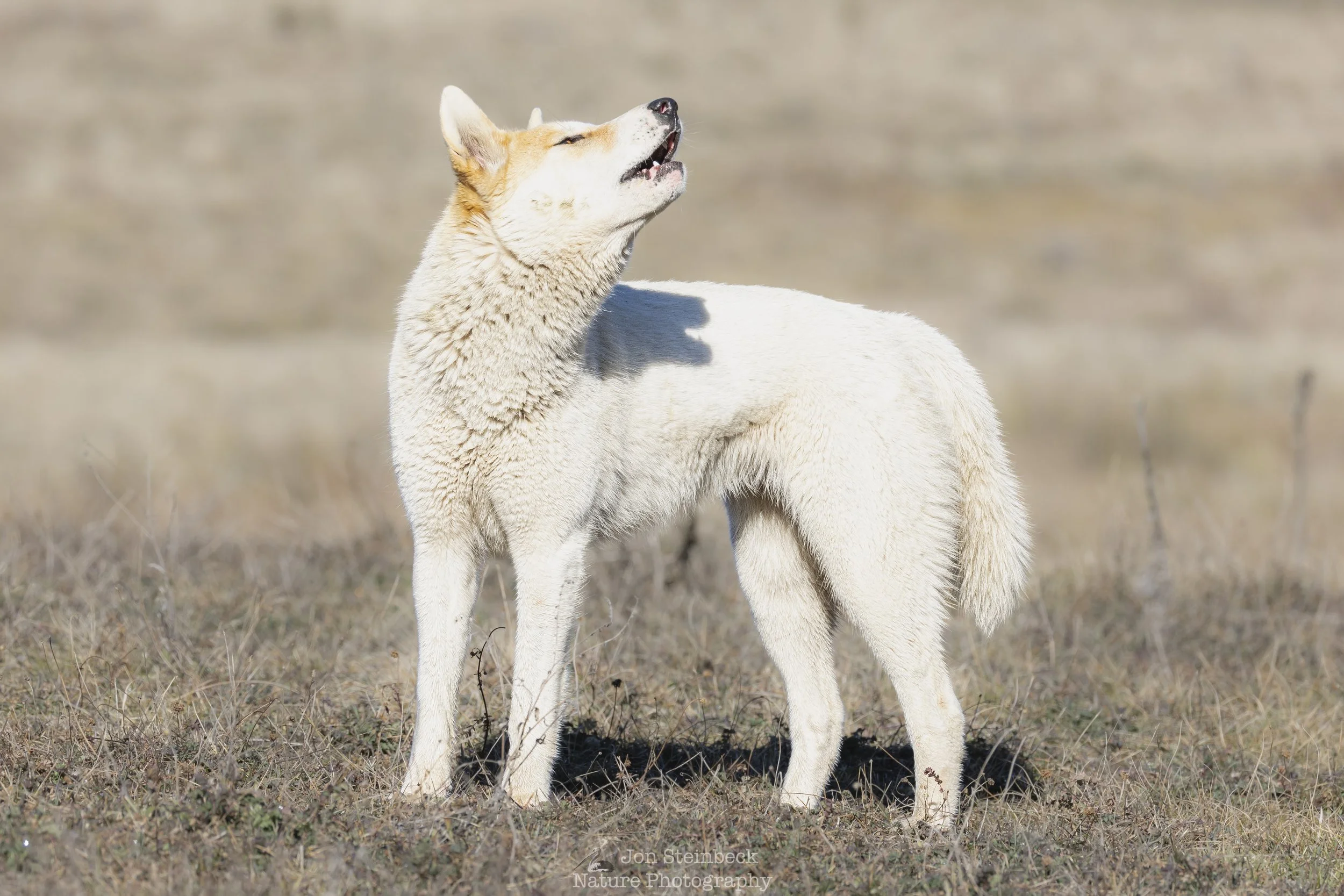
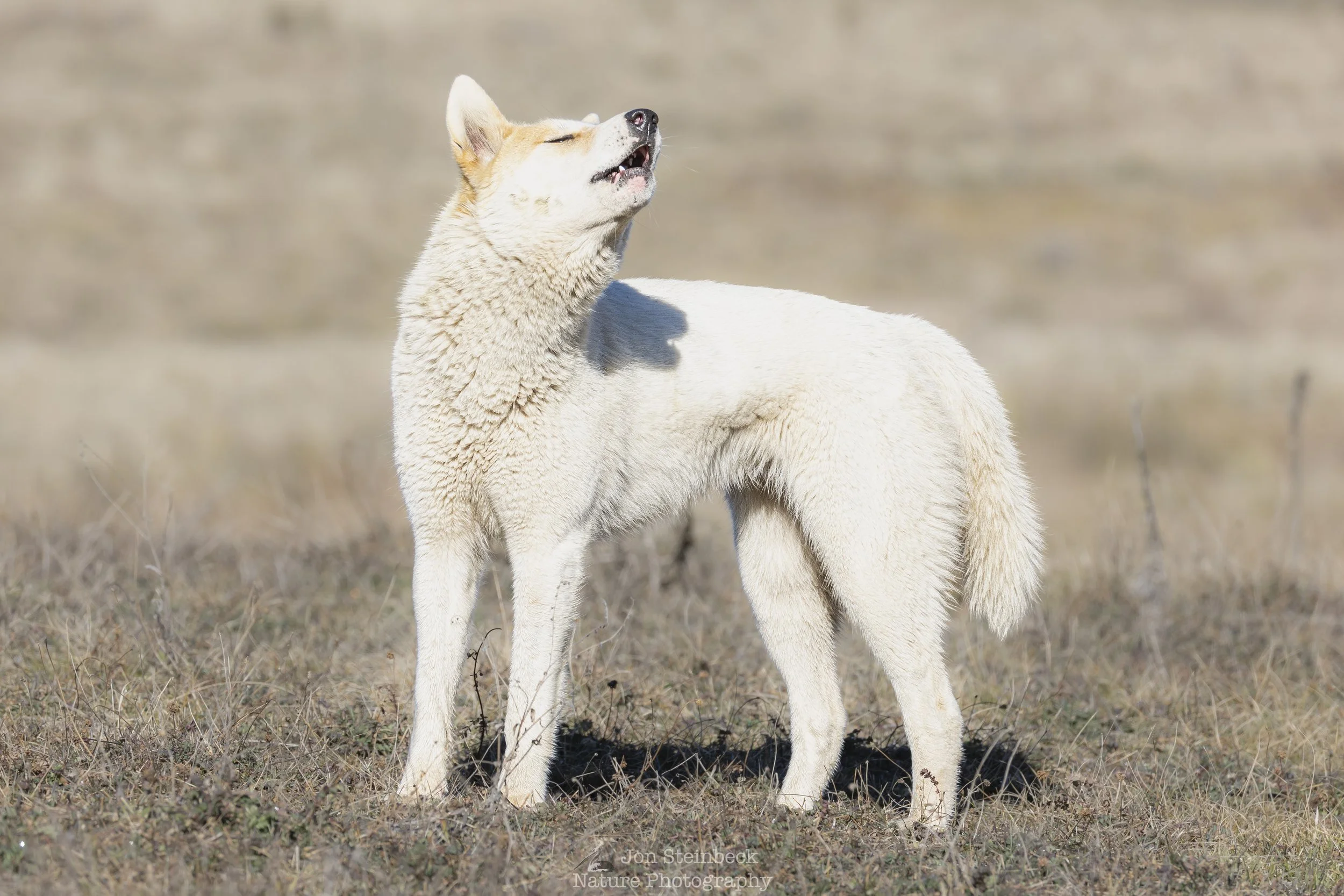
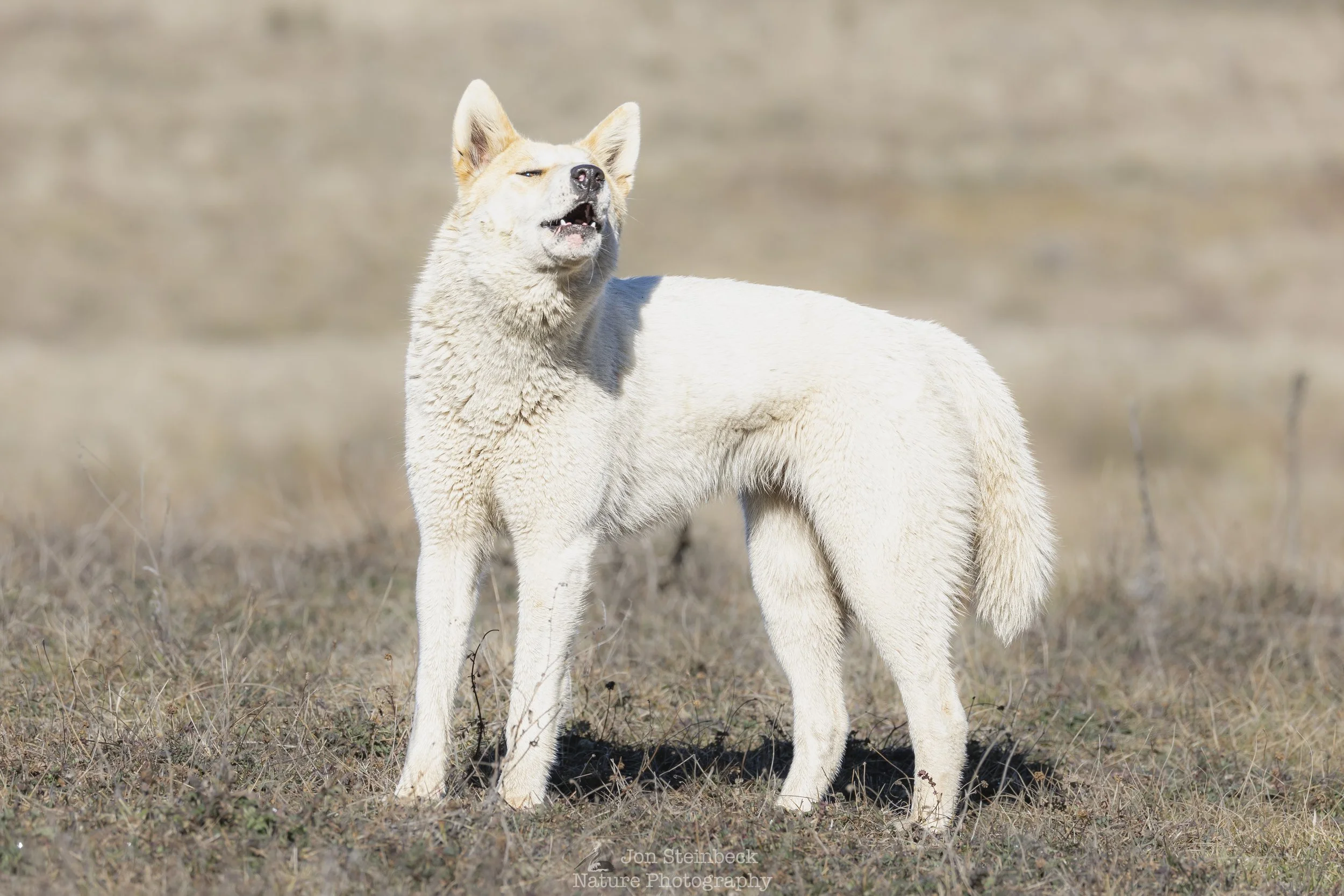
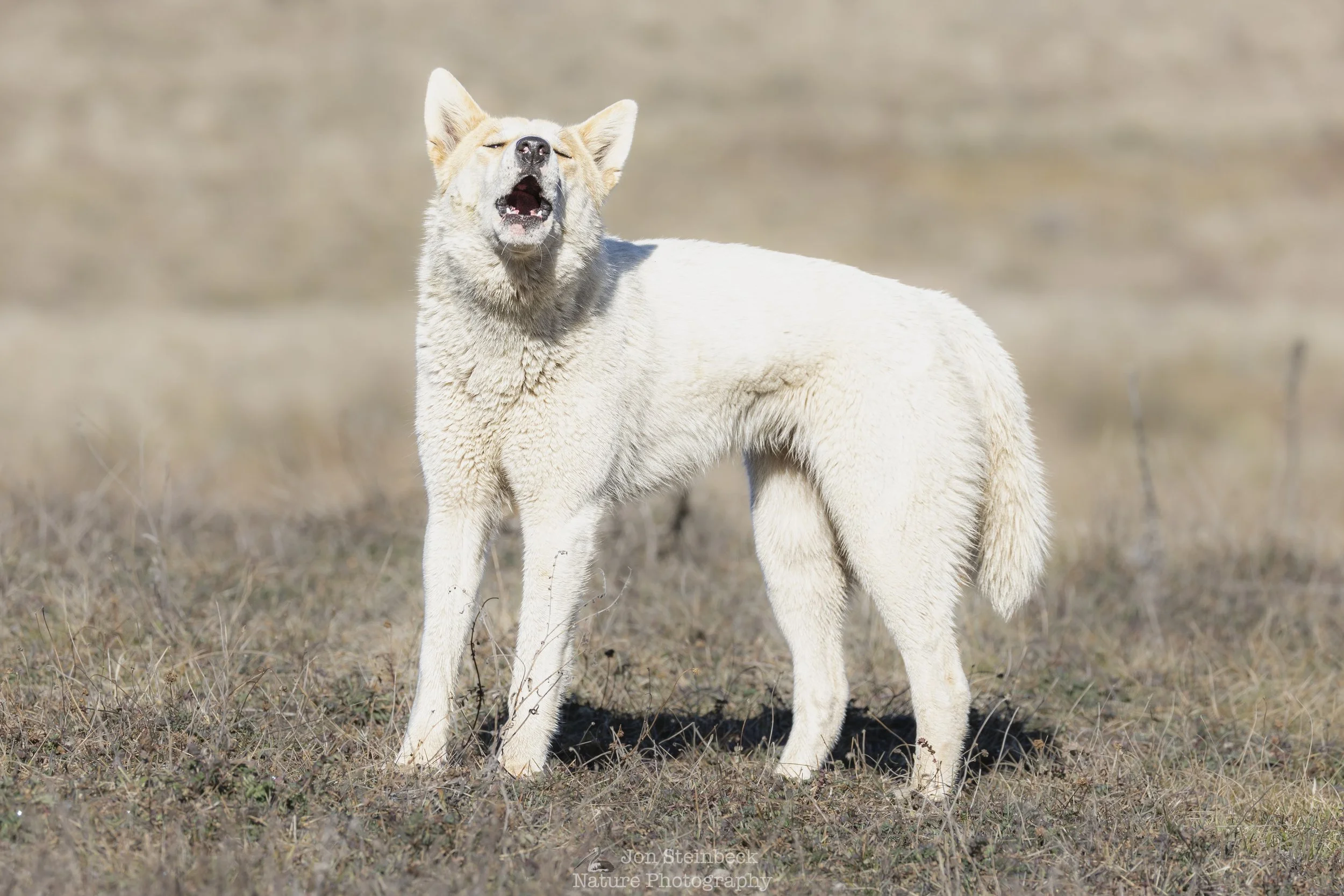
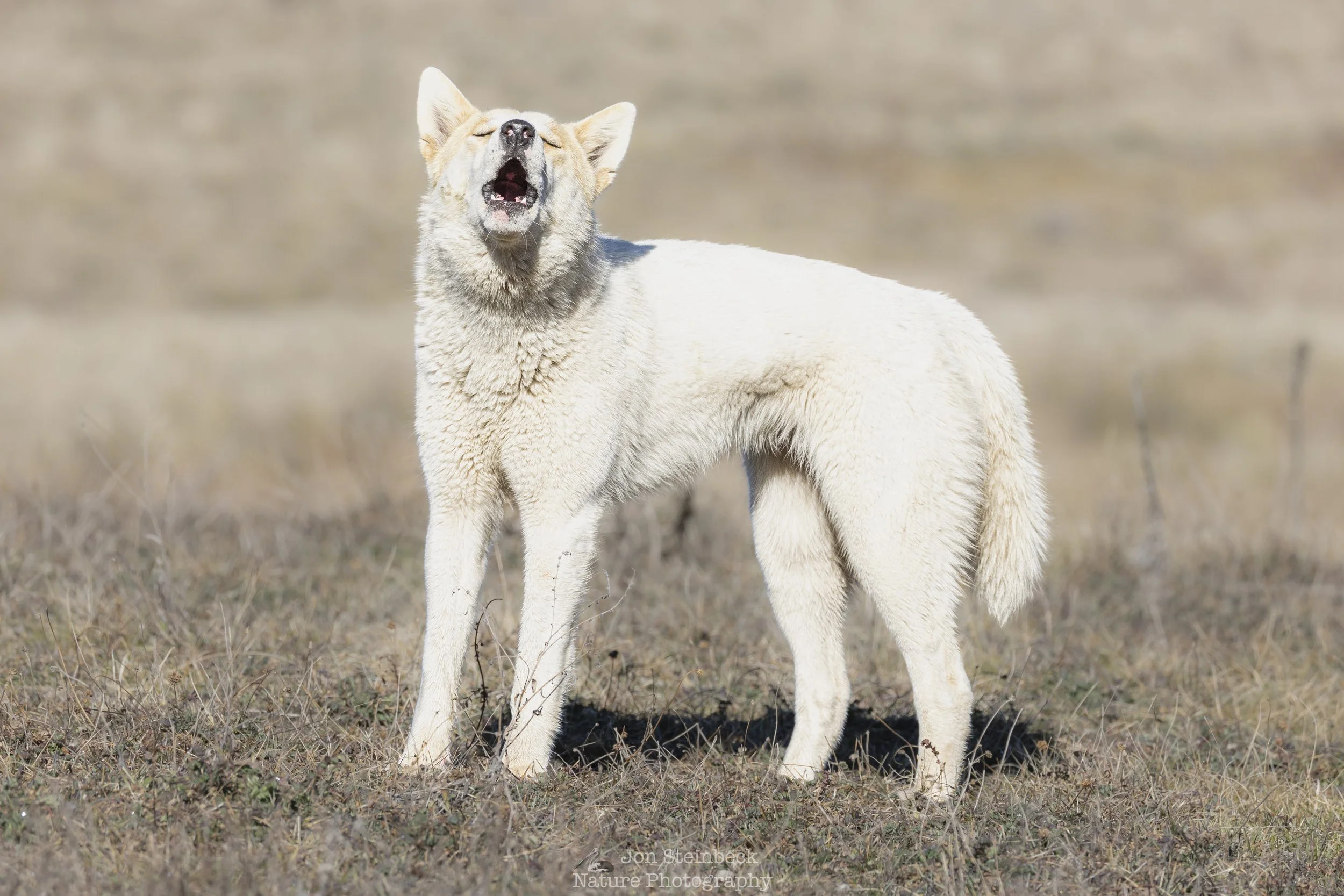
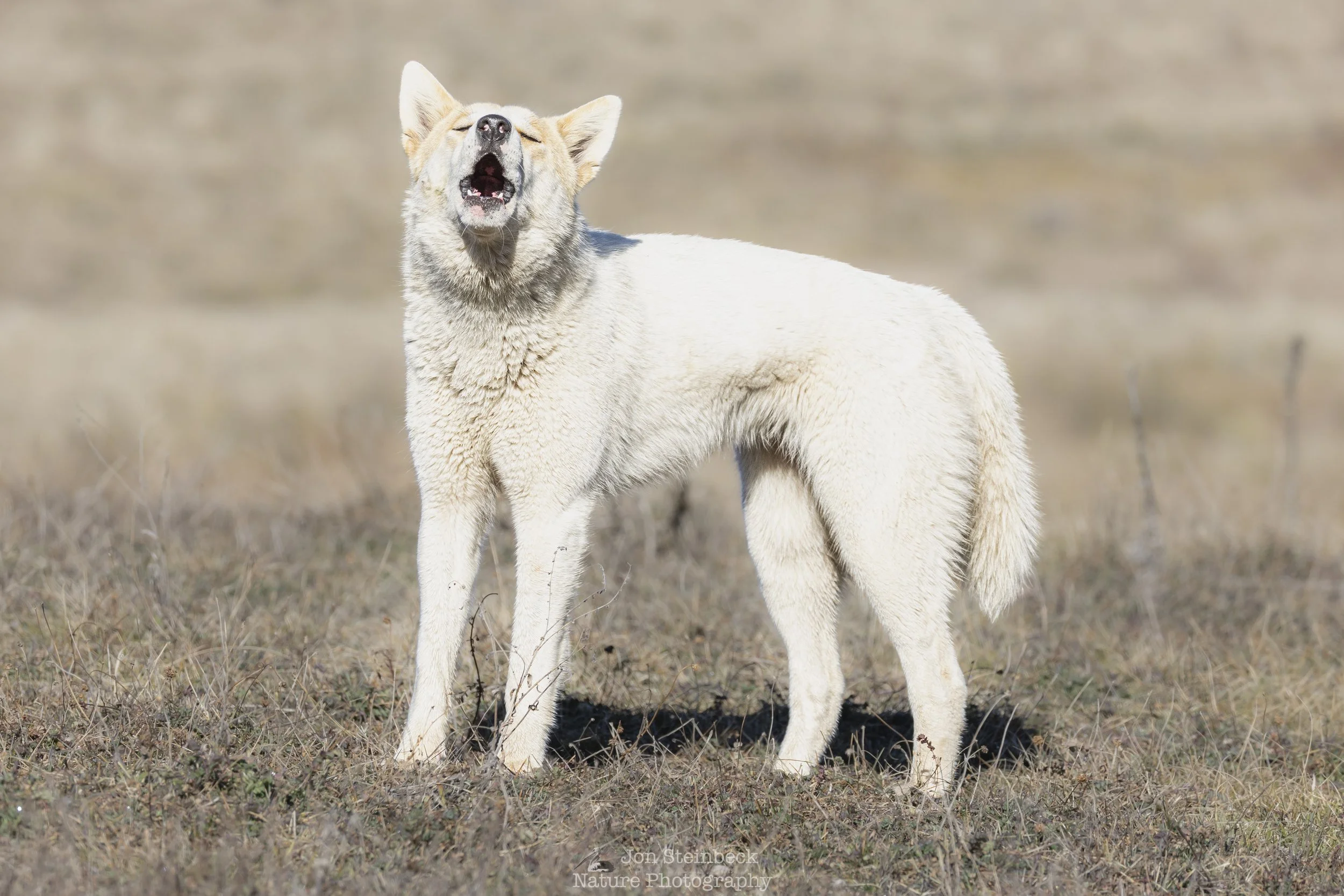
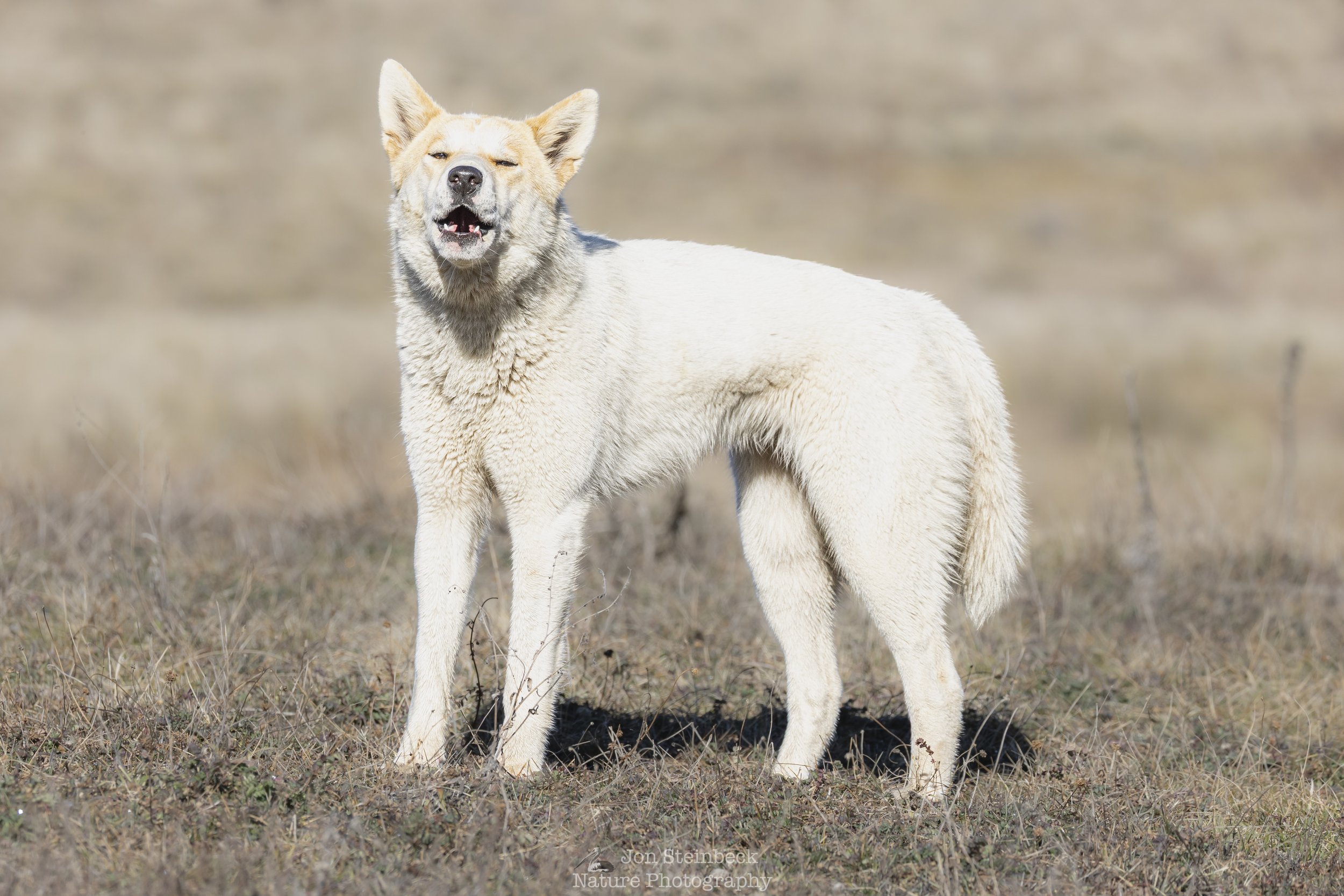
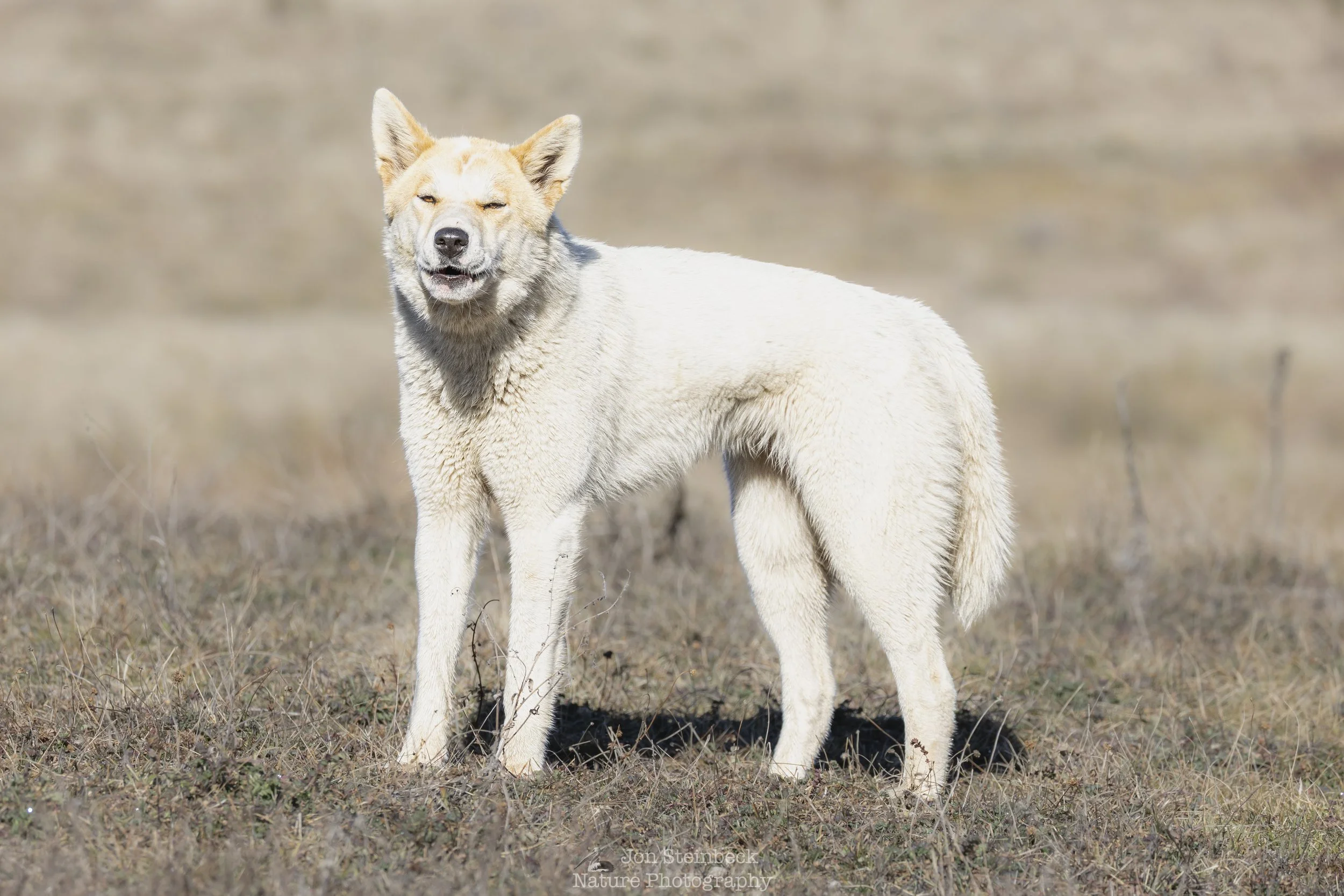
The howl
After the howling, I decided that it was a good time to leave the area, in case it was a den. I moved north around the northern rock group, so as to put as much distance between me and the southern rocks, just in case it was their den. The dingoes moved around the rock as well but eventually headed north while I moved south back towards where my car was.
The two dingoes, male on left and female on the right, heading to the north
Canon EOS R1 with a Canon RF 200-800mm F6.3-9 IS USM Lens [ISO 800, 227mm, f/9.0 and 1/1600])
Alpine Dingo scat, with fur among the remains
Canon EOS R1 with a Canon RF 200-800mm F6.3-9 IS USM Lens [ISO 800, 214mm, f/9.0 and 1/1600])
Walking back to the car, I came across some dingo scat, typically black and with remnants of fur in it, which means that the dingoes are eating mammals. I saw some older dingo scat as well, in the area, which means that the dingoes are probably routinely active there.
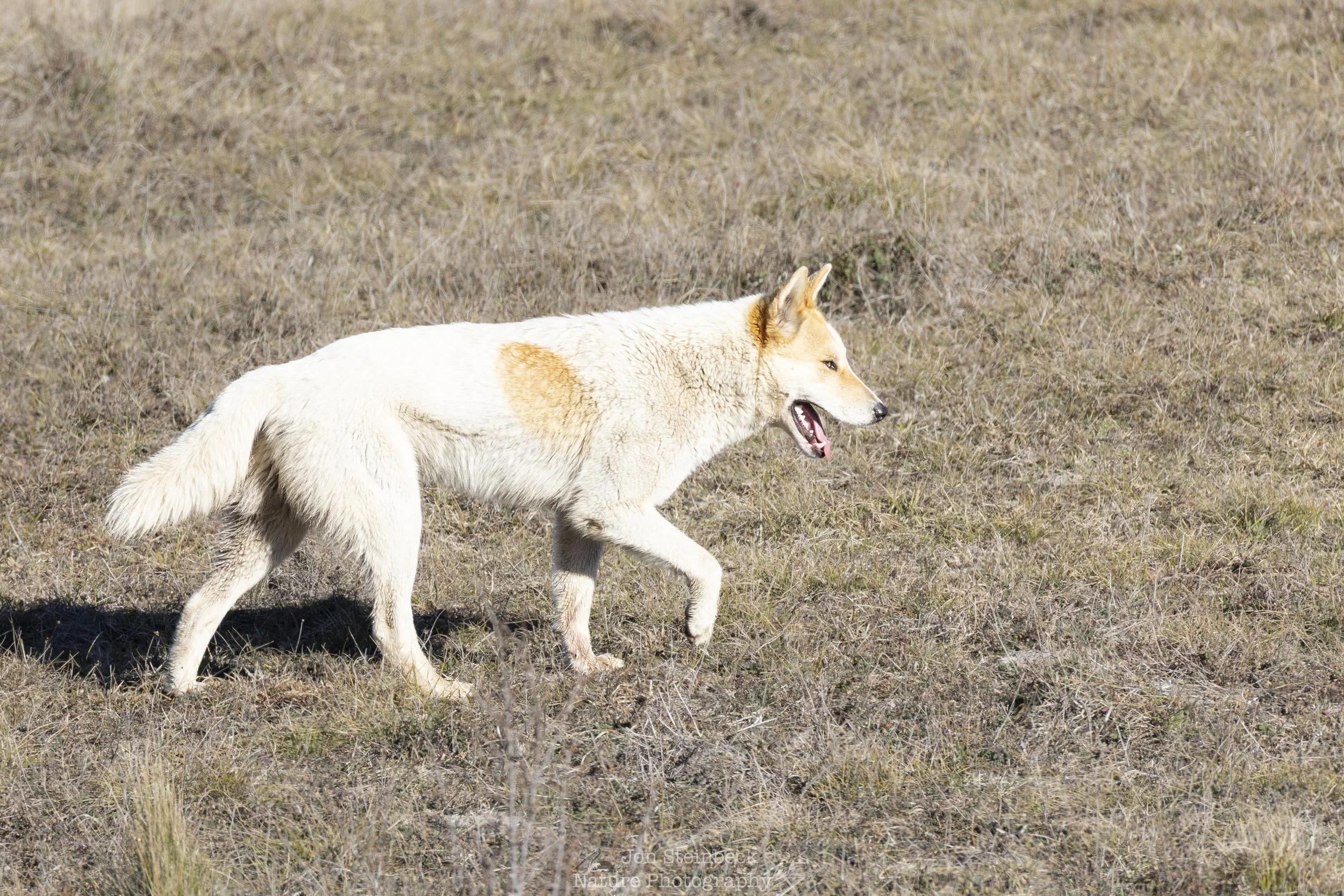
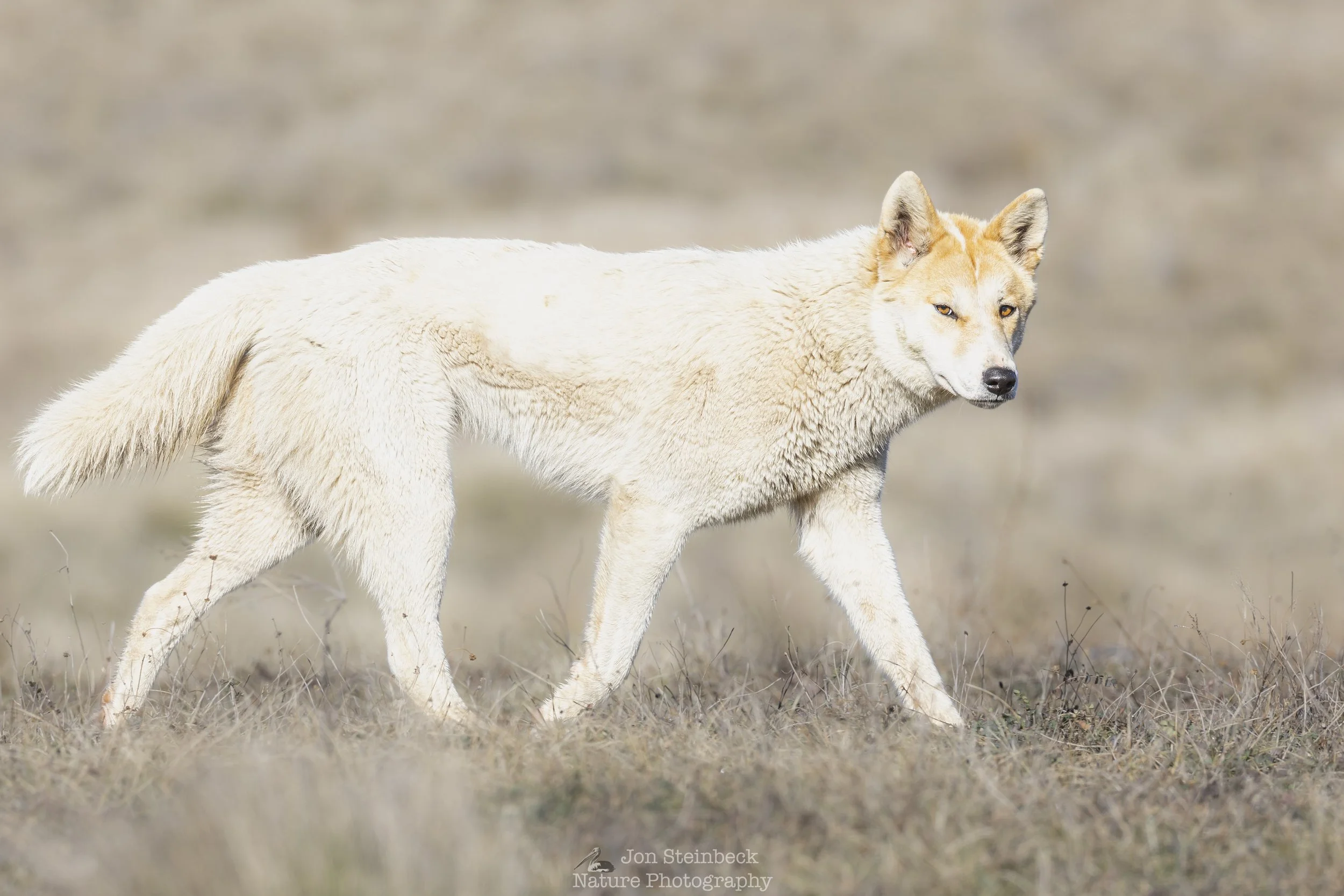
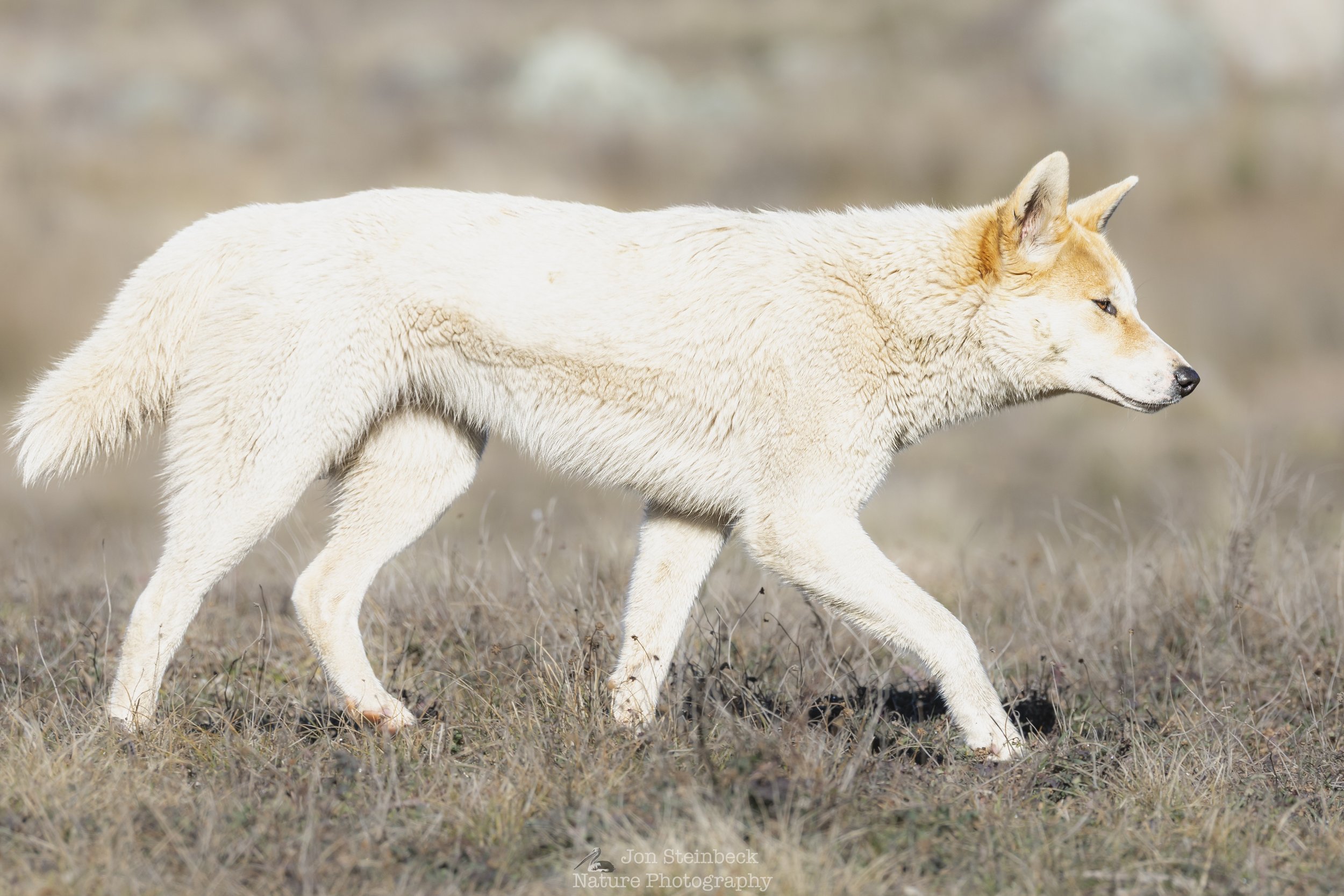
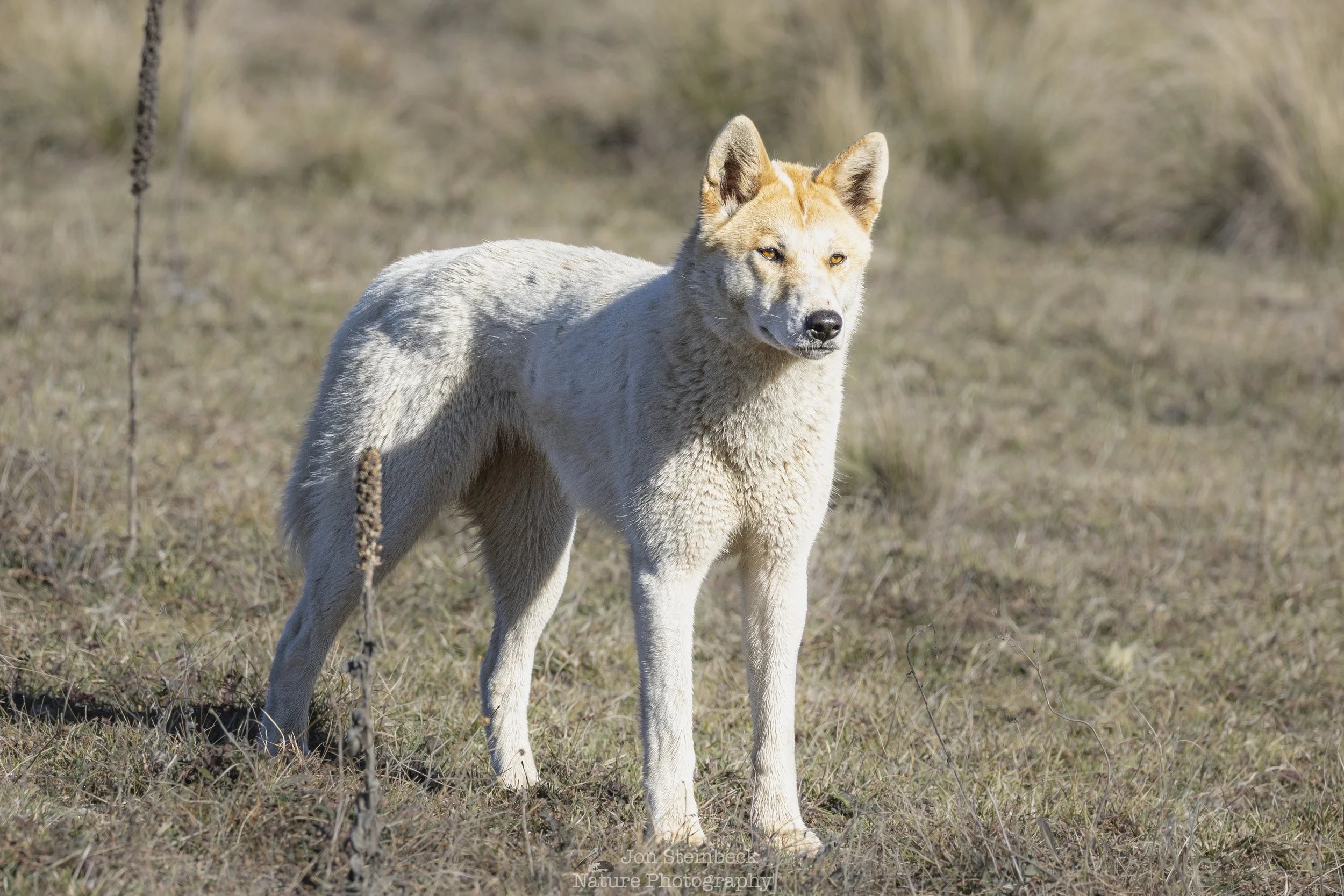
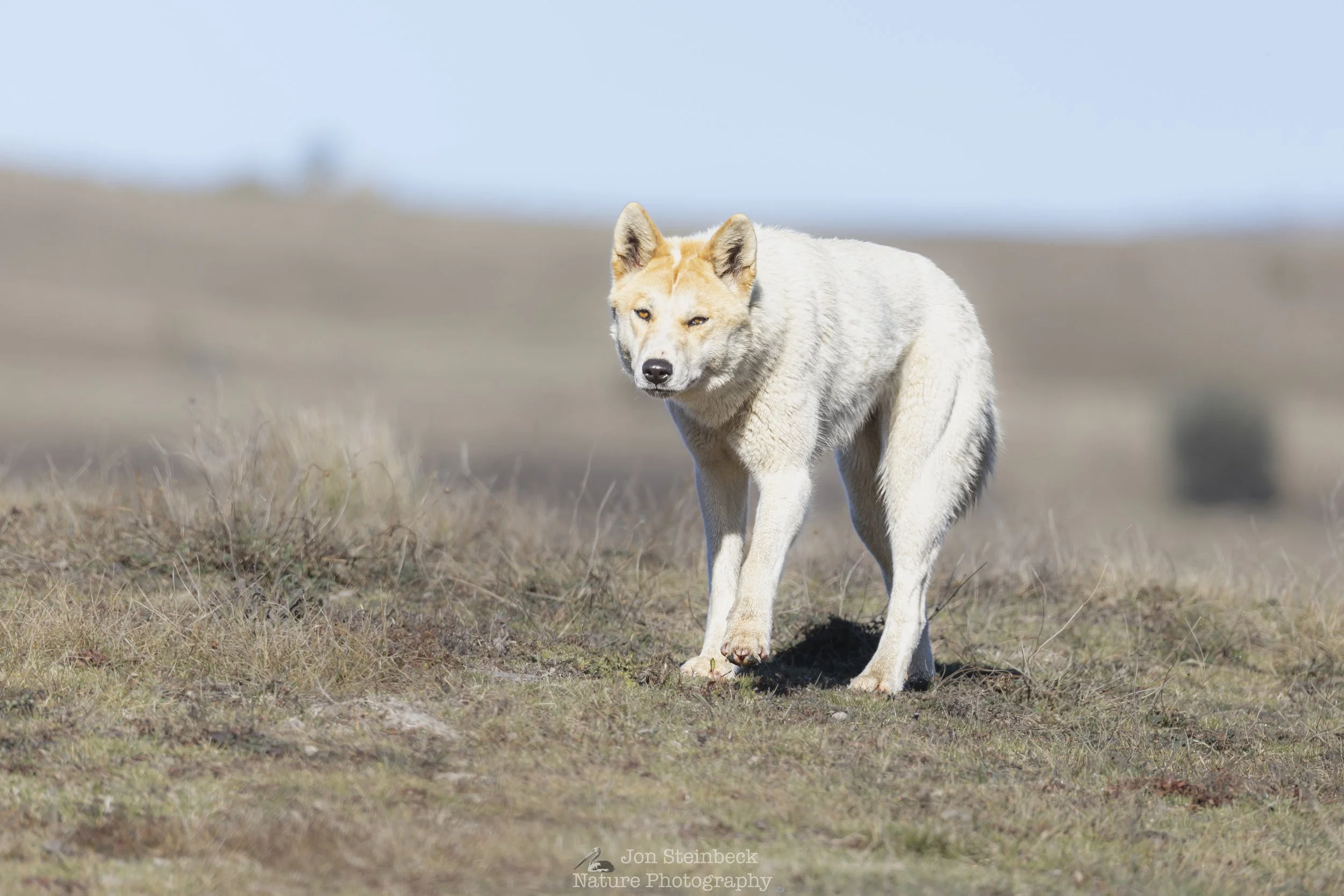
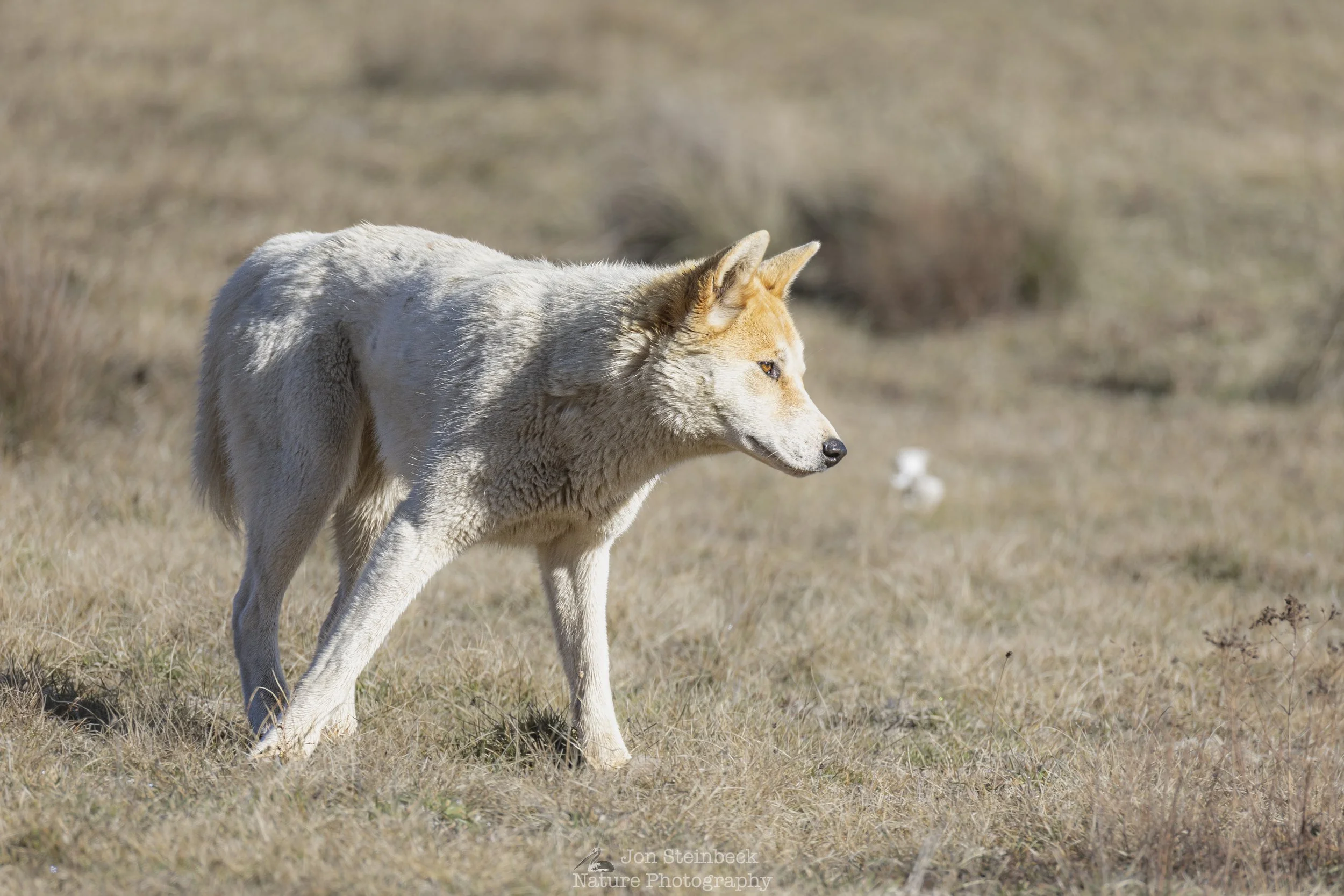
A gallery of more images
In researching this post I saw that a PhD student from the University of New South Wales, James Vandersteen, is researching this group of Alpine Dingoes to understand them. He is specifically trying to understand their role as apex predators to see how they impact the ecosystem in Namadgi. I look forward to reading his research about these amazing creatures.
I had an amazing experience that morning, with two wild Alpine Dingoes so close to me, but not aggressive, but also not afraid, wary perhaps, but not running away from me. That interaction, further cemented my wonderment for these beautiful animals. I can see how the dingo is a descendant of the wolf, and the winter coat of the Alpine Dingo helps to show that lineage. I was buzzing after my encounter with the pair of dingoes, and I feel so fortunate to have experienced them wild, in nature, and I hope that future generations can also feel what I did.
