Bar-tailed Godwits wintering in Narooma
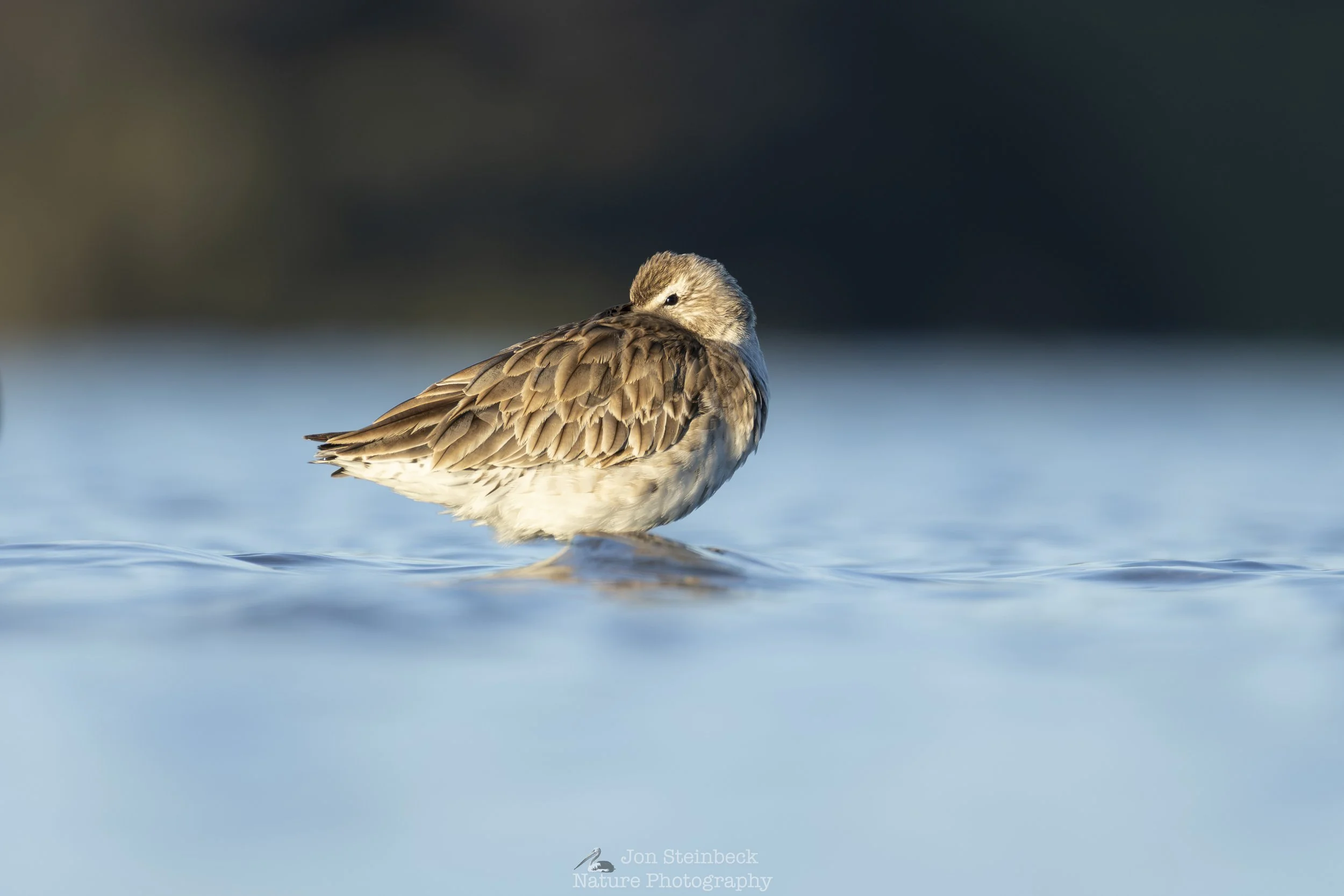
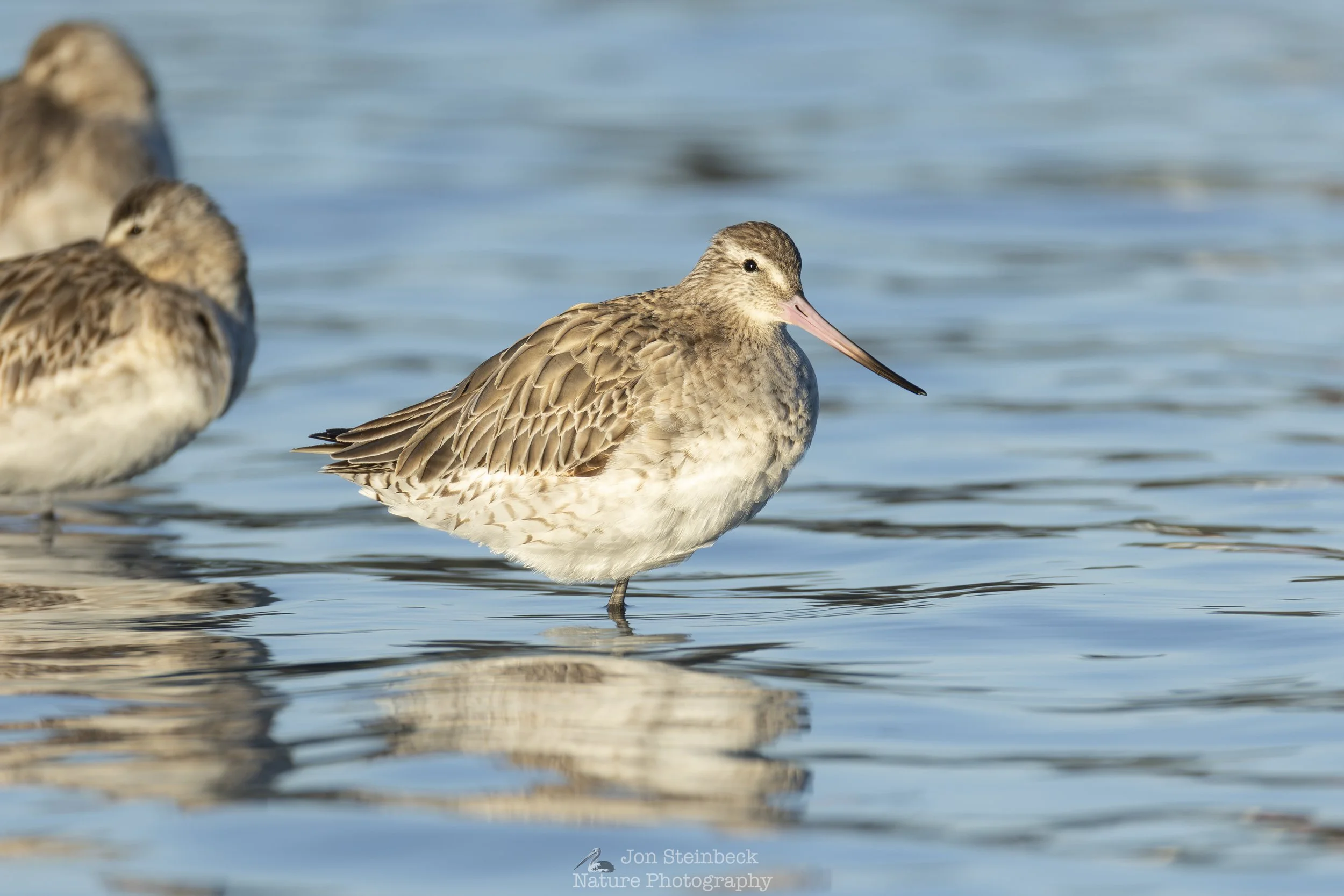
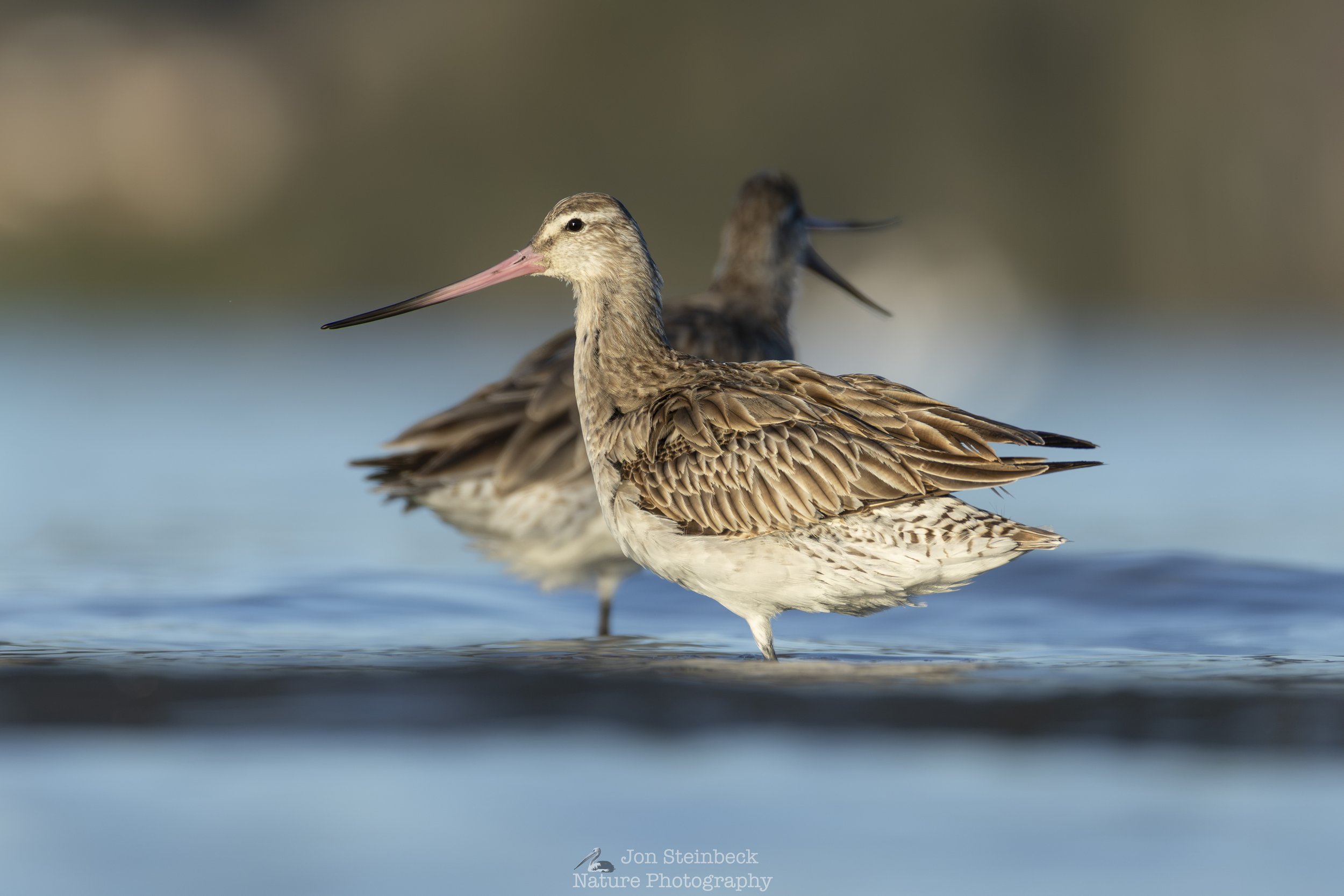
Bar-tailed Godwit in the shallow water of Wagonga Inlet, Narooma
Canon EOS R1 with a Canon RF 200-800mm F6.3-9 IS USM Lens [ISO 1250, 800mm, f/9.0 and 1/1600])
These Bar-tailed Godwits (Limosa lapponica) were part of a small number that resist the migration urge and remain in Australia over winter. Most godwits leave Australia in April and May, flying north to their breeding grounds in the high latitudes of the Northern Hemisphere. Godwits undertake the longest non-stop bird migration, with one individual flying 13 500km from Alaska to Tasmania in only 11 days non-stop. This flight takes a toll on the birds and they arrive with much reduced body weight, needing rapidly to replenish their energy levels upon arrival in Australia.
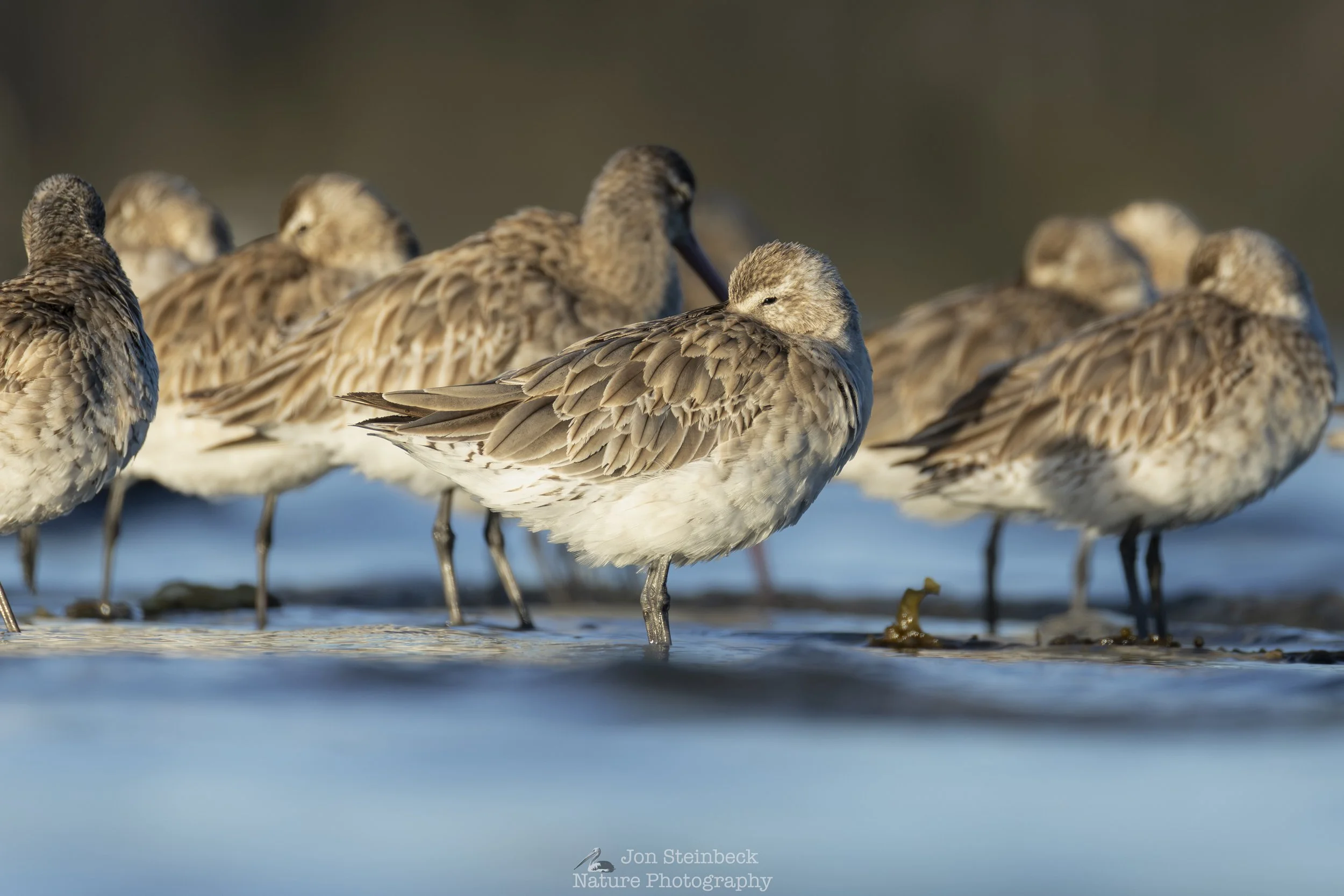
I can understand why these mostly juvenile birds decided to remain in Australia rather than enduring such a long flight. In mid-July at Narooma, there were about 30 godwits in a compact group on the edge of Wagonga Inlet, where the sand and grass meet. They were slowly moving back as the tide rose to the high tide mark. The birds were mainly preening or resting, rather than actively looking for food. They would await the turning ride in a few hours and then follow the ebbing water back onto the sandflats to hunt for food revealed by the receding tide.
Depending on which list you look at, these birds are either rated as vulnerable or near threatened, hence the need to protect their feeding grounds in Australia so that they can replenish their energy levels upon arrival in Australia.