
About Wildlife and Nature Photography
In November 2025, as part of my photography course at the Canberra Institute of Technology, I had to give a presentation about a field of photography that interested me. Not surprisingly, I chose wildlife and nature photography, and for context, the topics that I covered were specified for the assignment. While I am still in the early stages of my photographic journey, I thought that other photographers starting out might find this presentation interesting, and hopefully useful. I have therefore reproduced most of that presentation below. Please note that the original photographers own the copyright for their respective images that I have reproduced for fair use, in this case for education, and I acknowledge them for their brilliant work.
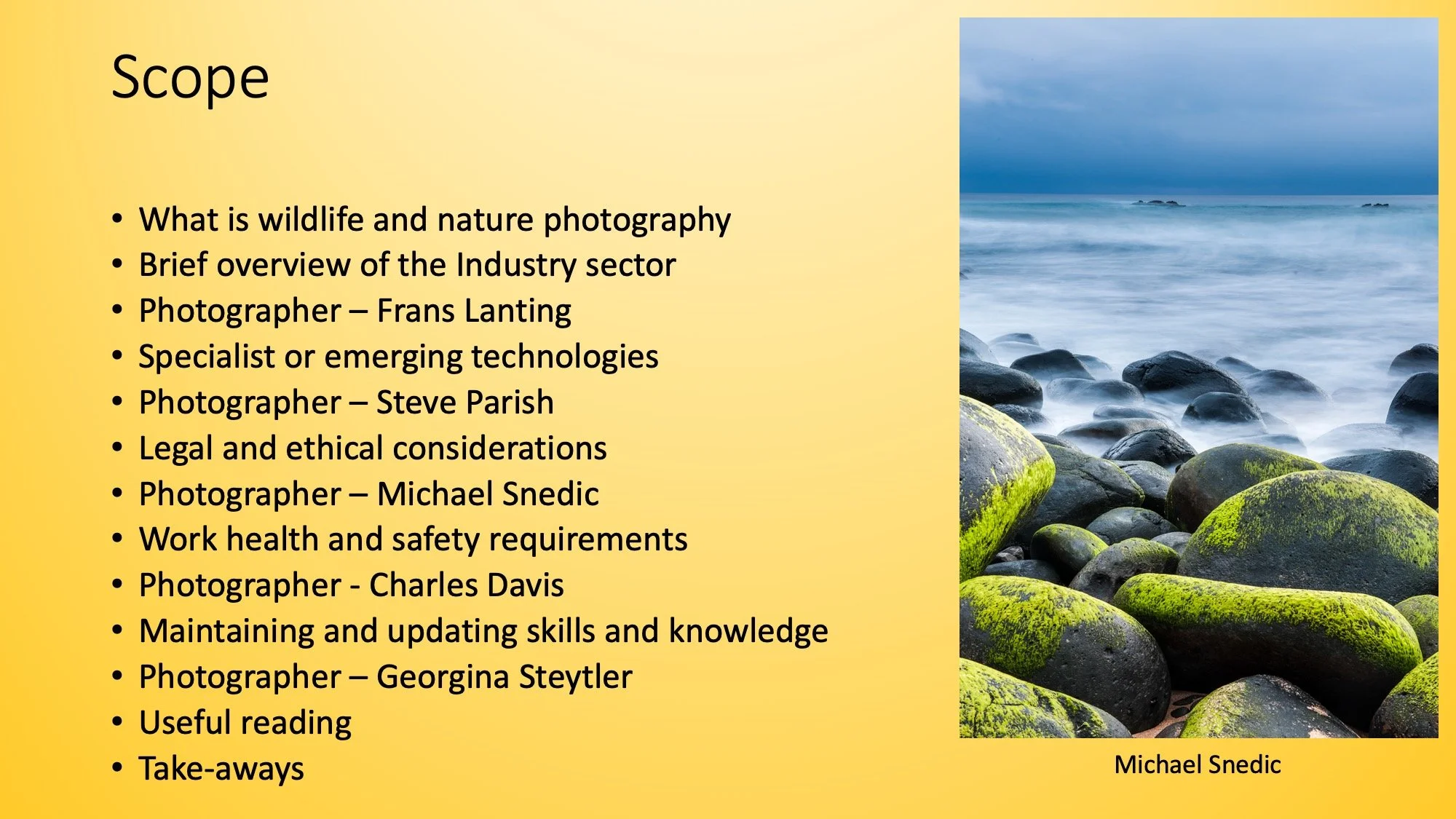
Here is a list of topics this brief will cover.
Image sourced from https://michaelsnedic.com/galleries/landscape-gallery-2/
AI generated image
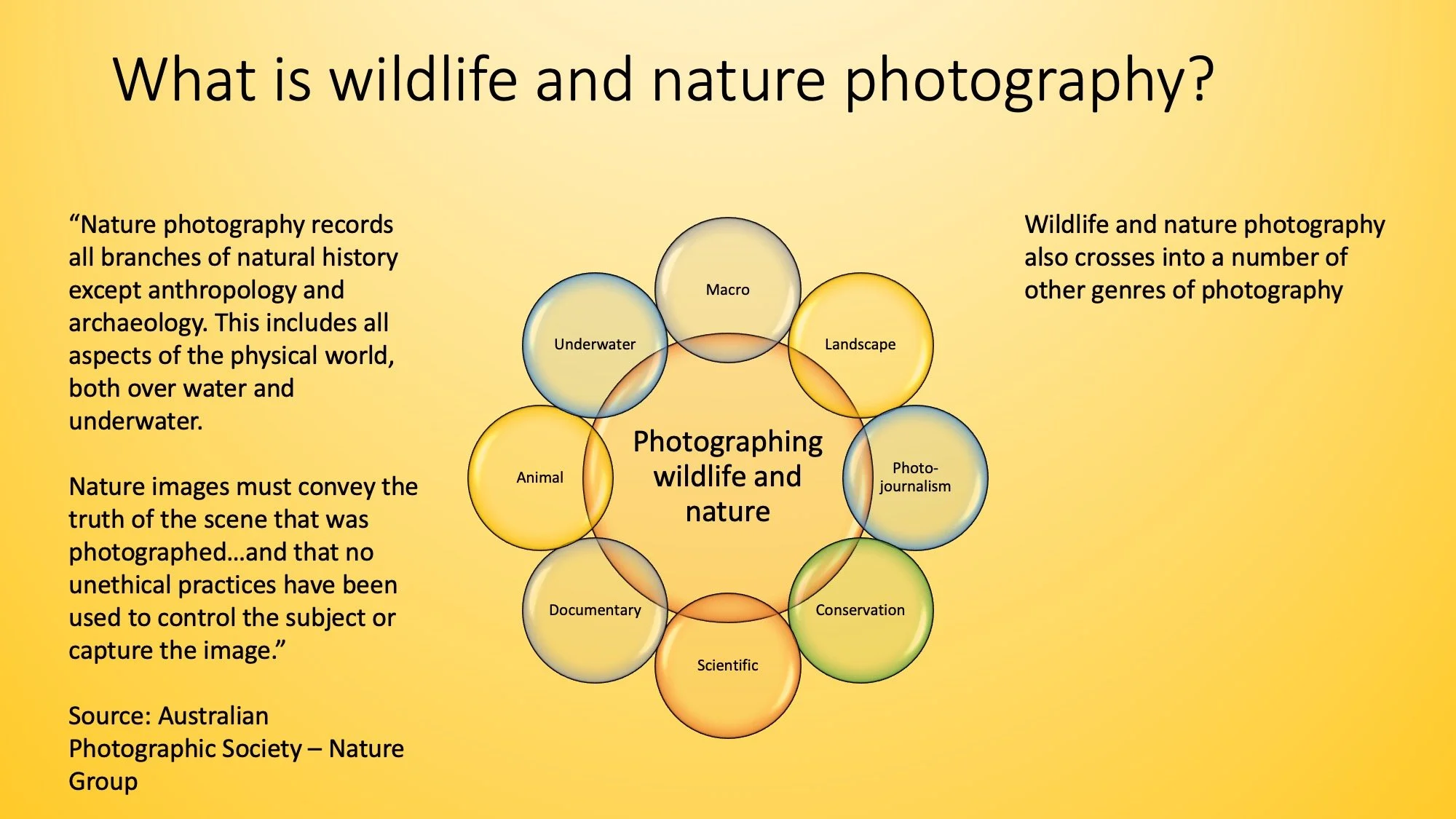
So what is wildlife and nature photography? In essence it is taking photographs of aspects of the natural world – animals, plants, landscapes, weather, etc. I would also note in the definition that I have included, the emphasis on ethical practices. The idea of the truth of the scene is also important, in that the image shouldn’t have major alterations. However, that idea is not about restricting artistic practices, which may push the boundaries of what many consider nature photography, but then again, this is not a law, just a fuzzy concept where the edges blur.
It is also a broad term that touches on a number of genres of photography, as you can see in the diagram, where a non-exhaustive list is included.
Definition of Nature Photography taken from https://www.a-p-s.org.au/index.php/nature-definition
Let’s look at some examples.
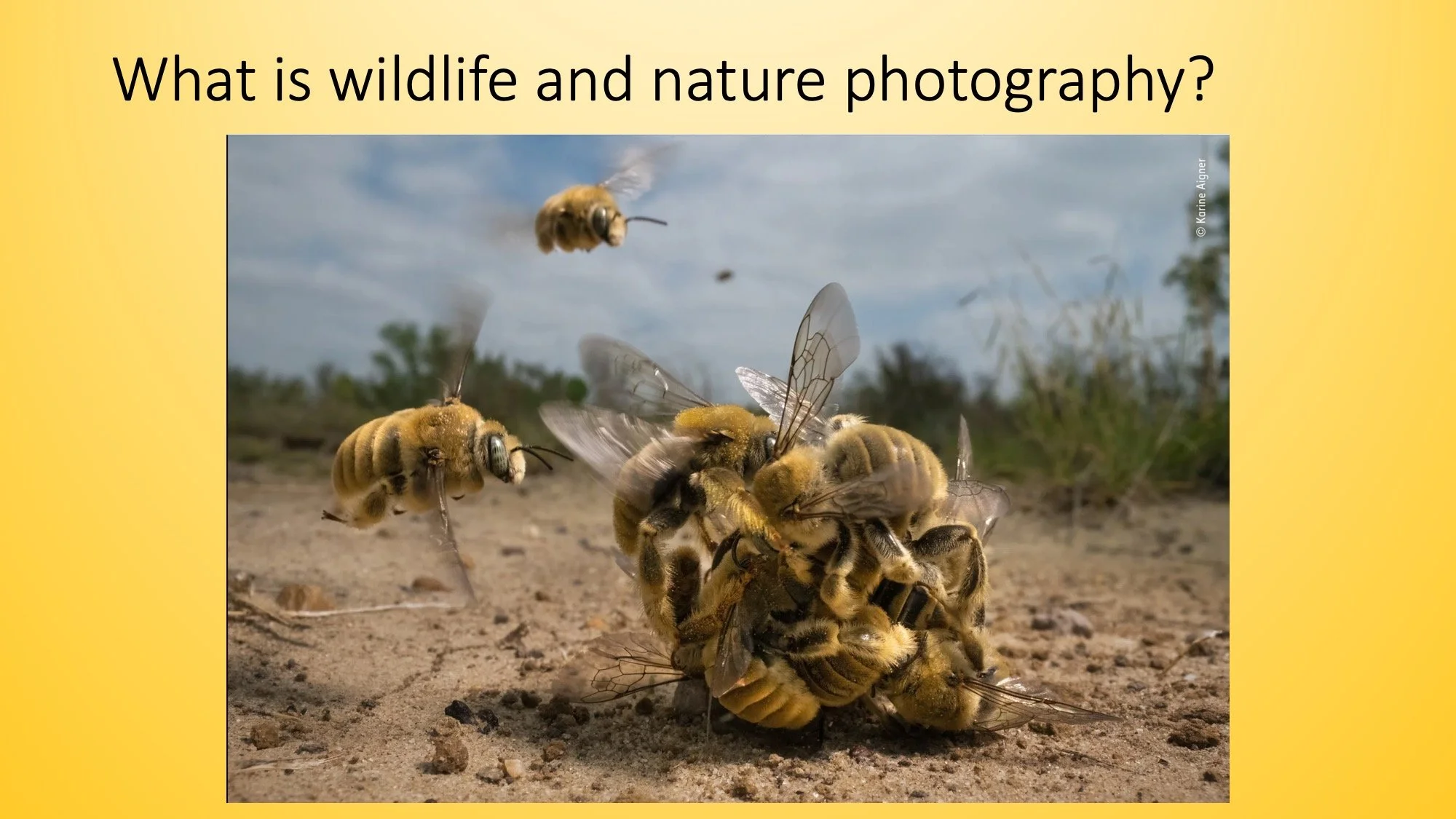
These slides show examples of wildlife photography drawn from the past four grand winners of the Wildlife Photographer of the Year award. They briefly show the diversity of wildlife photography.
Adult Grand prize winner 2022 - The big buzz - Karine Aigner - https://www.nhm.ac.uk/wpy/gallery/2022-the-big-buzz?tags=award.wldlfphtgrphrfthyr&tags=ed.10013,ed.10014,ed.10015,ed.current (more about the photographer - https://www.karineaigner.com/index)
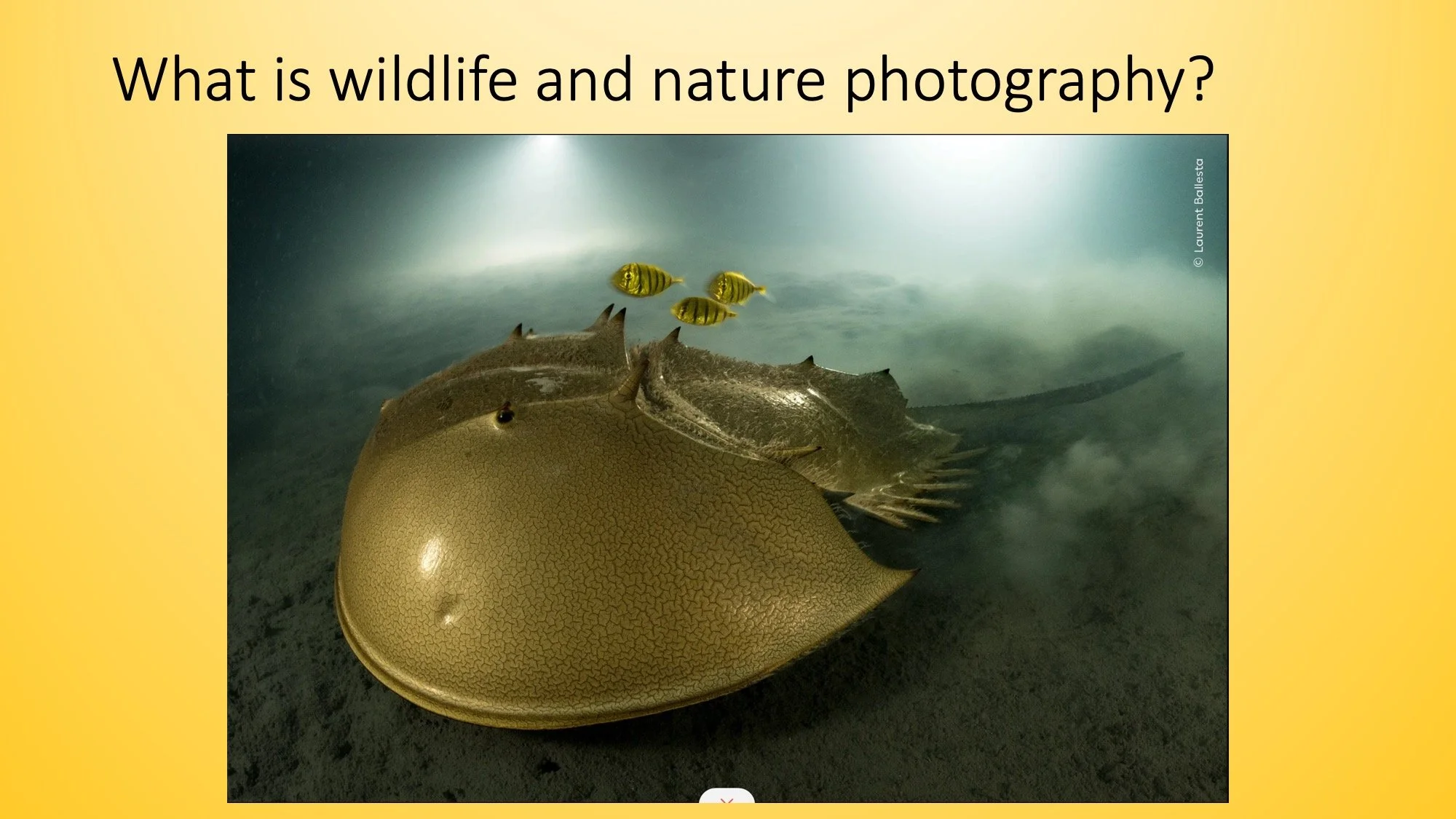
Adult Grand prize winner 2023 – The Golden Horseshoe - Laurent Ballesta - https://www.nhm.ac.uk/wpy/gallery/2023-the-golden-horseshoe?tags=award.wldlfphtgrphrfthyr&tags=ed.10013,ed.10014,ed.10015,ed.current (More about the photographer - https://laurentballesta.com)
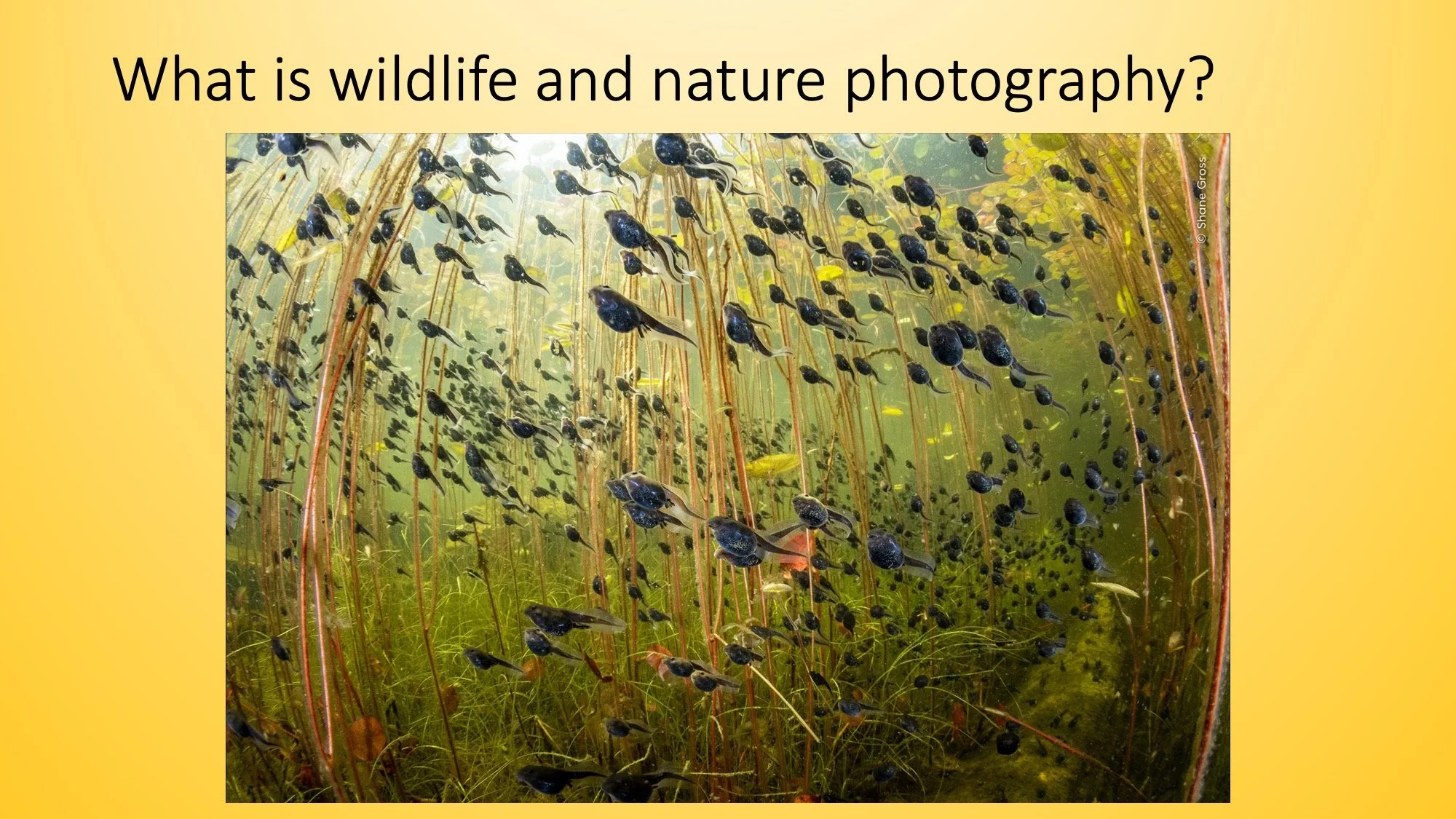
Adult Grand prize winner 2024 – The Swarm of Life - Shane Gross - https://www.nhm.ac.uk/wpy/gallery/2024-the-swarm-of-life?tags=award.wldlfphtgrphrfthyr&tags=ed.10013,ed.10014,ed.10015,ed.current (more about the photographer - https://www.shanegross.com/index)
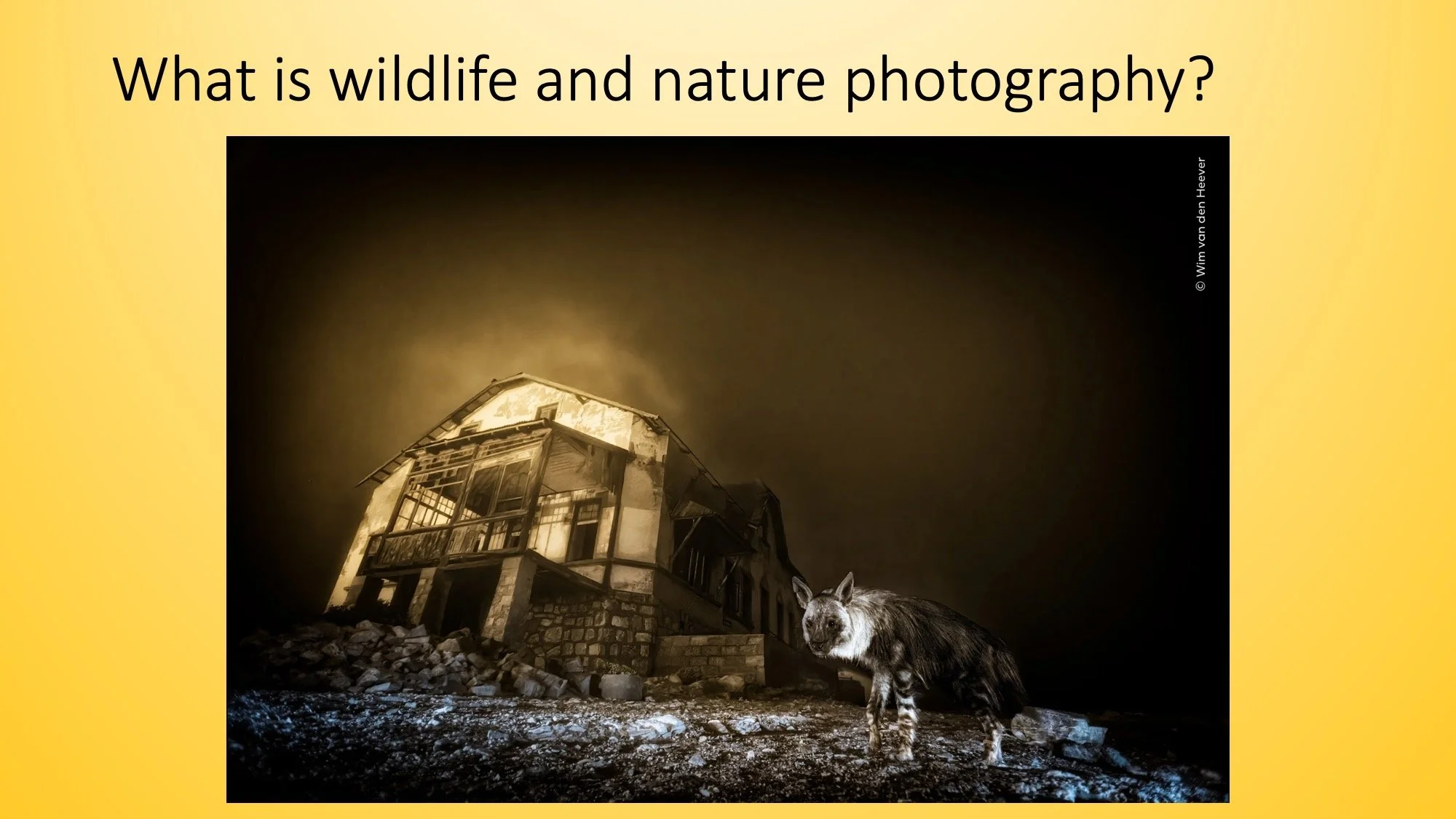
Adult Grand prize winner 2025 – Ghost Town Visitor - Wim van den Heever - https://www.nhm.ac.uk/wpy/gallery/2025-ghost-town-visitor?tags=award.wldlfphtgrphrfthyr&tags=ed.10013,ed.10014,ed.10015,ed.current (more about the photographer - https://www.wimvandenheever.com)
I now want to give a brief overview of the industry sector.
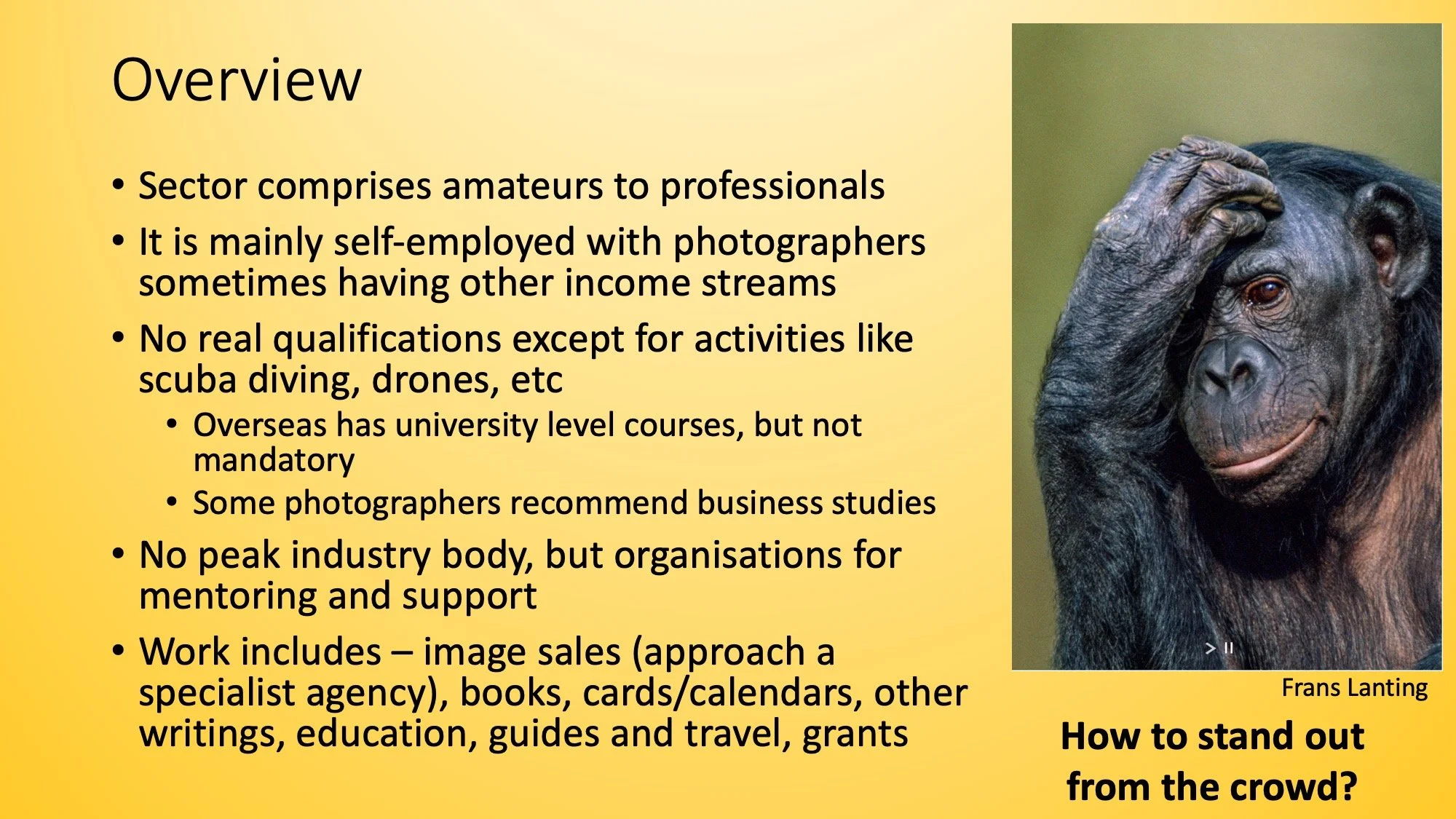
The sector is composed of both professionals and amateurs who work both in Australia and overseas. This no dedicated career path only that photographers try to get noticed so that they can make a living from their work.
With that in mind, it is probably not a surprise that the job opportunities are predominantly self-employed. While there may be some full-time jobs, like potentially at the CSIRO and the Australian Museum, those positions, if they still exist, are not limited to wildlife photography but also seem to have a wider remit, such as archiving and the management of large photographic collections. I also couldn’t find confirmation that those jobs still exist. In addition, some photographers are employed in related fields, such as academia, and photography supports their main employment (https://www.jamesdoreyphotography.com.au/James-Dorey-Photography). Other advice seemed to be to have a day job first and do wildlife photography as a second job until you are established (https://www.nickdalephotography.com/blog/how-to-become-a-professional-wildlife-photographer?srsltid=AfmBOoq_7DpyDMydB2shENb9taW-NVEaoo98q0woImSIfTOjexQLmj7V)
There are no real qualification required, although if photographers want to pursue something like underwater nature photography then a diving license would be required. A commercial drone license may also make it easier to use a drone in some national parks in Australia.
Overseas there are university level courses for wildlife photography, although they are not mandatory for becoming a nature or wildlife photographer, and there are no similar courses in Australia.
BA (HONS) – Wildlife Media at the University of Cumbria - https://www.cumbria.ac.uk/study/courses/undergraduate/wildlife-media/ - combing science and photography as well as fieldcraft
BA (HONS) Marine and Natural History Photography – Falmouth University - https://www.falmouth.ac.uk/study/undergraduate/marine-natural-history-photography – using photography to tell a story for conservation
Some of the photographers that I read about recommended business studies as a good idea because this sector is not just about photography, it is also about running an owner-operator business (https://www.nickdalephotography.com/blog/how-to-become-a-professional-wildlife-photographer?srsltid=AfmBOoq_7DpyDMydB2shENb9taW-NVEaoo98q0woImSIfTOjexQLmj7V and https://www.markcarwardine.com/wildlife-photography/how-to-be-a-professional-wildlife-photographer.html)
There are no real peak industry bodies in Australia but there are some societies that offer support to photographers:
Australian Photographic Society – Nature Group - https://www.a-p-s.org.au/index.php/welcome-to-nature – a group about supporting and providing feedback for photographers
Birdlife Australia Photography Group - https://birdlife.org.au/groups/birdlife-photography/?srsltid=AfmBOooy4Es09LizkrK_-ogA14VBjKlHCxRjAheojGxBK_cCel4Zm9mb – provide a group that supports and mentors bird photographers.
There are a number of international bodies.
There is usually little commissioned work available and mostly work is self generated. There are various potential income streams and that leads to the question about what business the photographer is actually in, are they photographers selling photographic services or are they retailers selling products, their photographs.
Image sales
-Stock photography – generally photographers agree that this is very saturated and there is very little money to be made here
-Print sales – A lot of photographers offer prints for sale. There are also a number of sites that organise the ordering, printing and delivery of prints, thus freeing the photographer to take photographs. However, the photographer needs to think about the type of prints that they will sell. These can range from fine-art framed prints to canvas prints. The question is what part of the market the photographer is aiming for. There is no point trying to be a fine-art photographer but only offering canvass or cheap paper.
-Some photographers advise that once you have a good body of work, try approaching a specialist photographic agency to represent you (https://www.markcarwardine.com/wildlife-photography/how-to-be-a-professional-wildlife-photographer.html) An example of such an agency is the International League of Conservation Photographers (https://www.conservationphotographers.org)
Books – a number of photographers have published books of their work. Sometimes this is self-published but for some of the better known ones these are published by established publishing houses (Georgina Steytler, covered later in this presentation, has published two books through Australian Geographic (https://www.georginasteytler.com.au/photography-books).
Other writing – Especially articles for magazines (https://michaelsnedic.com/articles/) Send specific proposals tailored for the magazine in question, with a link to quality images that you could provide (https://www.markcarwardine.com/wildlife-photography/how-to-be-a-professional-wildlife-photographer.html) Of course the better known magazines, like National Geographic, will only accept work by photographers who have proven high-quality work.
Education – This type of service can be through video courses, online training, workshops, etc. (https://www.georginasteytler.com.au/photography-workshops)
Guides and travel – Photographers can also lead trips both domestically and overseas. These could be purely photography trips or they could include a workshop element (https://wildnaturephotoexpeditions.com/workshop-schedule/).
Grants from conservation or wildlife organisations to tell a story related to conservation or wildlife (https://betterwithbirds.com/blogs/bird-photography-and-sound-tips/become-wildlife-photographer)
The main challenge in wildlife photography is how to stand out from the crowd – which can be by winning competitions through getting great shots. However, what does standing out even mean? As of 2023, people took approximately 1.72 trillion photos. Of those, 92.5% of photos were taken on smart phones and only 7% with proper cameras – (Statistics from https://petapixel.com/2023/06/20/almost-all-photos-are-now-taken-on-smartphones-according-to-study/) Of course AI-created and AI-enhanced images further saturate general feeds, so photographers need credible means, such as high profile photographic competitions, to build their reputation.
Let’s now look at the work of one very well known wildlife photographer.
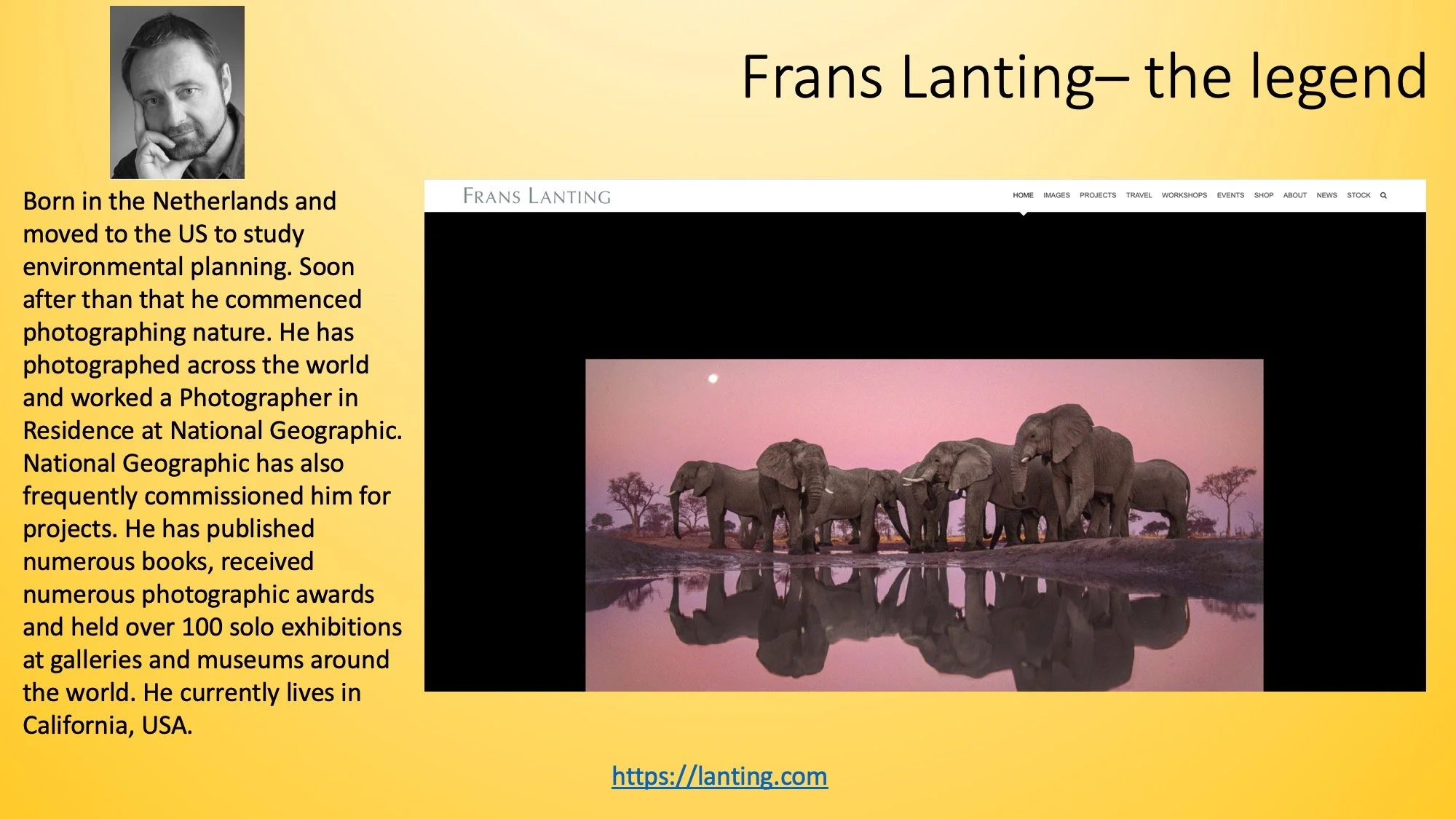
Frans Lanting, originally from the Netherlands but now living in the US. He has been photographing for over 50 years, although he started out as a academic focused on environmental activism. He believes that you have to understand your subject and not just observe from a distance. Former National Geographic photography director Thomas Kennedy said of Lanting: “He has the mind of a scientist, the heart of a hunter, and the eyes of a poet.” Lanting photographs across the world and his photos often have a narrative to them, as well as conveying that high-quality expected within National Georgraphic. Note that he sells his wonderful prints and books through his website and also conducts workshops for photographers.
Sourced from:
https://lanting.com/frans-lanting/
https://en.wikipedia.org/wiki/Frans_Lanting
https://photofocus.com/inspiration/on-photography-frans-lanting-1951-present/
Profile picture sourced from https://lanting.com/frans-lanting/
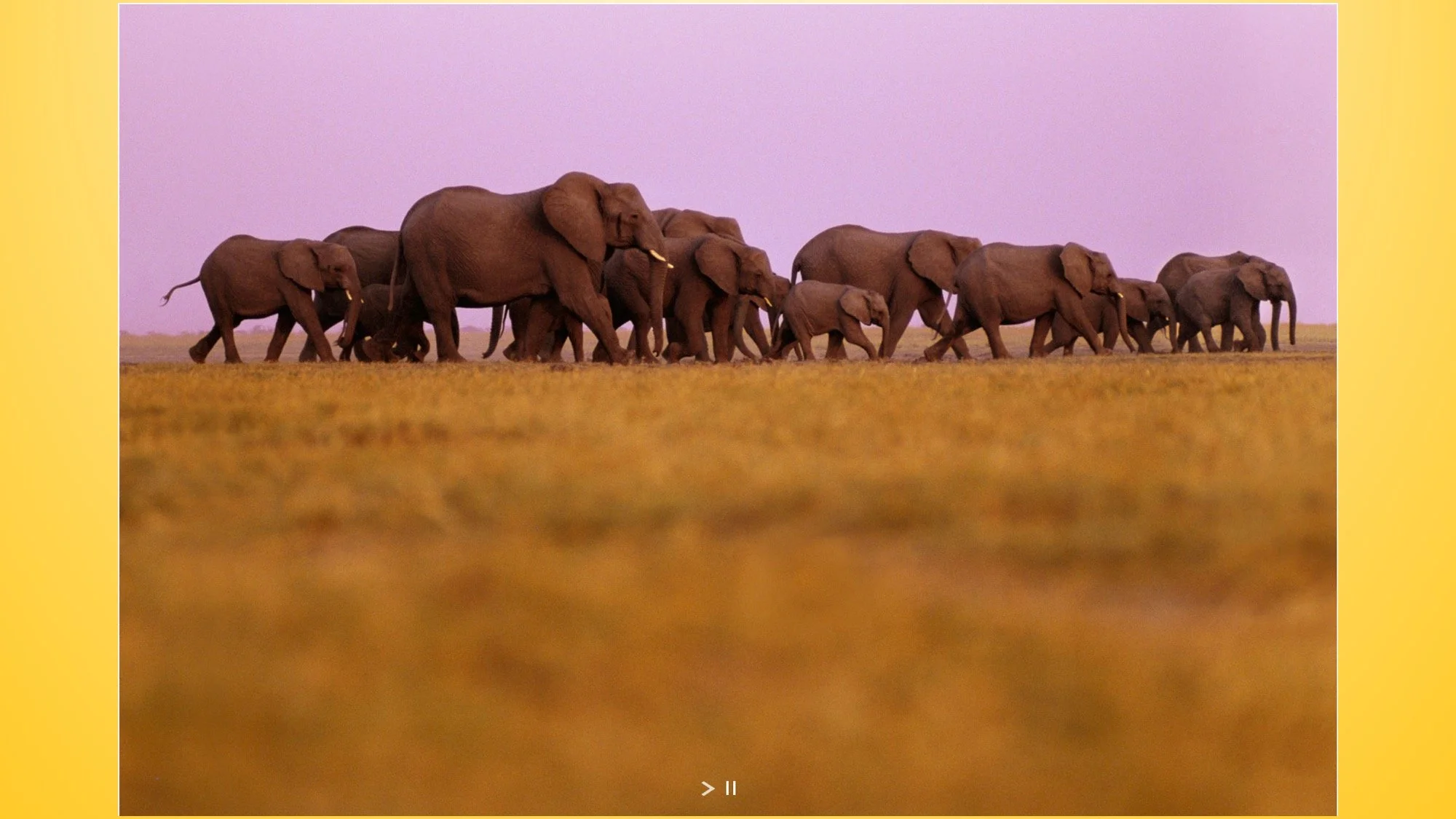
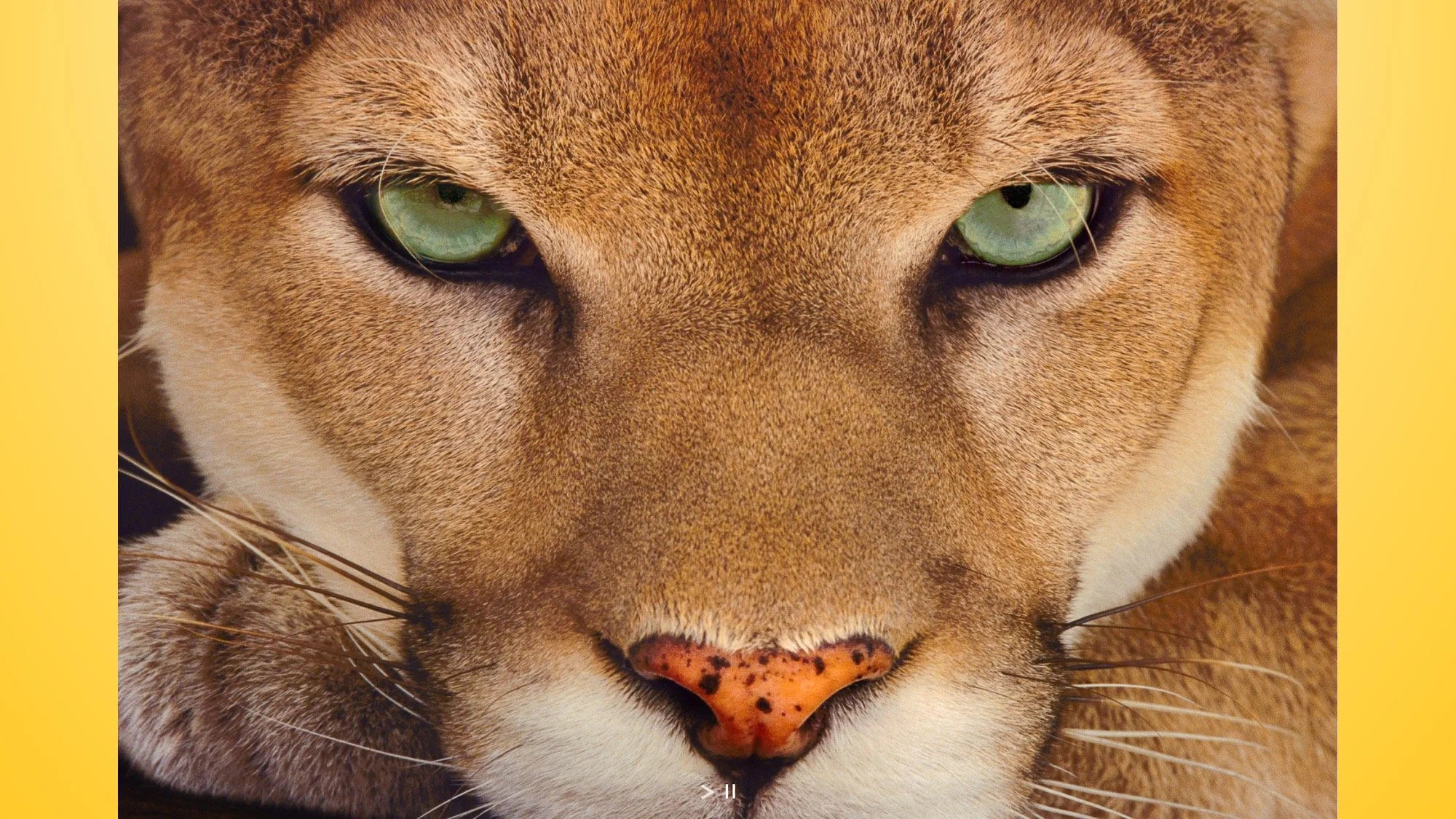
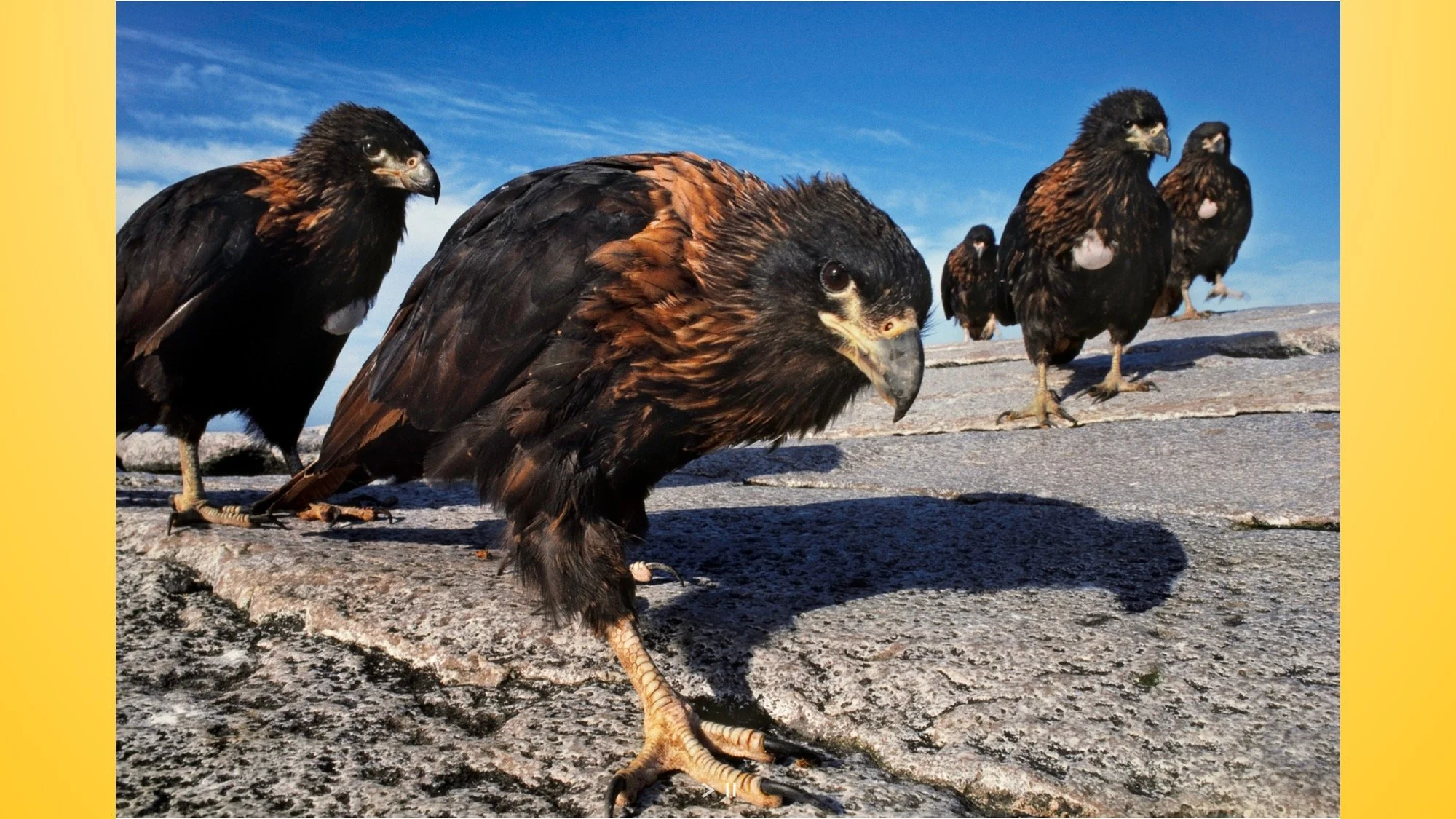
Let’s look at some examples of his work.
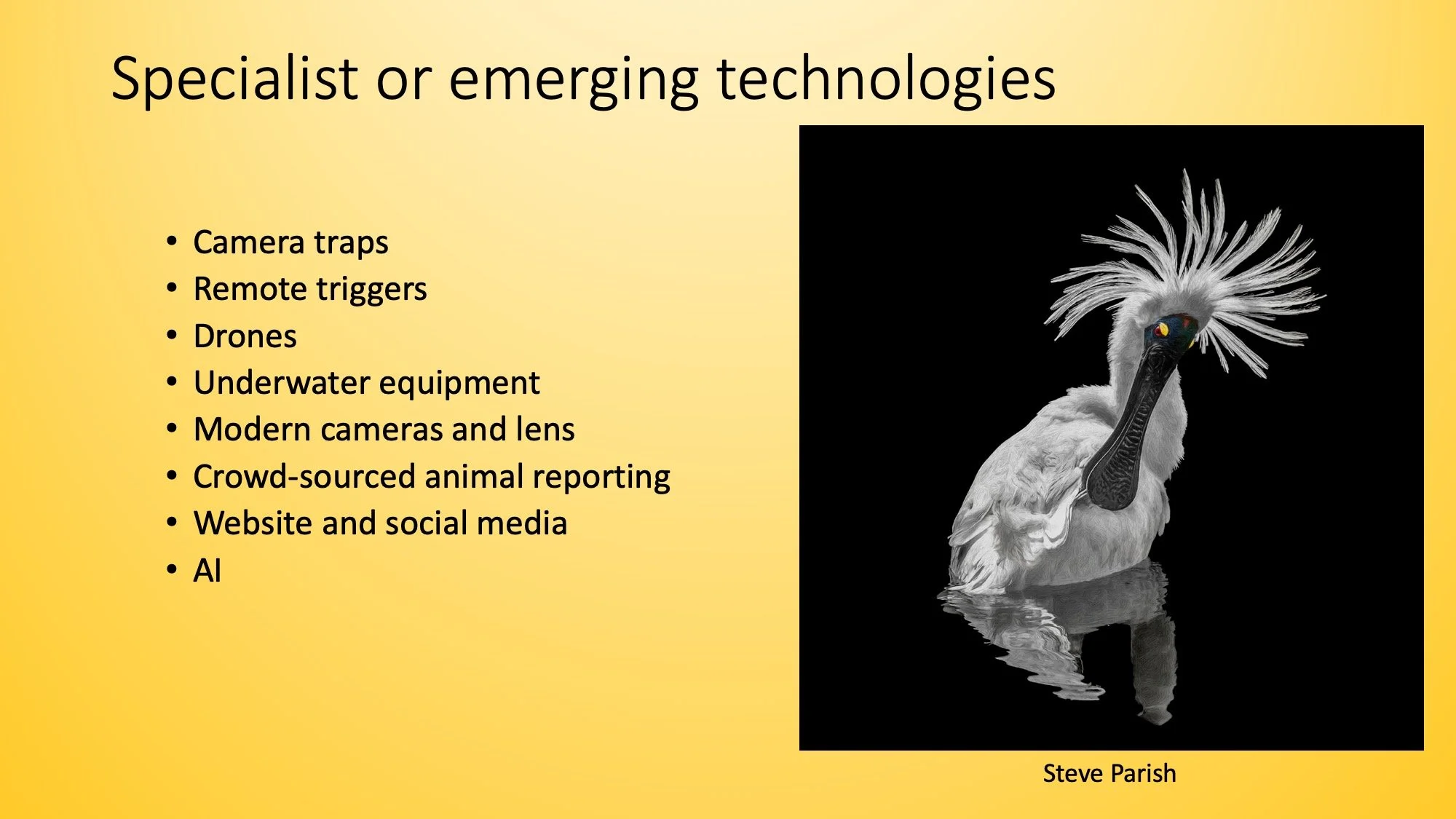
Camera traps allow photographers to capture shy wildlife or to cover areas over a period of time to see what animals wander through. Traps include trail cameras to specialist housings for DSLR/mirrorless cameras. (https://focusingonwildlife.com/news/camera-traps-to-drones-how-wildlife-photography-got-smarter-and-wilder/)
Remote triggers are similar in function to camera traps but they are a way to photograph dangerous animals from up close with wide angle lens. (https://www.driftwoodjournals.com/the-impact-of-technology-on-wildlife-photography/)
Drones allow for different perspectives on animals. This can be individuals or large herds. Drones are not just aerial ones but also underwater and on the land.
Underwater photography is a presentation in itself but includes not just the sea but inland waterways, even small ponds.
Cameras that have fast autofocus and eye detection. Lens that are fast, crisp and lightweight.
Crowd-sourced animal reporting such as The Atlas of Living Australia allow photographers to better understand animal distribution and movements, to help with planning.
Having a good website is an important marketing tool, and photographers need to understand what other marketing tools are out there. Also, how to get smart with social media (https://www.markcarwardine.com/wildlife-photography/how-to-be-a-professional-wildlife-photographer.html)
AI will be a challenge and a help. It will allow for easy identification of animals and potentially assist with culling and editing photographs, especially when using high frames per second for moving subjects. It may also be a challenge by taking some lower level work away and allowing unscrupulous photographers to cheat. (Although cheating was occurring before AI - https://www.news.com.au/technology/science/animals/wildlife-photographer-of-the-year-stripped-of-his-prize-for-using-a-stuffed-anteater/news-story/d3f6674d7de6dcefecb1fb84e9633f31) There can also be problems when AI alters images it is processing, no longer documenting what occurred or pushing colour patterns too far (https://www.eco-business.com/news/ai-edited-wildlife-photo-in-japan-reignites-debate-over-technologys-expanding-role-in-conservation/ and https://wildlife.org.au/nature-photography-an-interview-with-michael-snedic/). Ultimately, I think it is the story that sells good photographs and AI will not be able to replace that.
Imaged sourced from https://gallery.steveparish-natureconnect.com.au/portfolio/G0000CFKZFZZw0xQ/I0000mtjkGFITV14
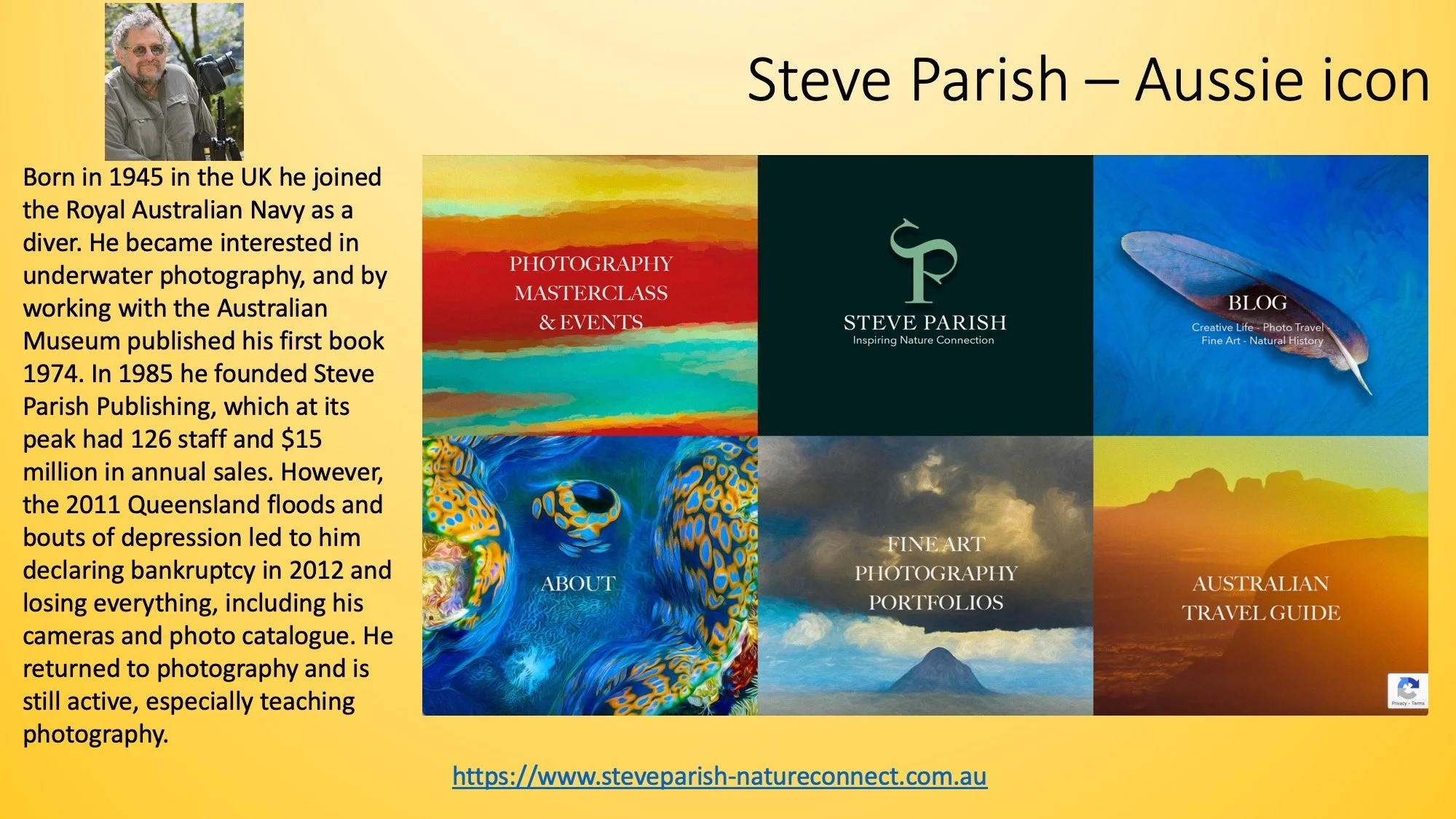
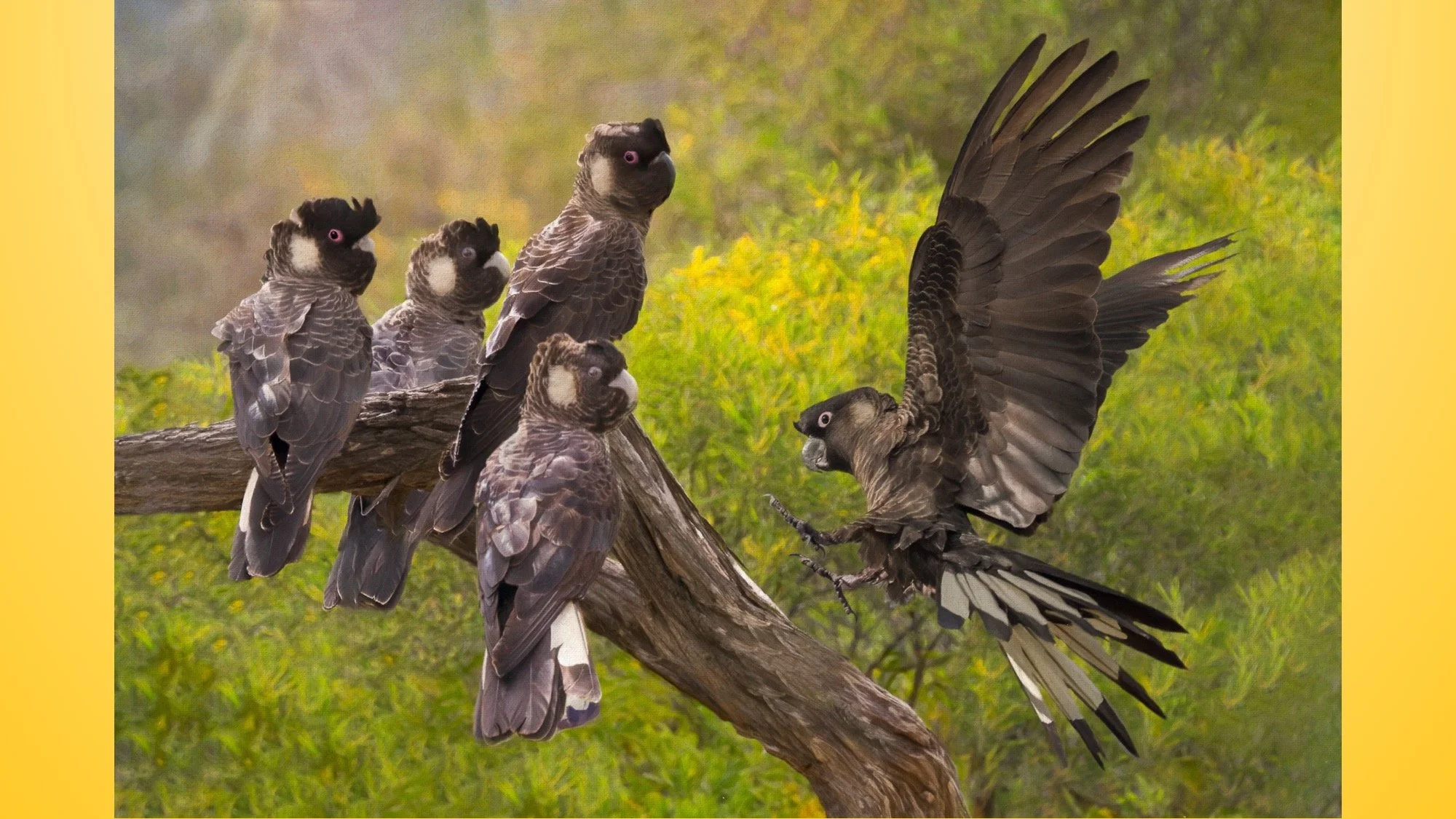
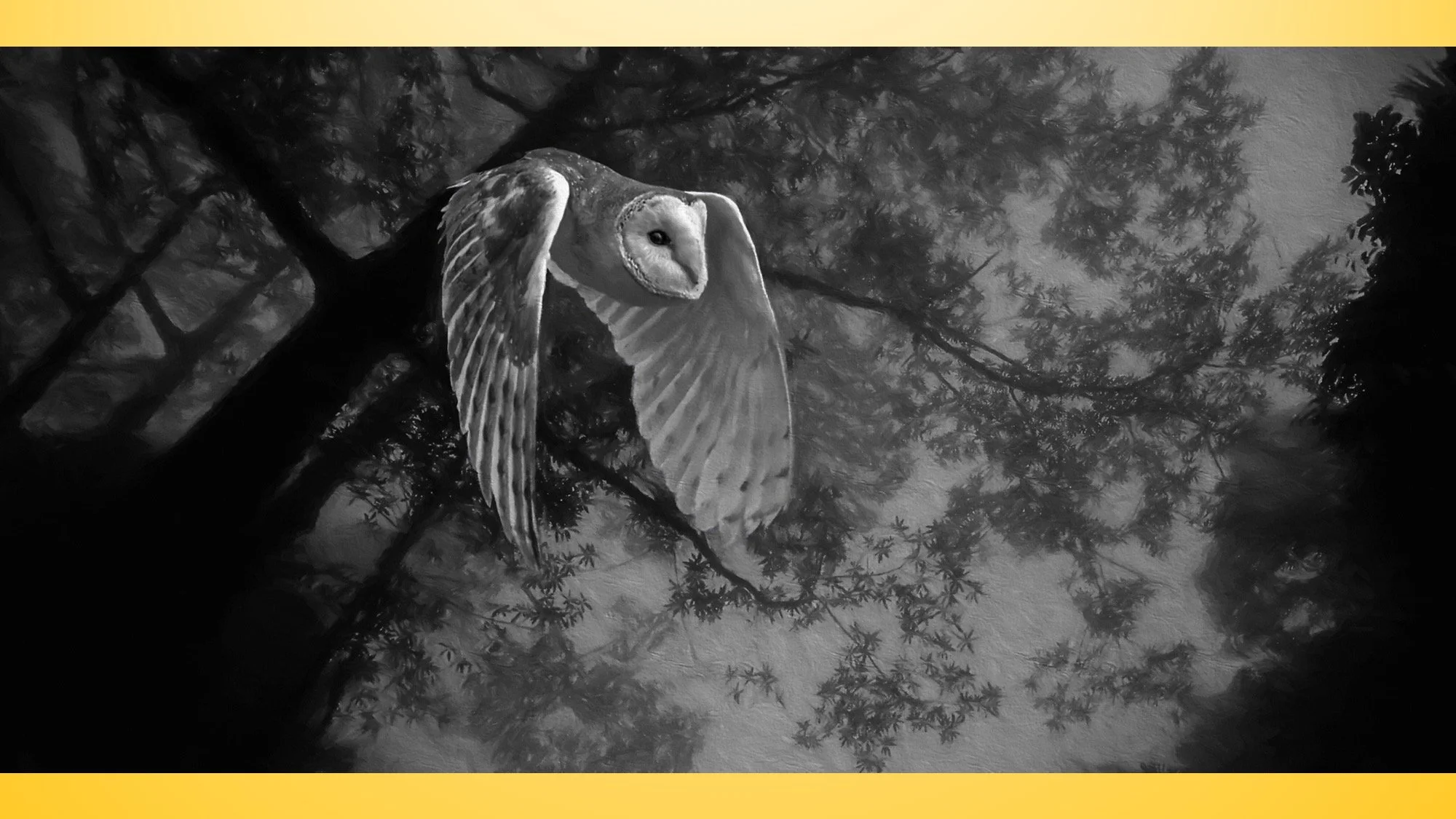
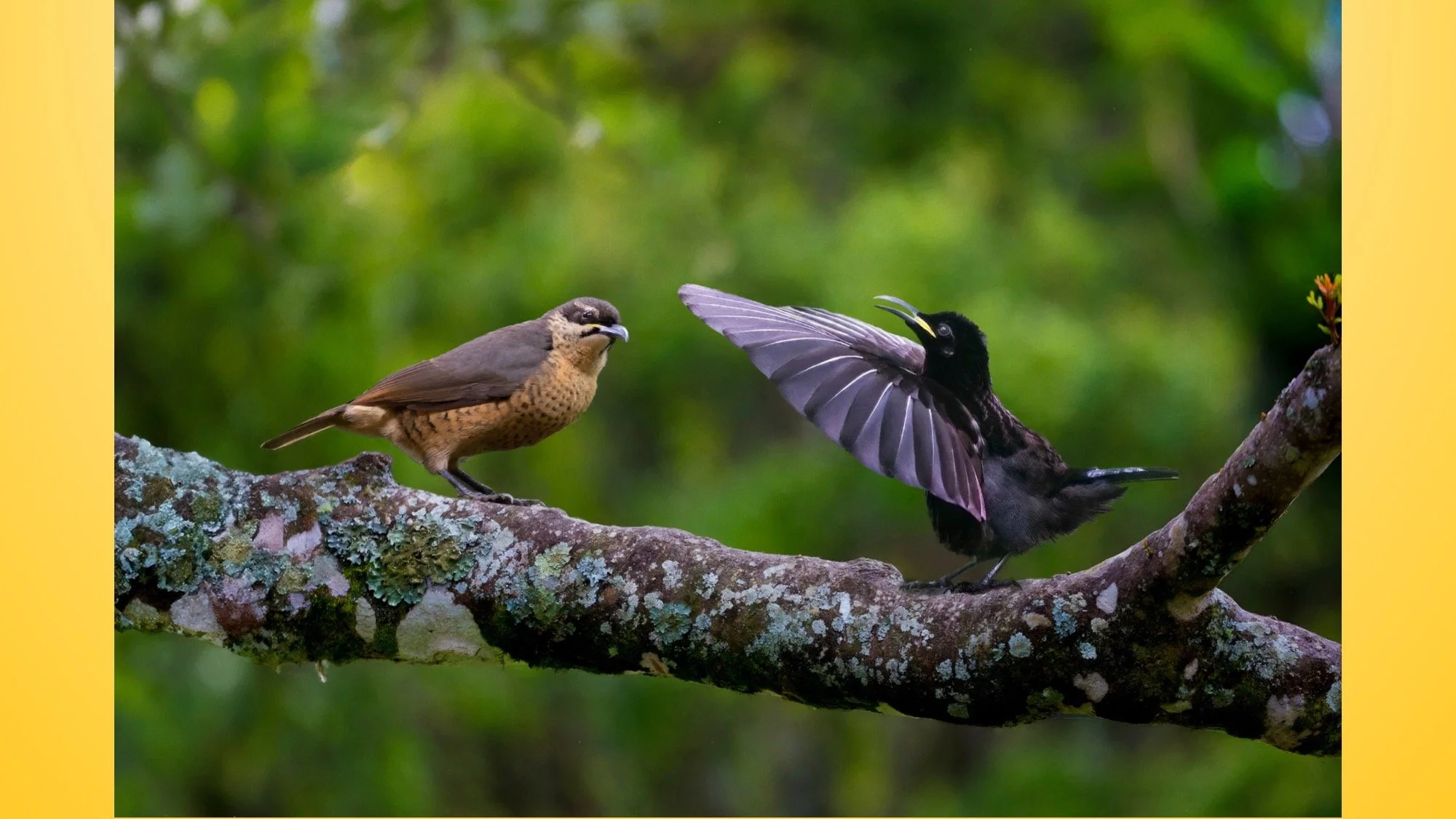
Steve Parish was born in the UK in 1945 and emigrated to Australia with his family. At age 16 he picked up a camera and was fortunate to meet some skilled Australian photographers. He was a diver in the Australian Navy and his early work was in underwater photography. In the 1990s and early 2000s, Steve Parish was probably the best known Australian nature photographer, covering a wide range of subjects. Unfortunately, the 2011 Queensland floods destroyed his film catalogue. He suffered a number of years of financial hardship and depression but started re-building his catalogue digitally and running workshops. Since returning to photography, he has embraced intense editing, such that some of his photographs resemble paintings rather than photos. Again, Steve’s website sells his prints and also lists his workshops.
Sourced from:
https://www.steveparish-natureconnect.com.au/about-steve-parish-nature-connect/
https://www.bushwalkingblog.com.au/nature-photography-steve-parish/
https://blackwoodphotoclub.org/2011/10/25/an-afternoon-with-steve-parish-2/
Profile image sourced from https://www.steveparish-natureconnect.com.au/about-steve-parish-nature-connect/
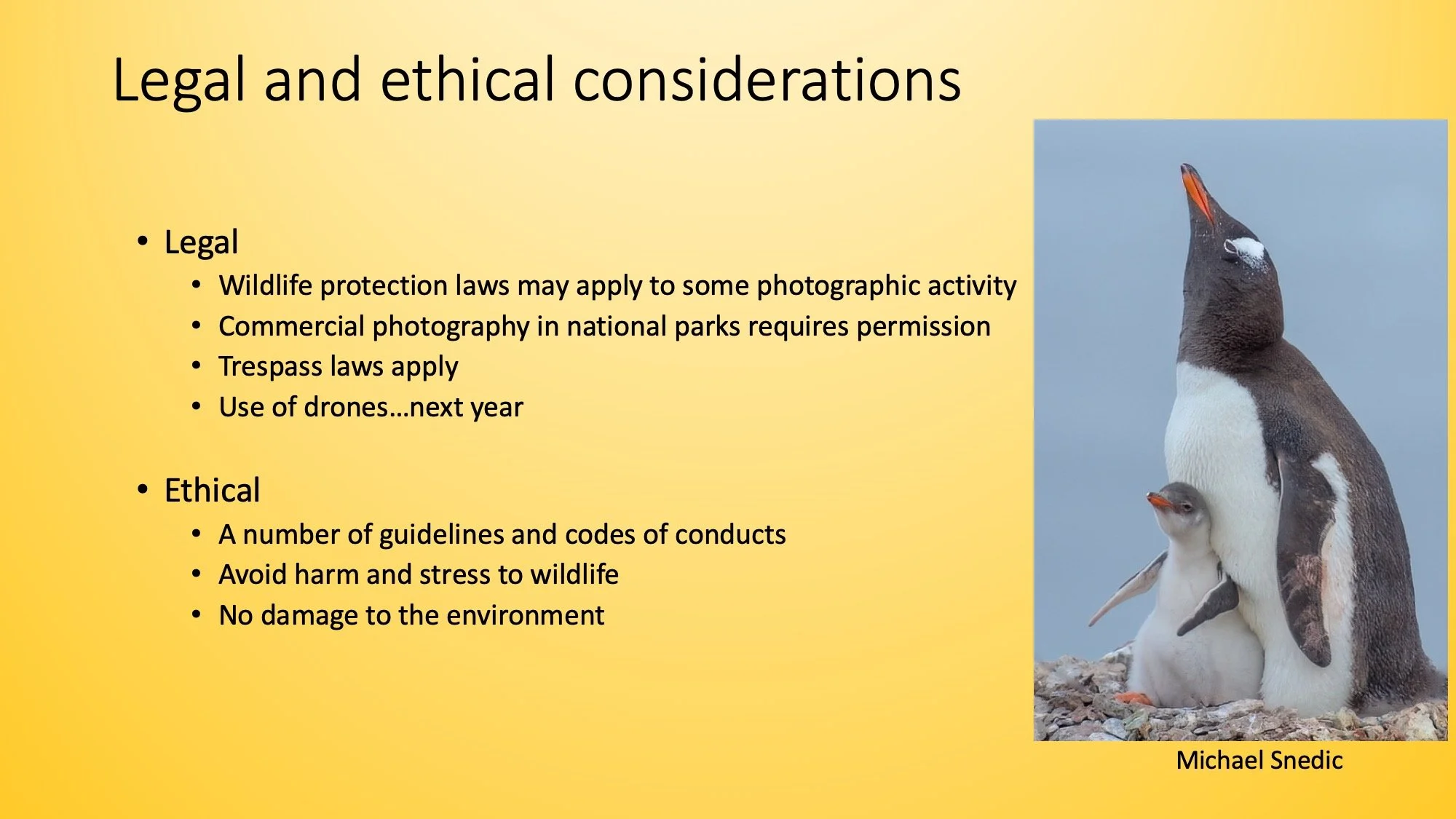
Legal
The act of wildlife photography is not covered by any specific laws, but carrying out that act can impinge on some laws. While the laws below are for WA, a number of states, such NSW, have conservation acts that likely have similar clauses that seek to minimise distress to wildlife.
Under section 149 of the Biodiversity Conservation Act 2016 (WA) – no unlawful taking of wildlife, which could include staging wildlife for photography (https://www.cdu.edu.au/files/2024-07/Ethical%20wildlife%20photography%20%28DBCA%2C%2007_2024%29.pdf)
Under section 153 of the Biodiversity Conservation Act 2016 (WA) – it is an offence to disturb wildlife and higher penalties apply to threatened species, so photographers need to be aware of this, especially if they are using some lure to attract wildlife or are regularly intruding on breeding areas. (https://www.cdu.edu.au/files/2024-07/Ethical%20wildlife%20photography%20%28DBCA%2C%2007_2024%29.pdf)
Under section 155 of the Biodiversity Conservation Act 2016 (WA) – it is an offence to feed wildlife meaning that photographers cannot bait wildlife for the purpose of photography. (https://www.cdu.edu.au/files/2024-07/Ethical%20wildlife%20photography%20%28DBCA%2C%2007_2024%29.pdf)
I would add, that I suspect that most wildlife photographers wouldn’t violate these laws anyway, based purely on ethical considerations to minimise stress to wildlife, which I cover below in this section.
There are also laws that govern photography in national parks. Because national parks are managed at state level, each state has slightly varying laws. By way of example, NSW National Parks laws seem less than clear about commercial wildlife photography in parks. The laws are clear on commercial photography requiring permits, but probably equate that with photoshoots, however the policy also mentions the taking of photographs to sell to stock sites or third parties for commercial purposes. It is not clear if that includes photographing an animal. It is clear that the NPWSNSW does not own the copyright on natural structures in the park so there is no need to seek permission for commercial photography of these sites from outside a park. (https://www.environment.nsw.gov.au/topics/parks-reserves-and-protected-areas/park-policies/filming-and-photography and https://www.environment.nsw.gov.au/topics/parks-reserves-and-protected-areas/commercial-activities-in-parks/filming-and-photography-licences/filming-and-photography-more-information#filming-activities) That said, using Google, I couldn’t find an instance where NPWSNSW had prosecuted a wildlife photographer for photographing in a national park. I think that the laws are there as a way to hold people to account if they regularly make themselves a nuisance in the national park.
Wildlife photographers also need to respect trespass laws. In October 2025 a Tasmanian wildlife photographer was convicted of trespass after spending the night on a private island. He was searching for an endangered bird species on the island, which was to be the future site of a windfarm. He was opposed to the windfarm and the island’s owners may have pressed charges to discourage other activists. (https://www.abc.net.au/news/2025-10-07/rob-blakers-pleads-guilty-to-trespassing-charges-robbins-island/105858916)
I won’t cover drone laws here because that is a large issue (https://www.casa.gov.au/knowyourdrone/drone-rules) although, it is worth noting that there was controversy in 2021 about whether a winning photograph in the Australian Wildlife Photographer of the Year Award was legally taken of a bushfire (https://www.abc.net.au/news/2021-02-12/robert-irwin-photo-sparks-drone-use-warning/13148626). It is also worth noting that commercial drone operators require registration and licensing (https://www.casa.gov.au/knowyourdrone/drone-rules)
Ethical
Ethics is a strong part of nature and wildlife photography. Most nature photographers have a passion for the natural world and that is what got them into nature photography, so they care about the ethics related to wildlife. There is probably some disagreement on the extent of some ethics and there may also be some photographers who get obsessed with getting ’the shot’.
There are a number of guidelines and codes of conducts on ethical practices for wildlife photography, including from conservation and wildlife organisations for when photographers are working with them (https://www.dcceew.gov.au/sites/default/files/documents/e2022-0206-permit-application-attachment-awc-handling-guidelines.pdf)
These generally highlight the need to reduce negative impacts on wildlife and the habitat.
This can include not damaging vegetation, not photographing animals at their nest due to disturbing their parenting and heightening the risk of predation, not approaching wildlife too closely.
Sourced from:
https://www.cdu.edu.au/files/2024-07/Ethical%20wildlife%20photography%20%28DBCA%2C%2007_2024%29.pdf
https://www.a-p-s.org.au/index.php/nature-code
Image sourced from https://michaelsnedic.com/galleries/birds-gallery/
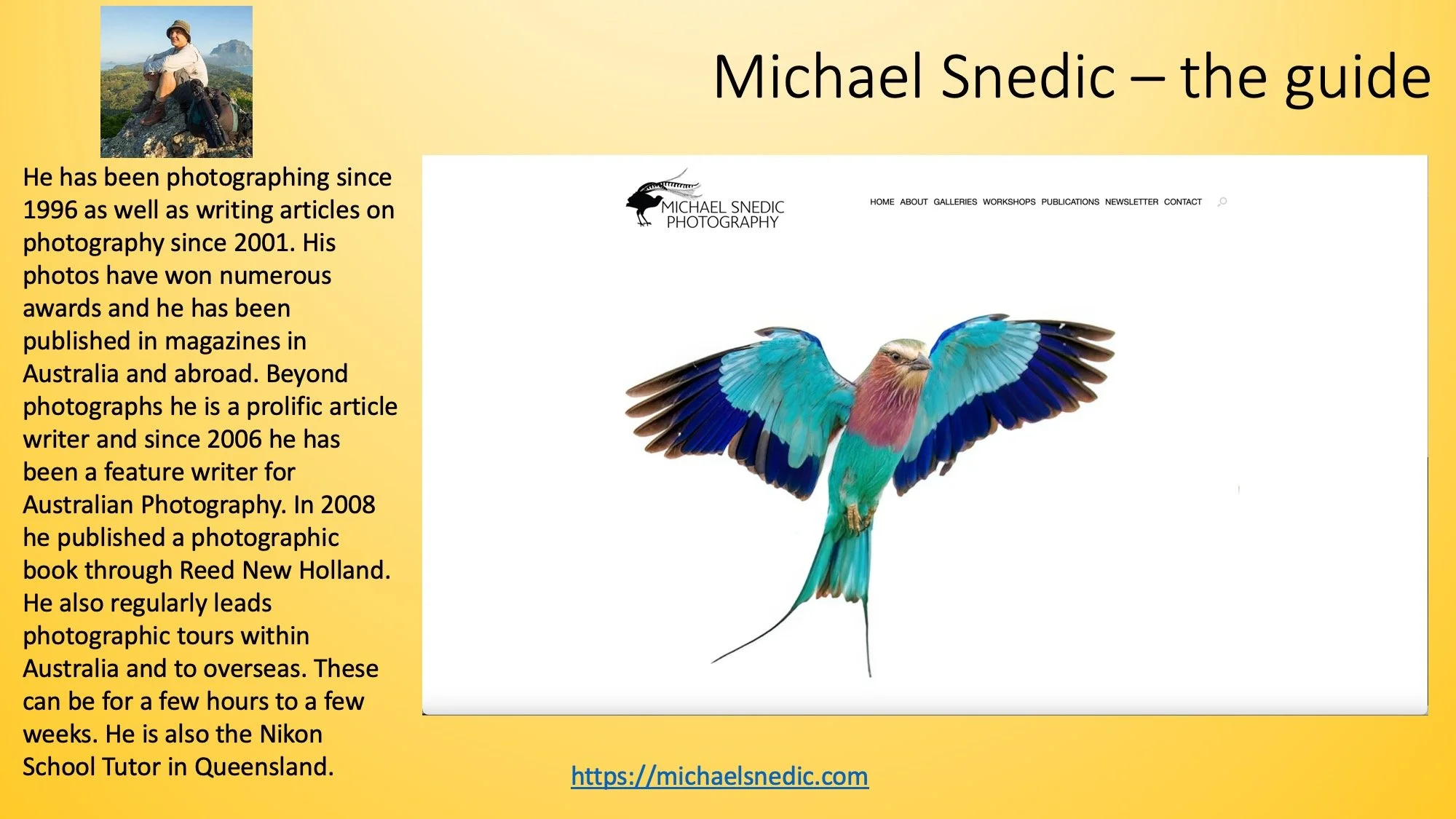
Michael Snedic is probably the least known photographer among the ones I have listed. However, he is a good example of someone who probably uses the camera as a tool but makes his living from activities around photography, such as workshops, tours and writing articles. He is a very competent photographer, who takes some wonderful photographs, and seems to make a good living by running tours both in Australia and internationally. His personal website leads to another website that offers tours and workshops, of varying durations, from a few hours to a few weeks.
Sourced from:
https://michaelsnedic.com/about/
https://www.naturettl.com/michael-snedic/
https://wildlife.org.au/nature-photography-an-interview-with-michael-snedic/
Profile image sourced from https://michaelsnedic.com/contact/
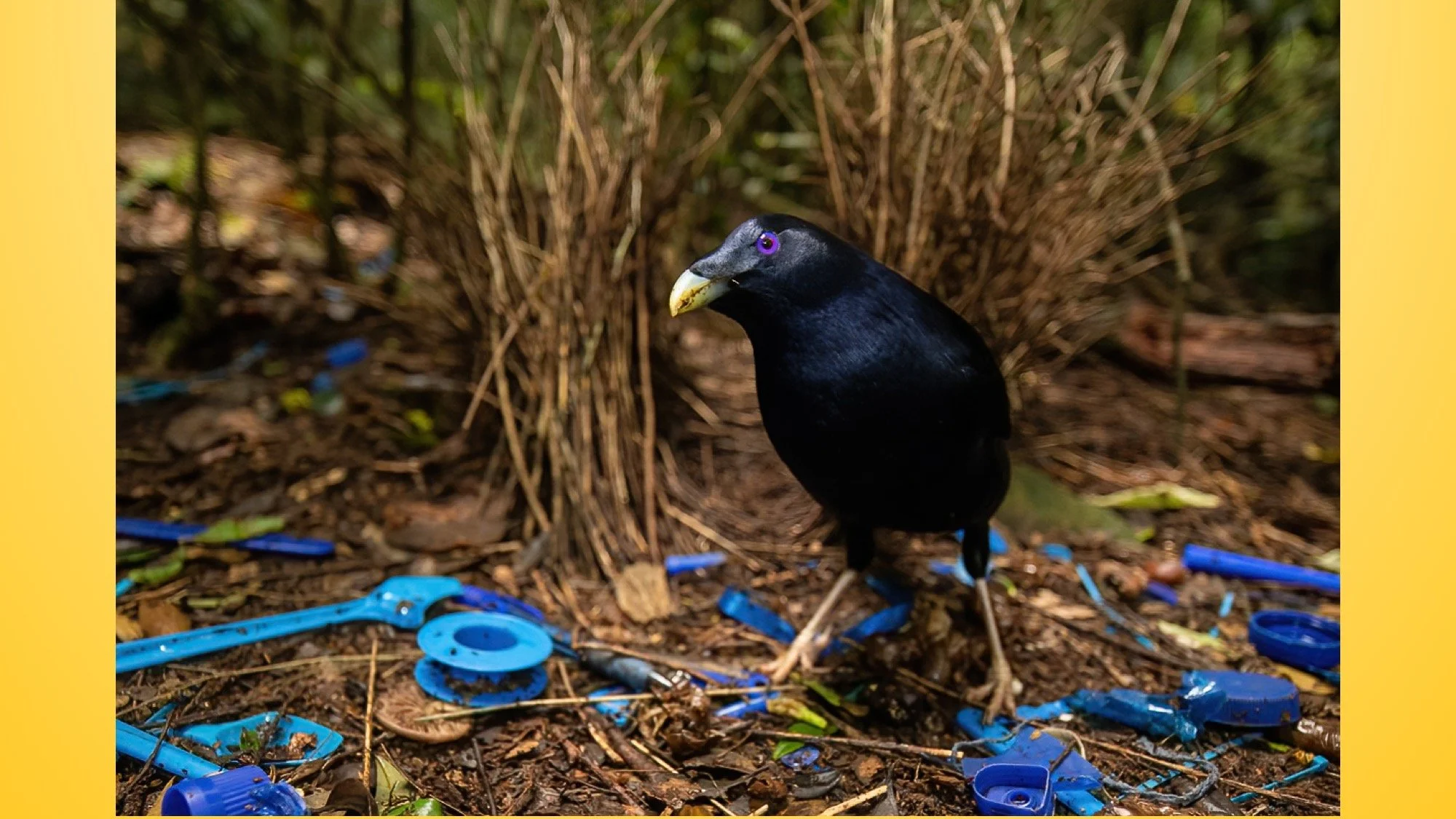
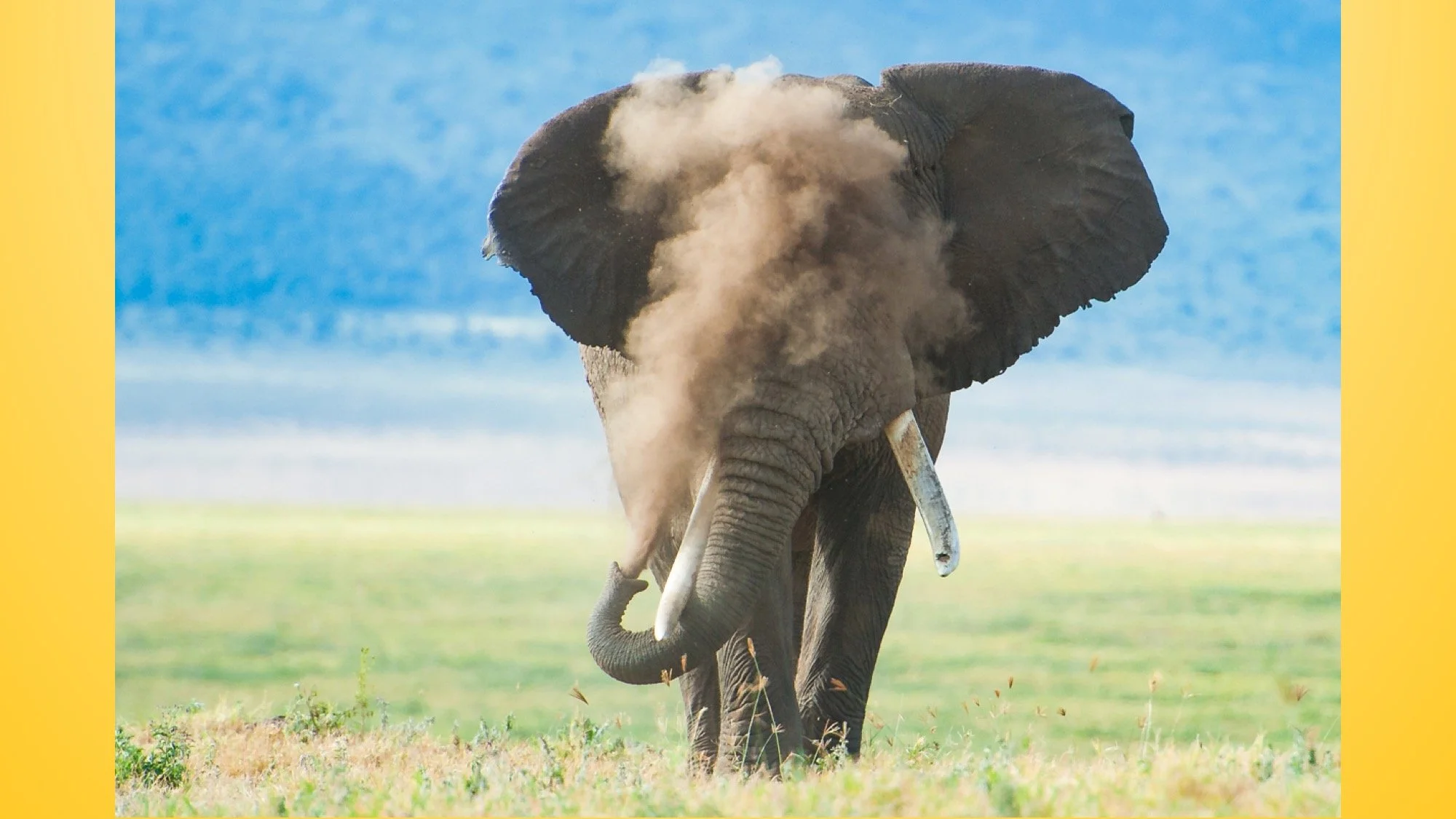
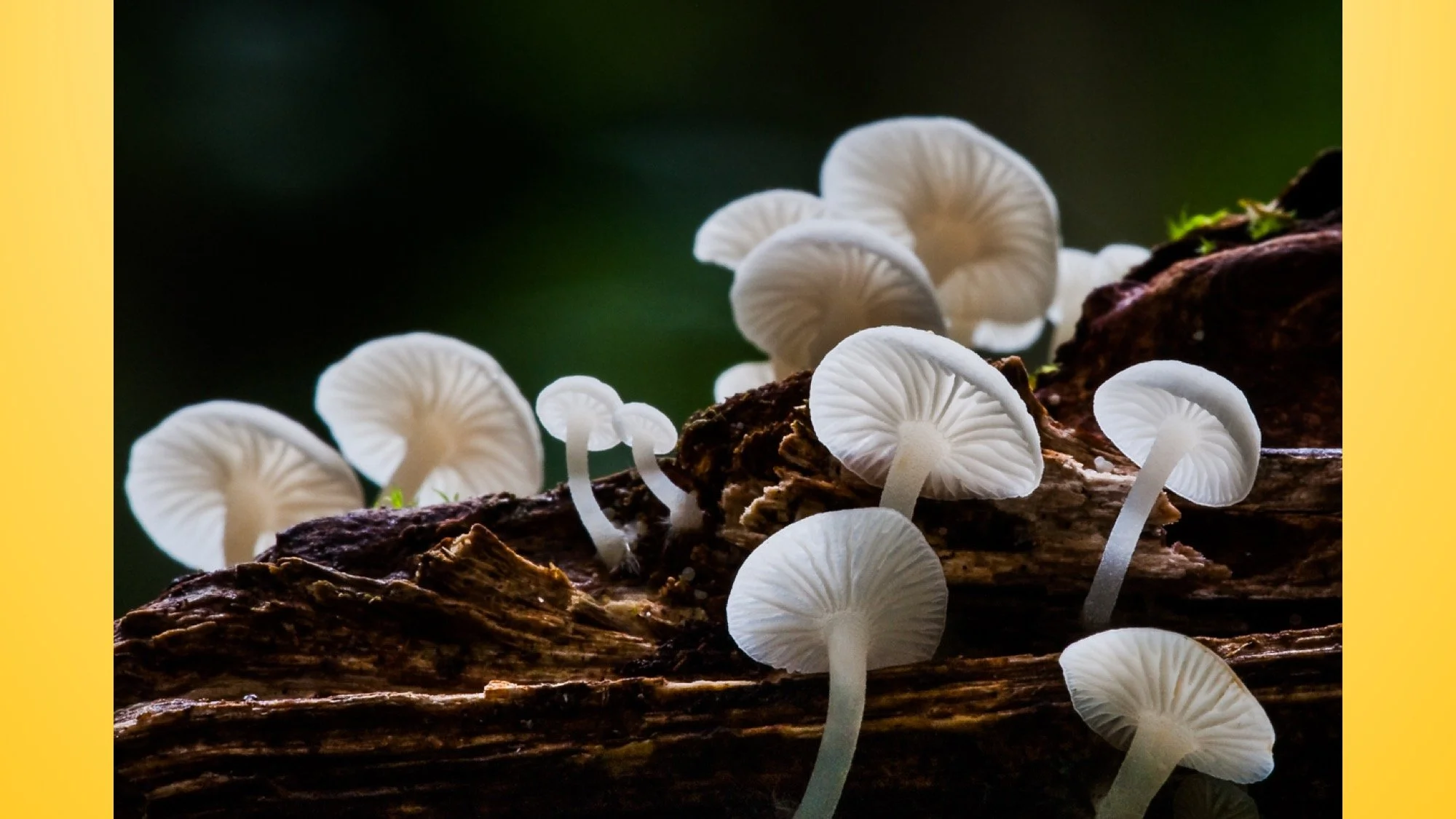
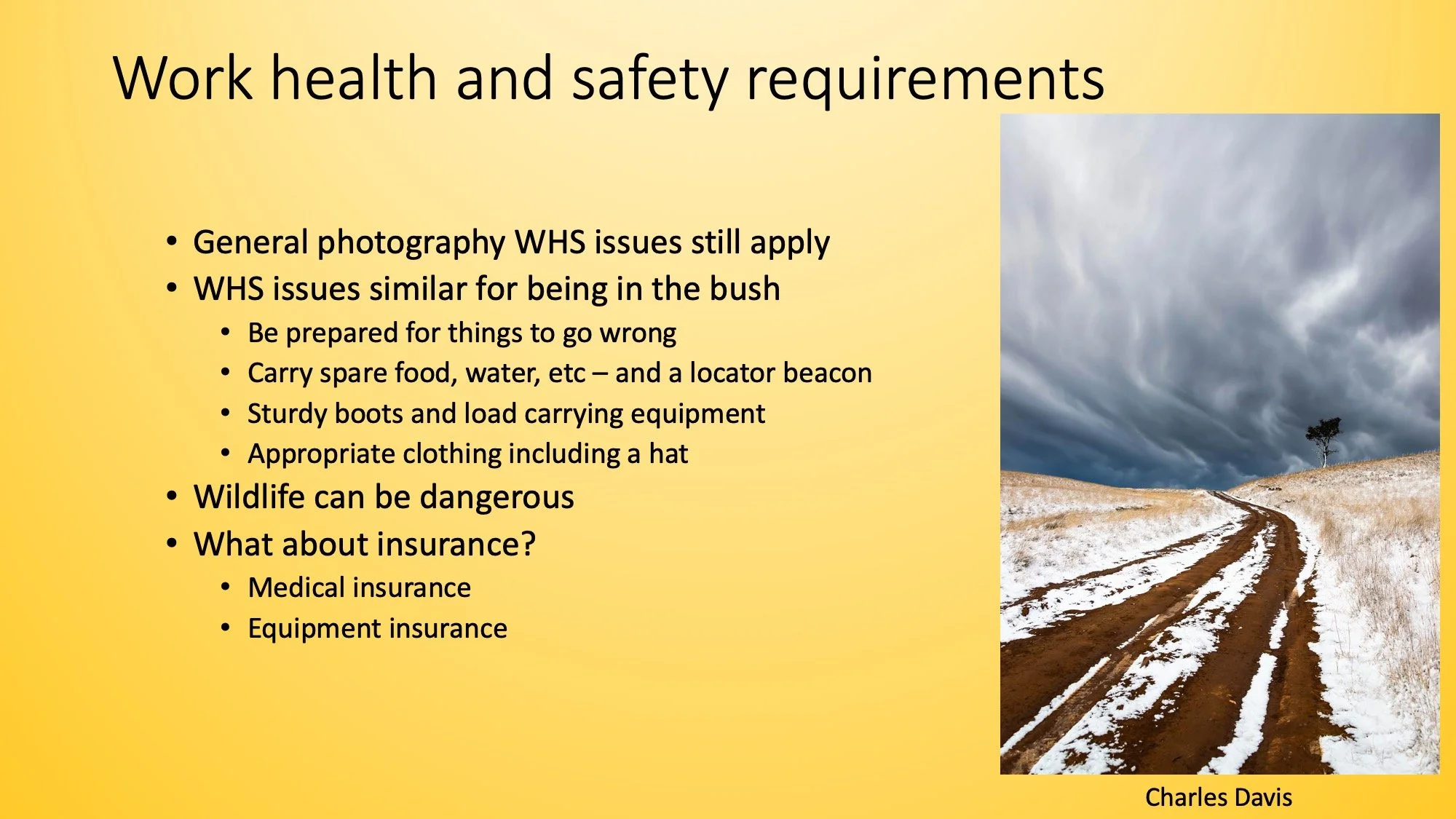
The general photography WHS issues still apply to wildlife photography, although more so to those related to working in the field rather than in a studio.
Without going into specialist areas like underwater photography there are additional WHS issues to do with taking photos in nature. A lot of these are similar to those for being in the bush (https://photographylife.com/wildlife-photography-safety-tips)
Be prepared for things to go wrong, such as bad weather, injuries (including snake bite).
Carry spare food and water as well as maps (both physical and an offline digital map) and a locator beacon.
Sturdy boots and load carrying equipment for carrying heavy camera gear.
Appropriate clothing for the conditions, including a hat to protect you from the weather and to make it harder for ticks to get into your hair.
Of course wildlife can be dangerous, as the story of Hoshino Michio shows. He was killed while filming a brown bear in Alaska in 1996 (https://www.nippon.com/en/views/b05701/visions-of-alaska-remembering-japanese-photographer-hoshino-michio.html). While Australia doesn’t have large carnivores there are a number of poisonous animals, and we also have stinging plants. Some of our larger animals, like dingoes, kangaroos and cassowaries will attack if they feel threatened.
WHS also got me thinking about insurance for photography equipment and also health insurance.
Tailored insurance for photographic equipment https://www.photography-insurance.com.au
Photography insurance including liability insurance https://www.aami.com.au/business-insurance/small-business/photographers-insurance.html
Medical and travel insurance would be more case specific, and may become expensive once the insurance company is aware of your activity.
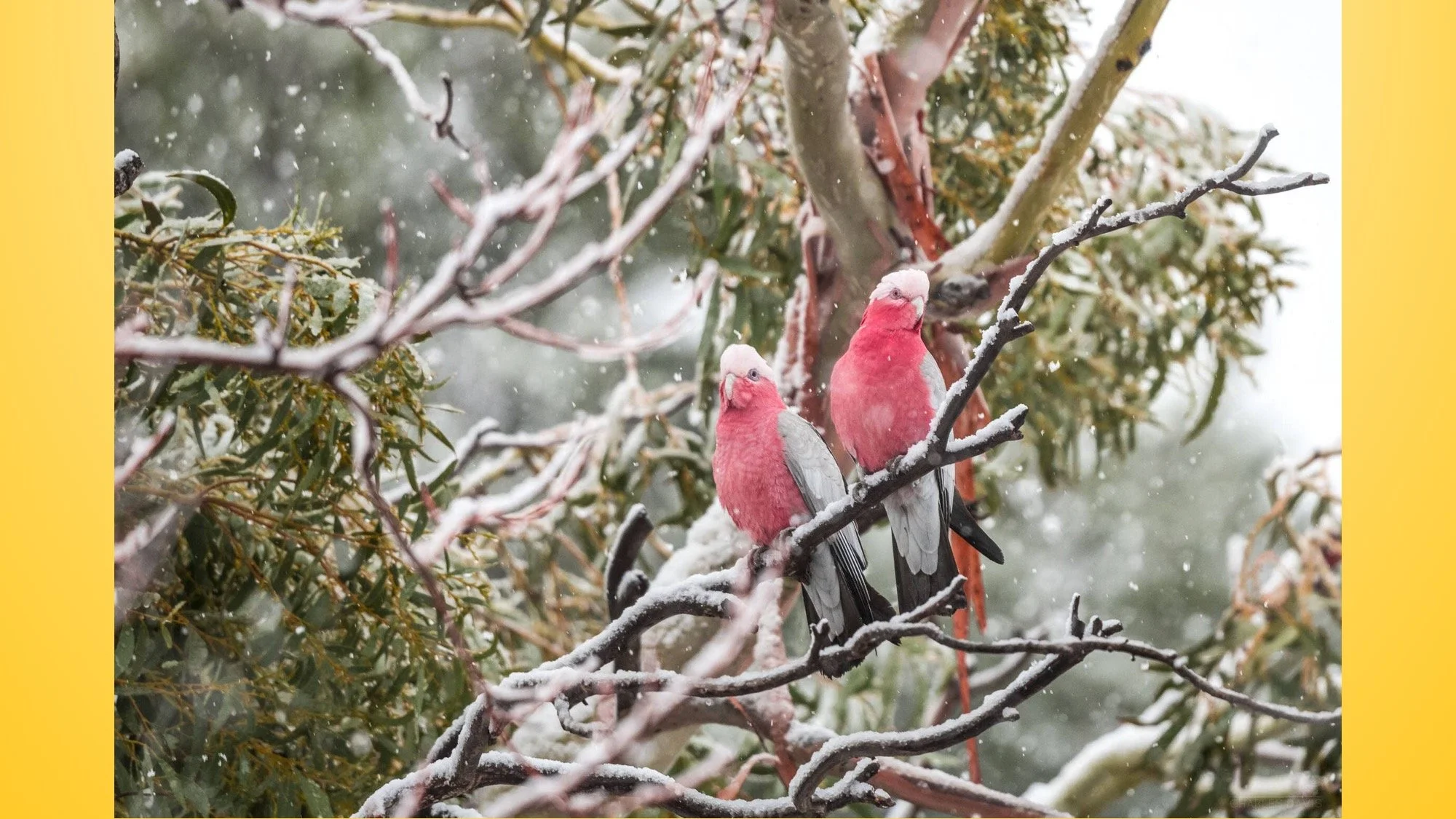
Image from https://shop.australiangeographic.com.au/products/snow-road-by-charles-davis?variant=47348332036396
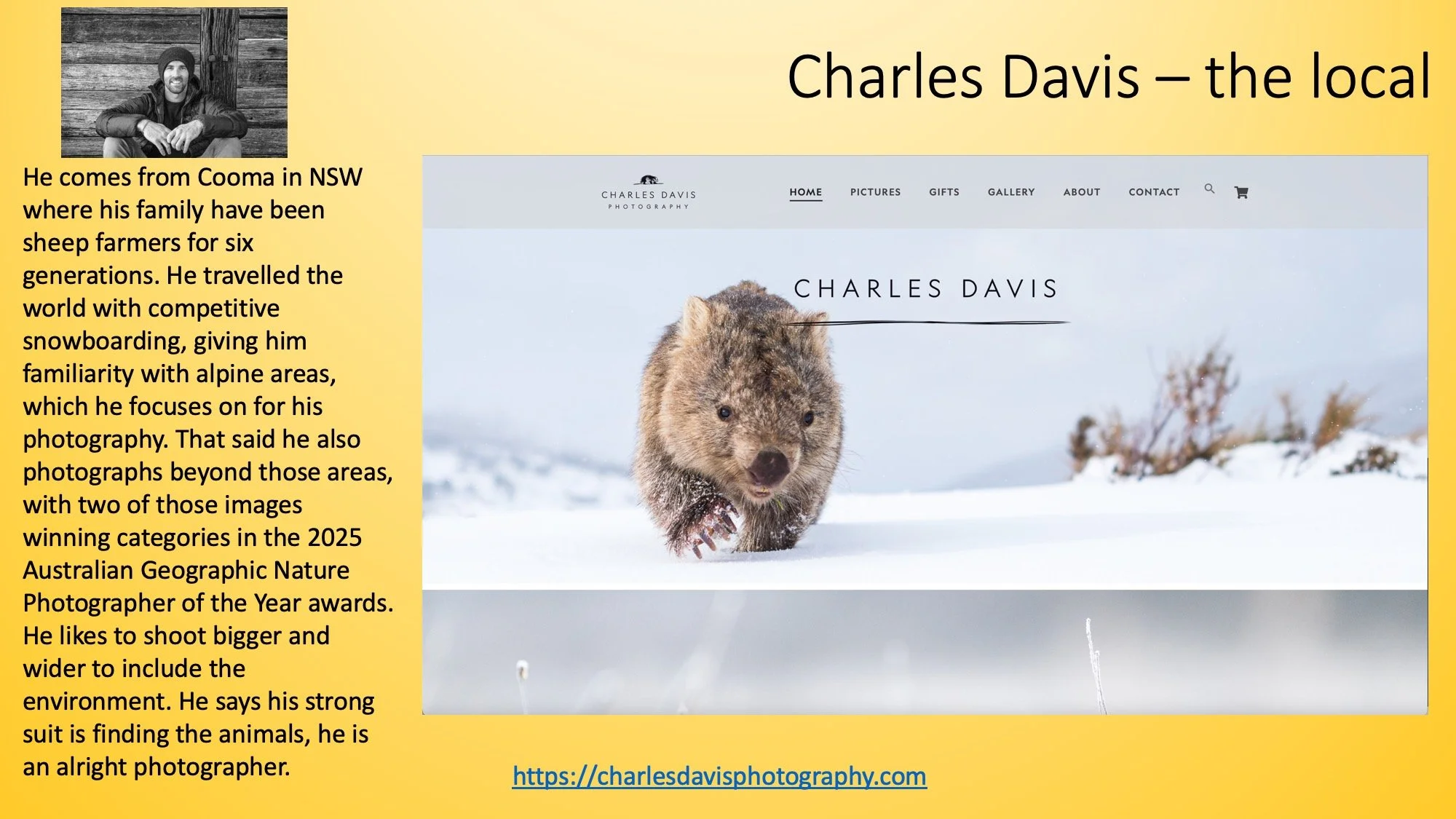
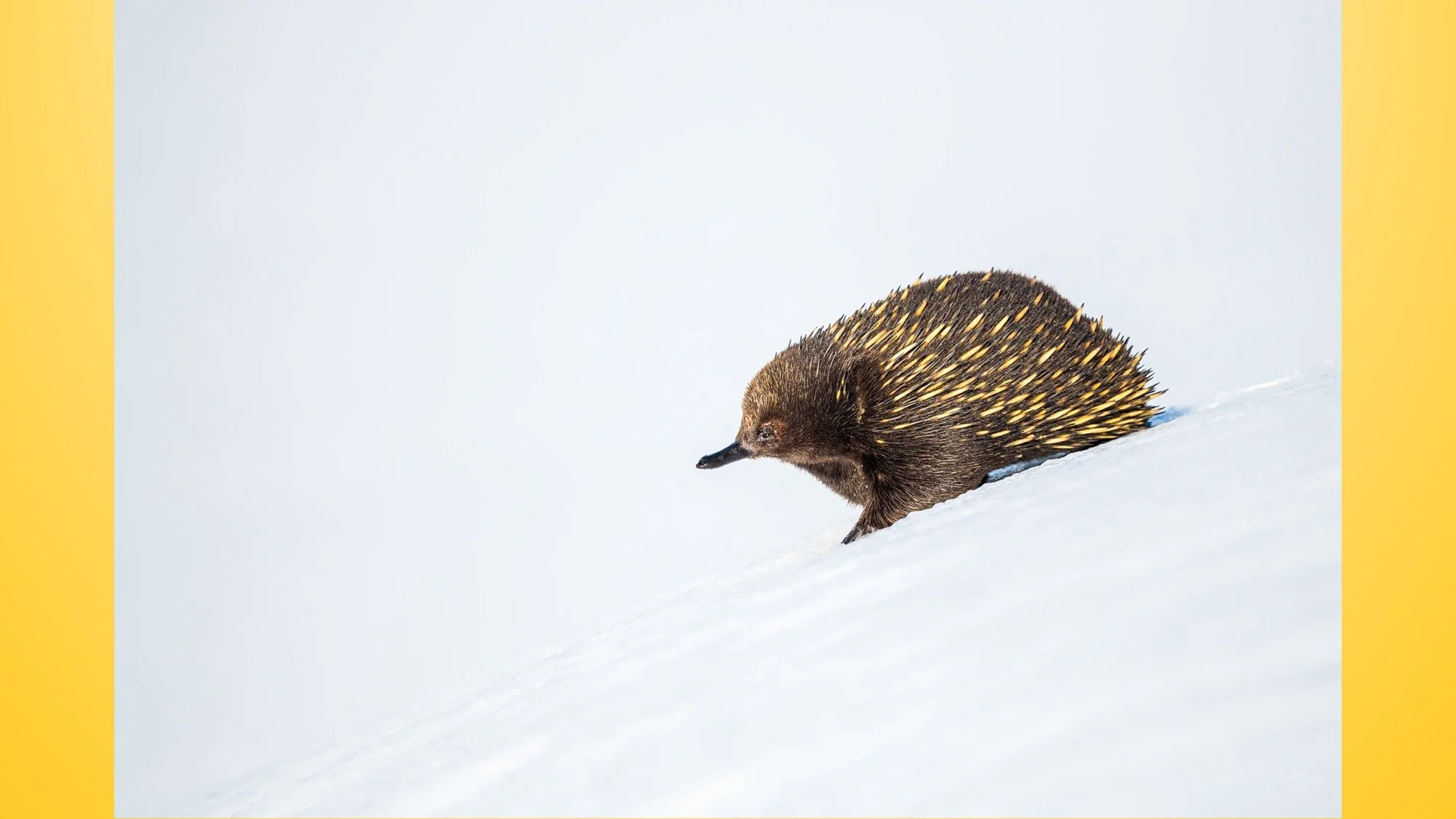
Charles Davis comes from Cooma, NSW, and I had a chance to visit his amazing gallery there. I tried to reach out to him but I didn’t have any luck unfortunately. He appears to be self taught as a photographer but possibly had some good advice from snowboarding photographers. In interviews he referred to finding his photography niche by shooting images of well-known Australian wildlife in Australia’s snow fields. However, he has also started to branch out to wider Australia. He likes to include the environment in his images rather than going for the tightly cropped picture of an animal. He seems to make his money mainly from selling his photography, although he also does some wildlife filming and scouting locations for the likes of David Attenborough.
Sourced from:
https://charlesdavisphotography.com/about/
https://www.capturemag.com.au/profiles/charles-davis-emerging-talent
https://lamontmag.com/charles-davis-photographer/
https://www.snowsbest.com/australias-snow-wildlife-photos-that-will-make-you-weep/
https://www.capturemag.com.au/profiles/charles-davis-emerging-talent
Profile image sourced from https://charlesdavisphotography.com/about/
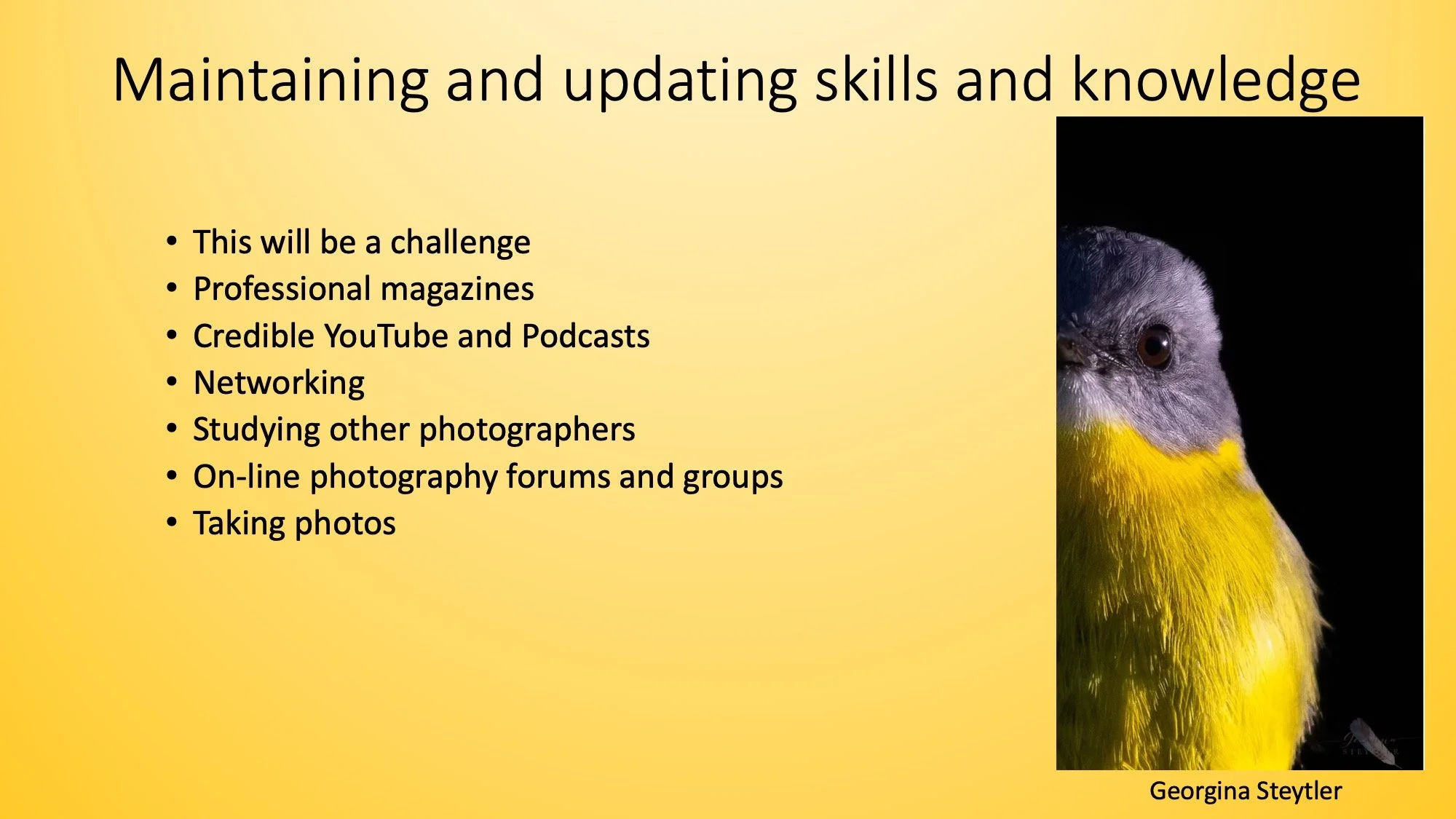
I have no doubt that this will be a challenge, although some ways to do this are listed below.
I think that magazines can still help.
The Journal of Wildlife Photography (https://journalofwildlifephotography.com)
Australian Photography (https://www.australianphotography.com)
YouTube and Podcasts with credible photographers.
Adorama - https://www.youtube.com/adorama
Networking with other photographers about what they are doing.
Attending photographic exhibitions and studying how other photographers are working.
Participating in on-line photography forums and groups so as to be part of discussions, receive critiques and mentoring.
Getting out and taking photographs of no matter what – I recall a reptile photographer saying that he practiced his technique and composition photographing rubber snakes that he would place around his backyard so that he was ready for photographing the real thing.
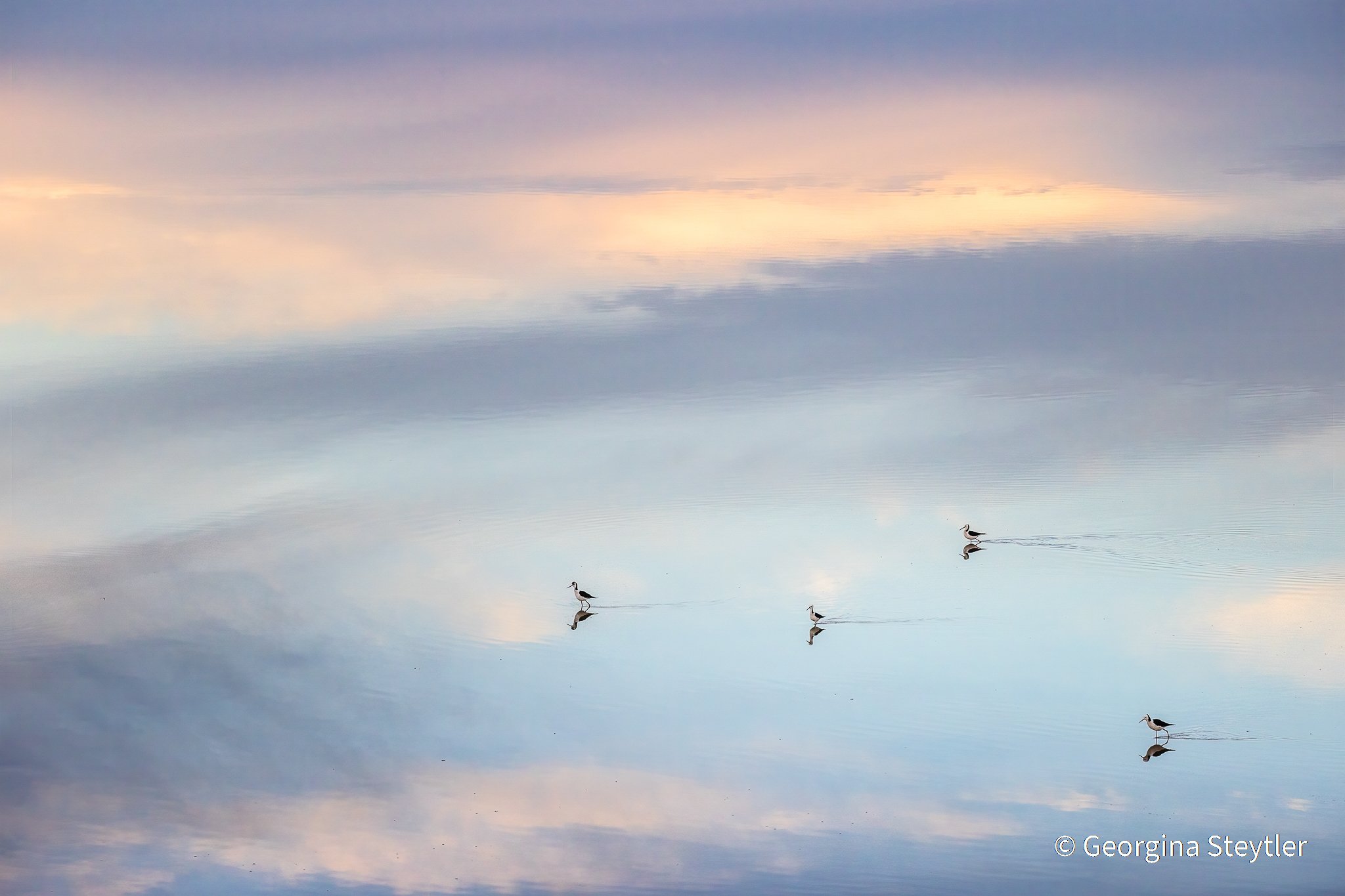
Image sourced from https://www.georginasteytler.com.au/copy-of-behaviour
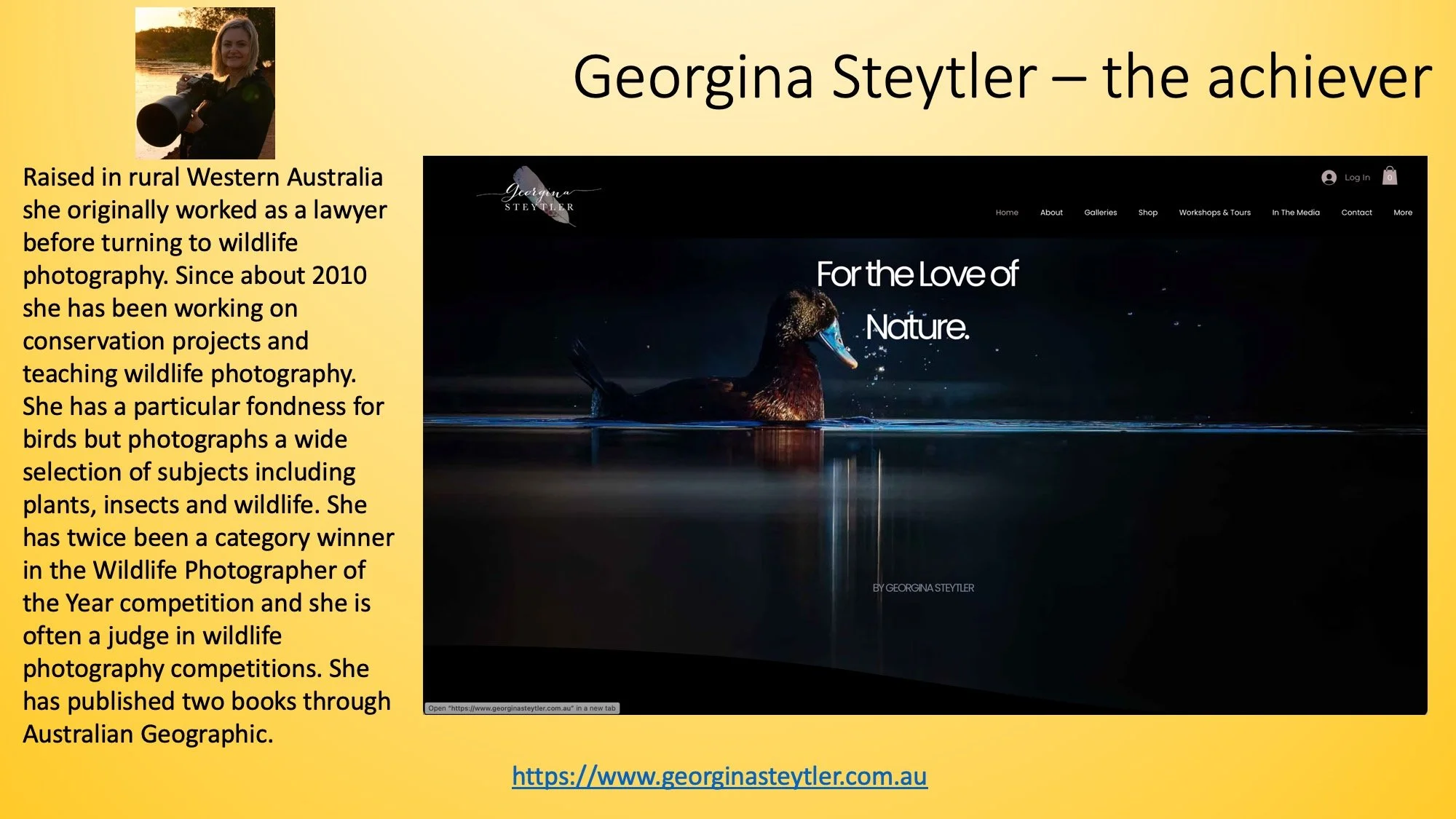
My final photographer is Georgina Steytler, who is a former lawyer who became involved in environmental issues. She also appears to be a self-taught photographer. She photographs a range of subjects including plants and insects, with a particular interest in birds. Her photographs range from documentary to artistic. Her images have won international awards and she has published two wonderful books through Australian Geographic. She produces a regular email that sometimes includes comparisons of her raw and processed images. She also continues with environmental causes and is associated with a charity to manage a threatened wetland in WA. Through her website she sells prints, her two books, jigsaws and workshops.
Sourced from:
https://www.georginasteytler.com.au/about
https://www.naturettl.com/georgina-steytler/
https://www.abc.net.au/news/2025-10-26/five-headed-caterpillar-wins-photo-award/105926608
Profile image sourced from https://www.georginasteytler.com.au/about
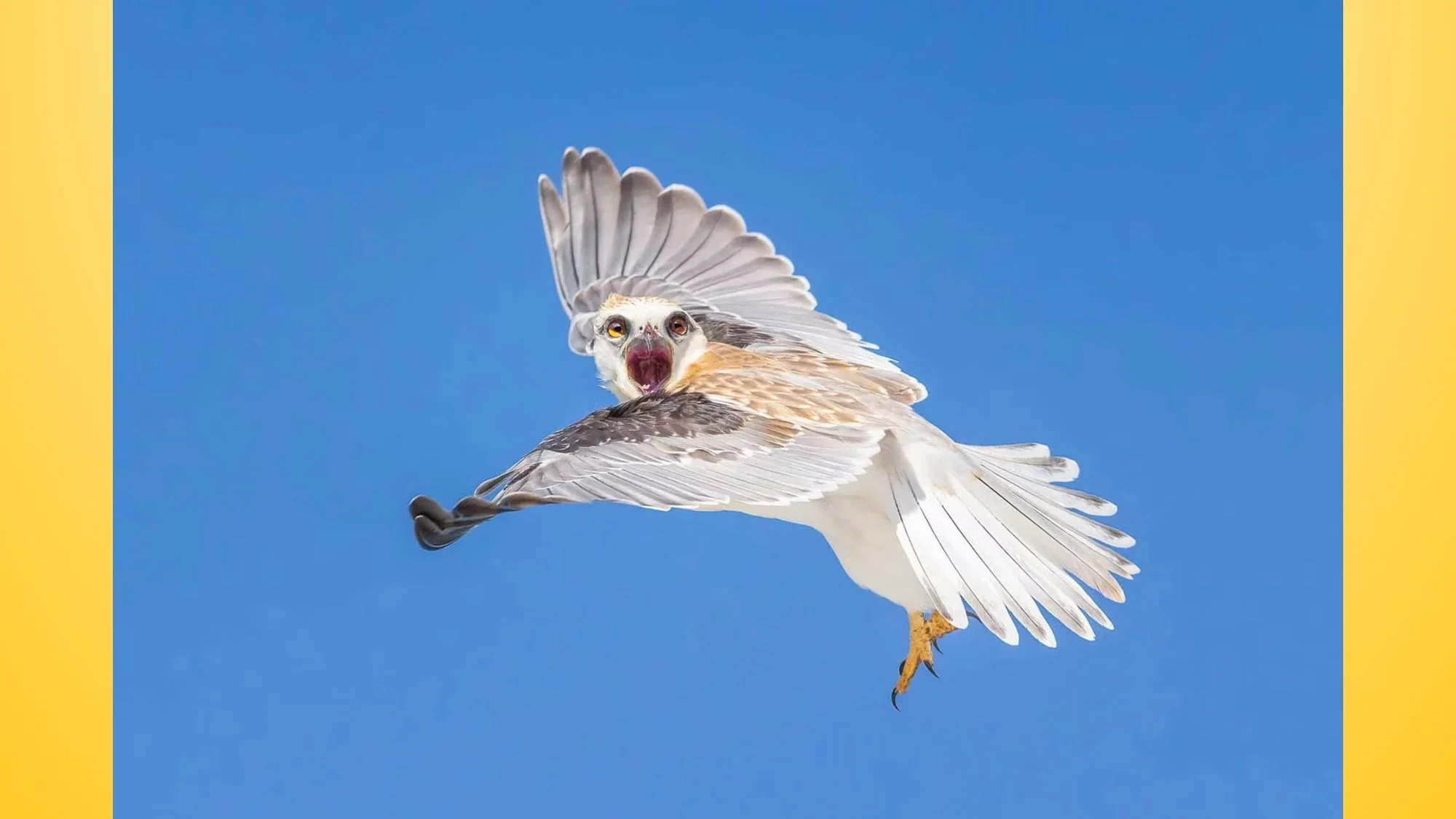
Image sourced from https://www.georginasteytler.com.au/flight-photography
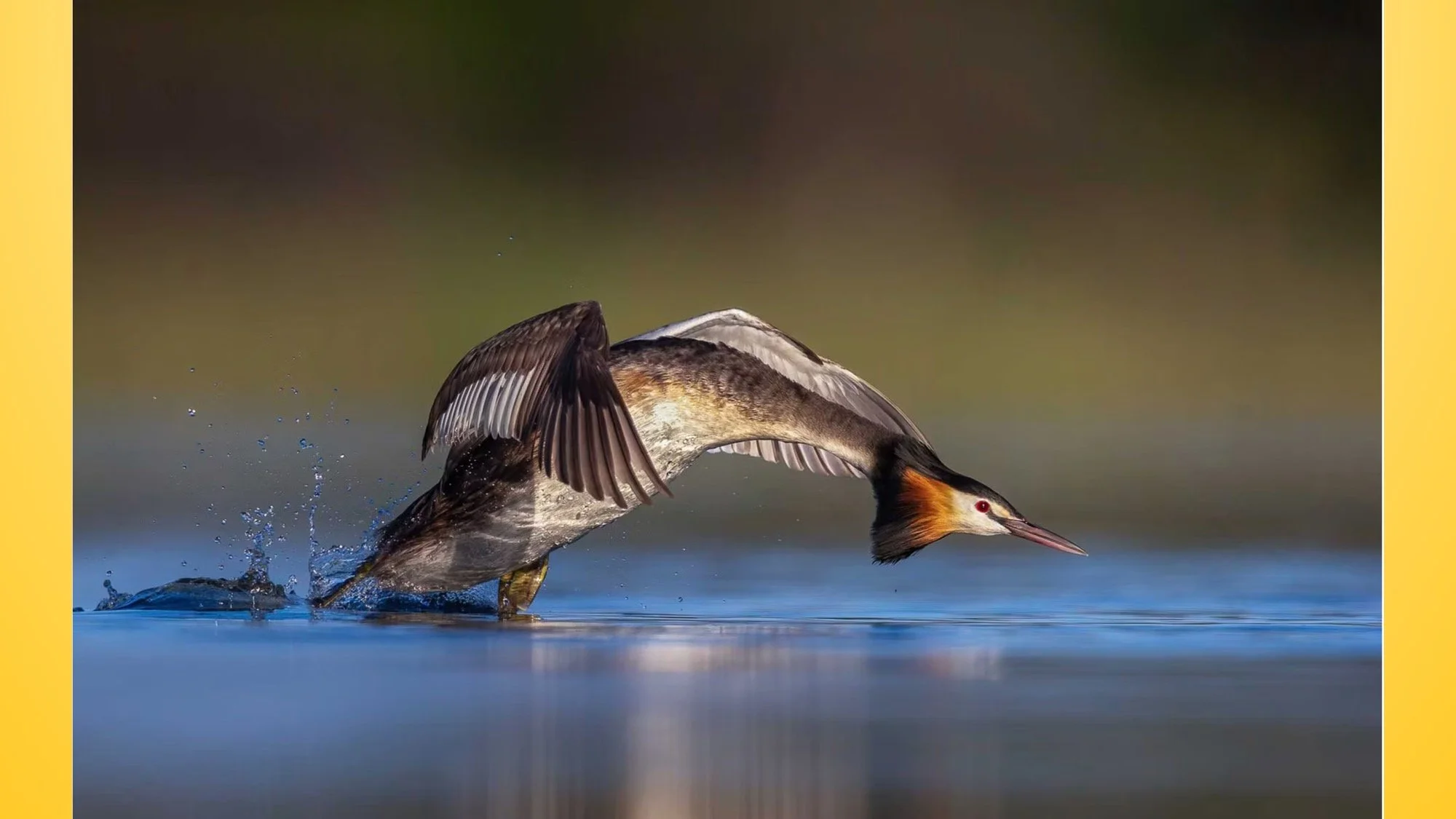
Image sourced from https://www.georginasteytler.com.au/flight-photography
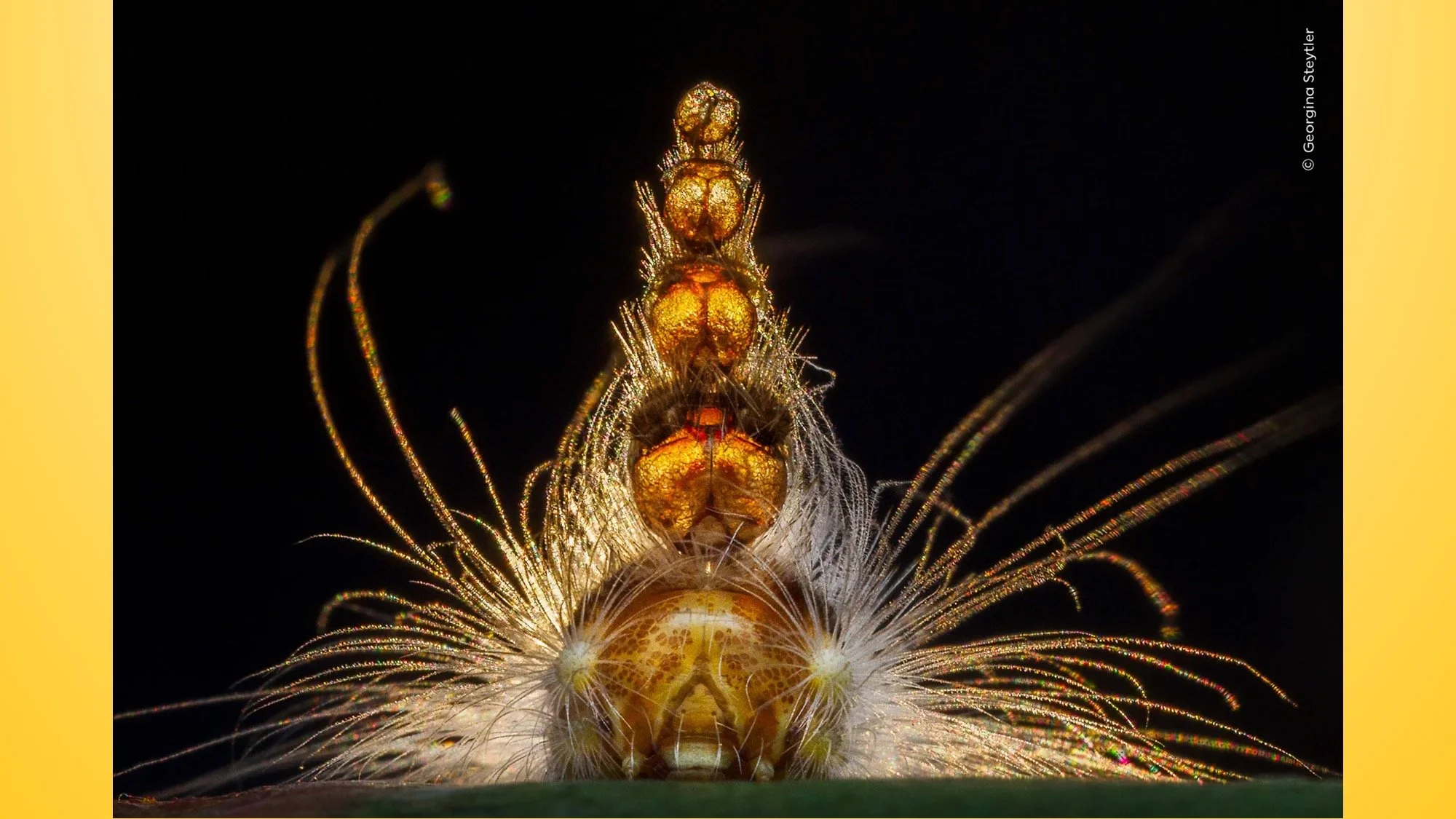
Mad Hatterpillar - Georgina Steytler - Behaviour: Invertebrates Winner 2025
Image sourced from https://www.nhm.ac.uk/wpy/gallery/2025-mad-hatterpillar?tags=ed.current
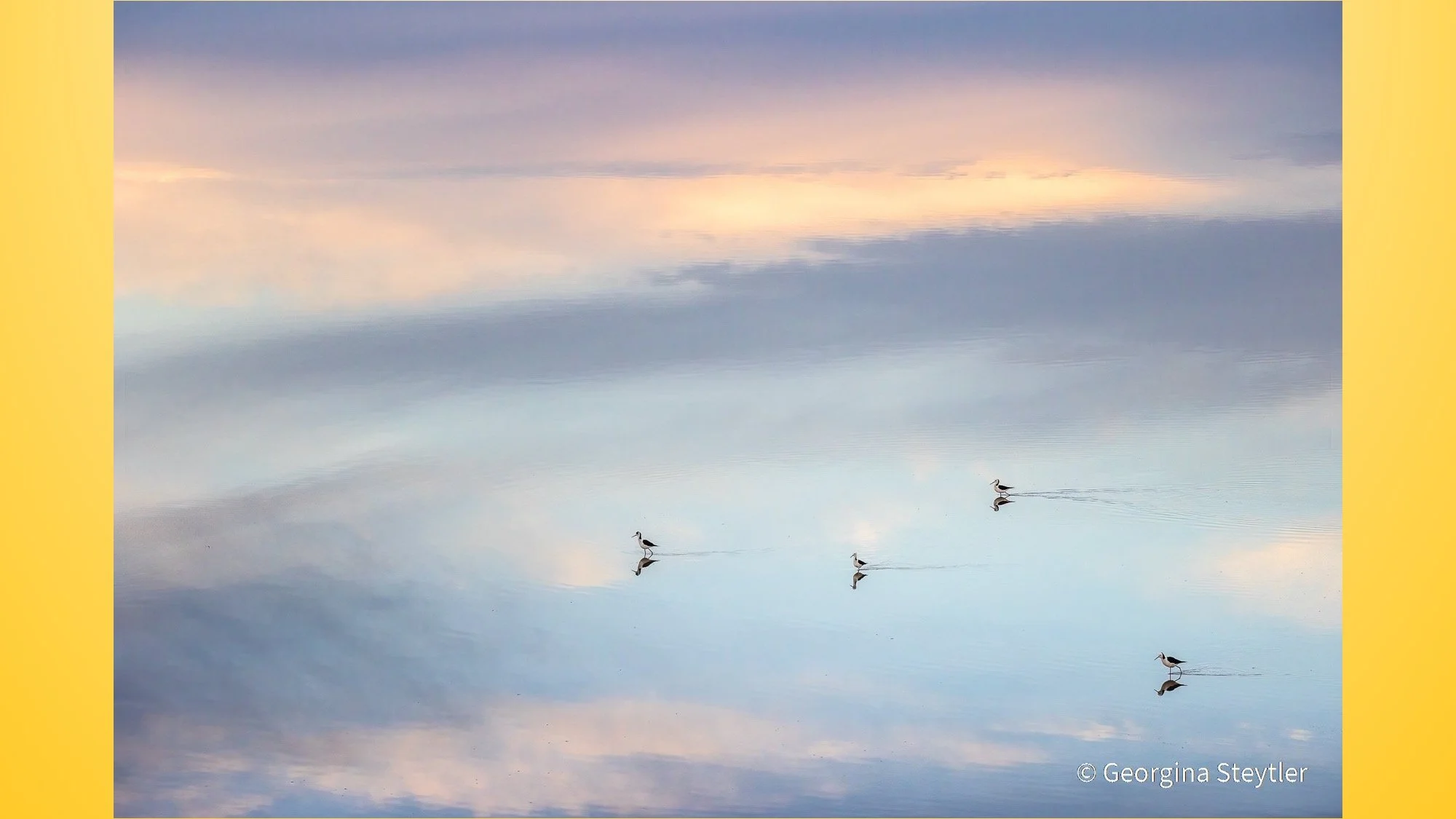
Useful Reading
•How to Become a Professional Wildlife Photographer – by Nick Dale (UK)
•How to be a professional wildlife photographer – by Mark Carwardine
•How can I be a photographer for National Geographic? – by National Geographic (US)
Websites of professional wildlife photographers
•Karine Aigner - www.karineaigner.com/index
•Laurent Ballesta - laurentballesta.com
•Shane Goss - www.shanegross.com/index
•Wim van den Heever - www.wimvandenheever.com
•Jan Wegener - www.janwegener.com
•Dani Connor - www.daniconnorwild.com
•Joel Sartore - www.joelsartore.com
•Christian Ziegler - christianziegler.photography
•David Tipling - davidtipling.com
•Tim Laman - www.timlaman.com
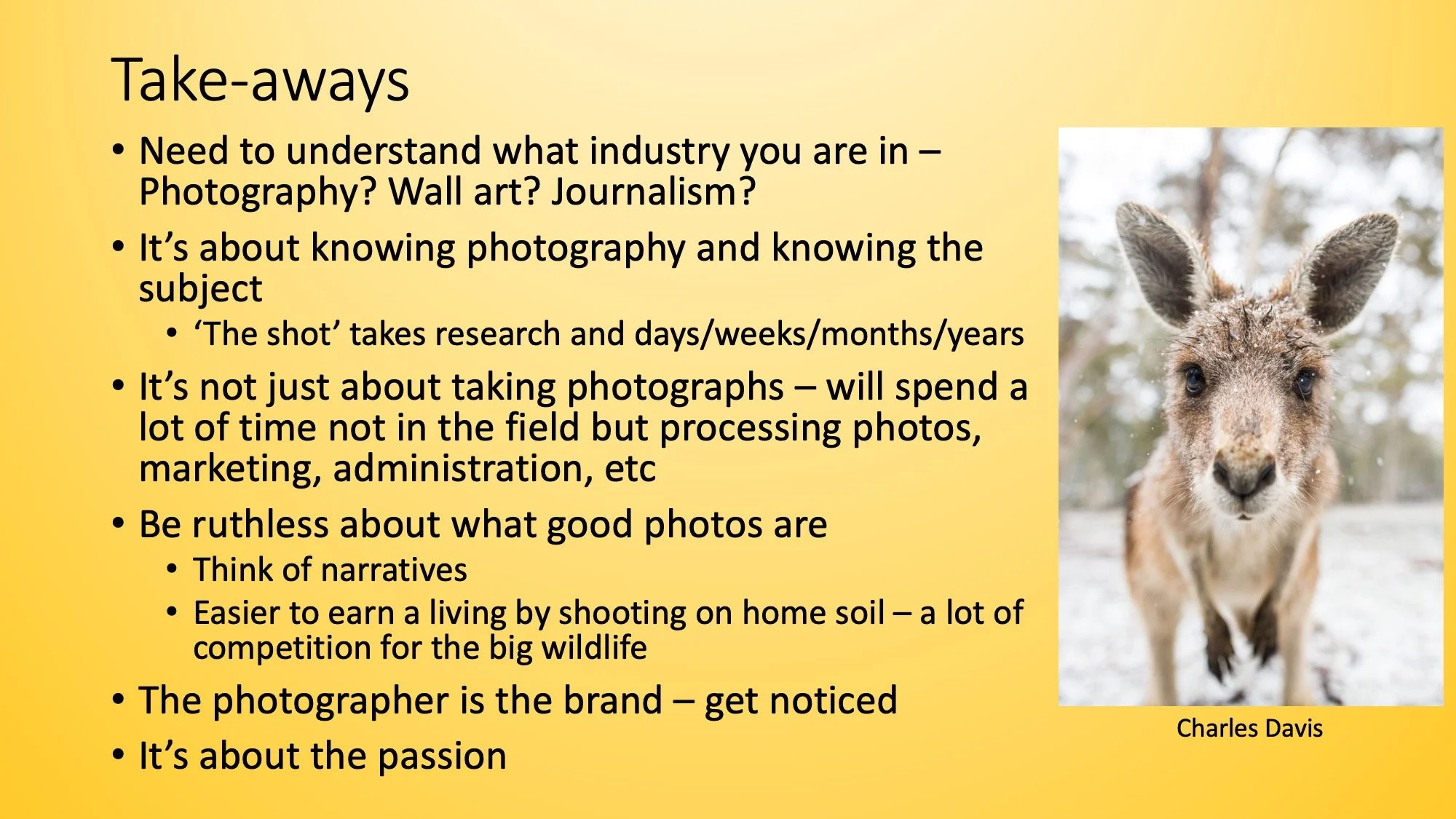
All the photographers I looked at, to a lesser or greater extent reflected these takeaways.
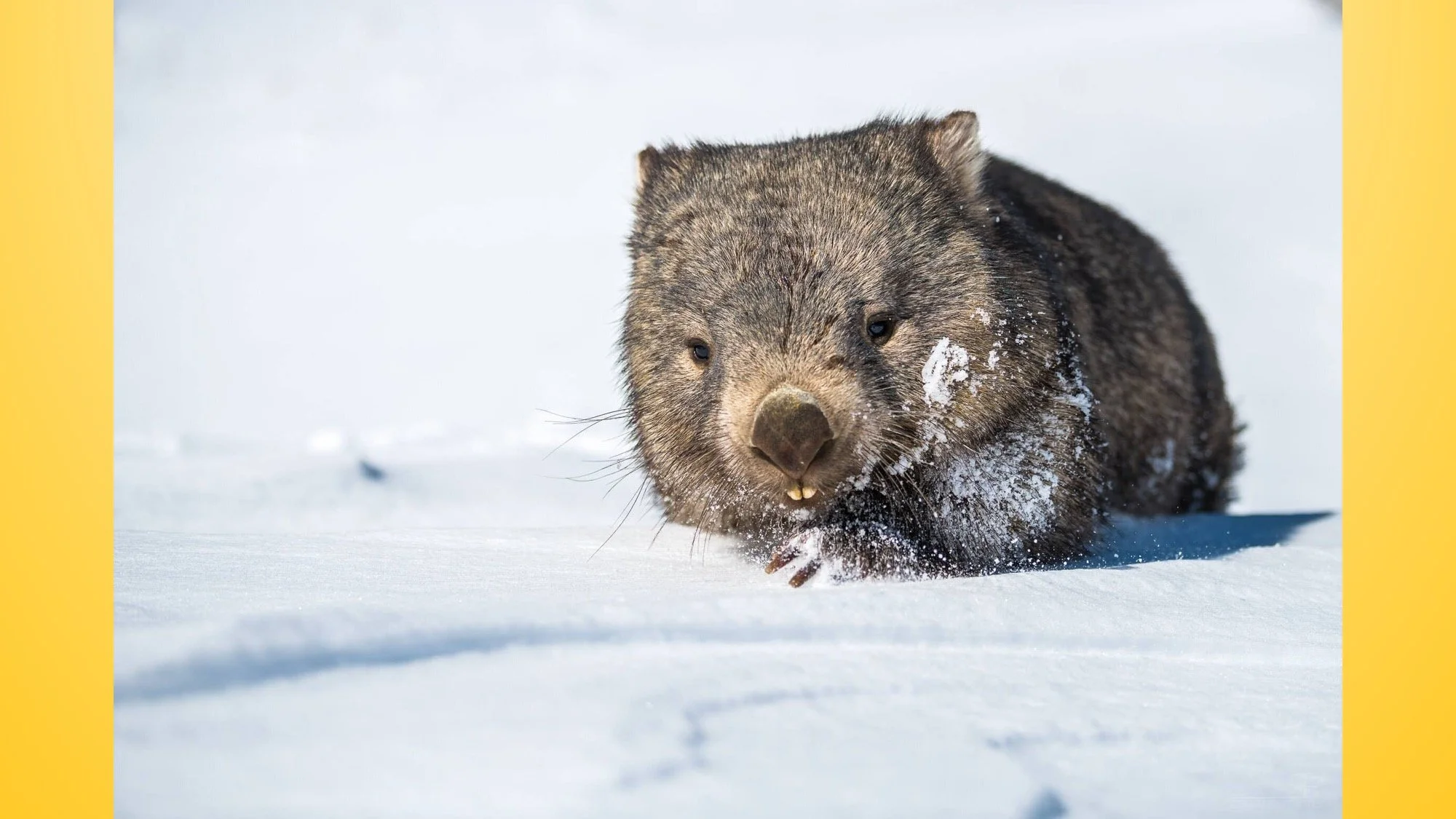
Image sourced from https://shop.australiangeographic.com.au/products/eric-by-charles-davis