
Sponsor a Species Day with ACT Wildlife
Sadie, a Common Wombat, now at the velvet stage, with fur
Canon EOS R5 Mk II with a Canon RF 70-200mm f/4L IS USM [ISO 1600, 74mm, f/4.0 and 1/200])
On Sunday, 18 October, ACT Wildlife held a “Sponsor a Species” event for their supporters. It was a very well attended activity, with one couple even flying in from Melbourne. I attended in my role as assisting the social media coordinator, so that I could take photos. Yes, a tough gig. Hanging out with wonderful, caring people while being up close with Australian wildlife!
An orphan Brushtail Possum
Canon EOS R5 Mk II with a Canon RF 70-200mm f/4L IS USM [ISO 1600, 200mm, f/4.0 and 1/200])
The possum-caring twins with two of their charges
Canon EOS R5 Mk II with a Canon RF 24-70mm f/2.8L IS USM [ISO 100, 39mm, f/10 and 1/160] with a Godox AD300Pro II flash)
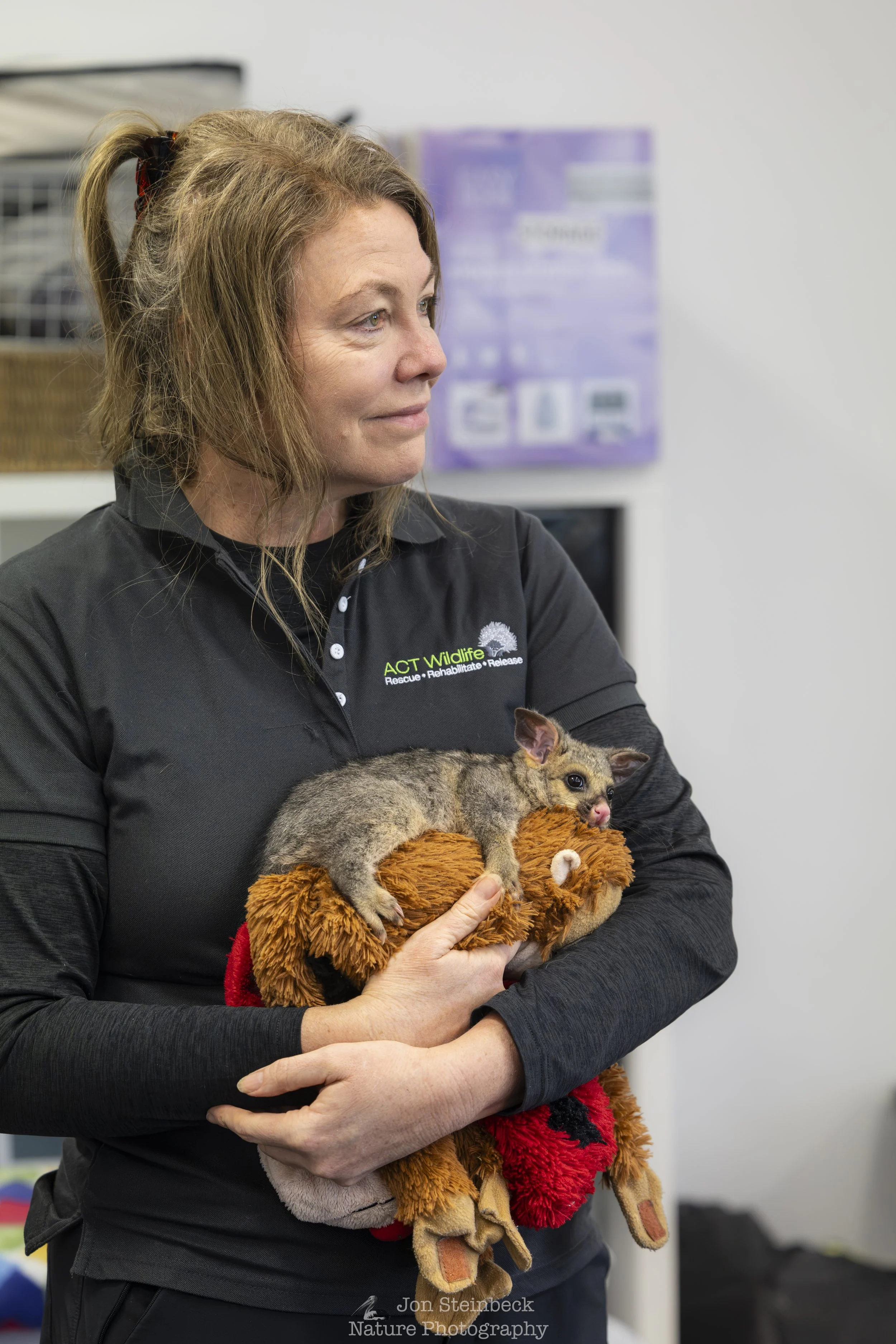
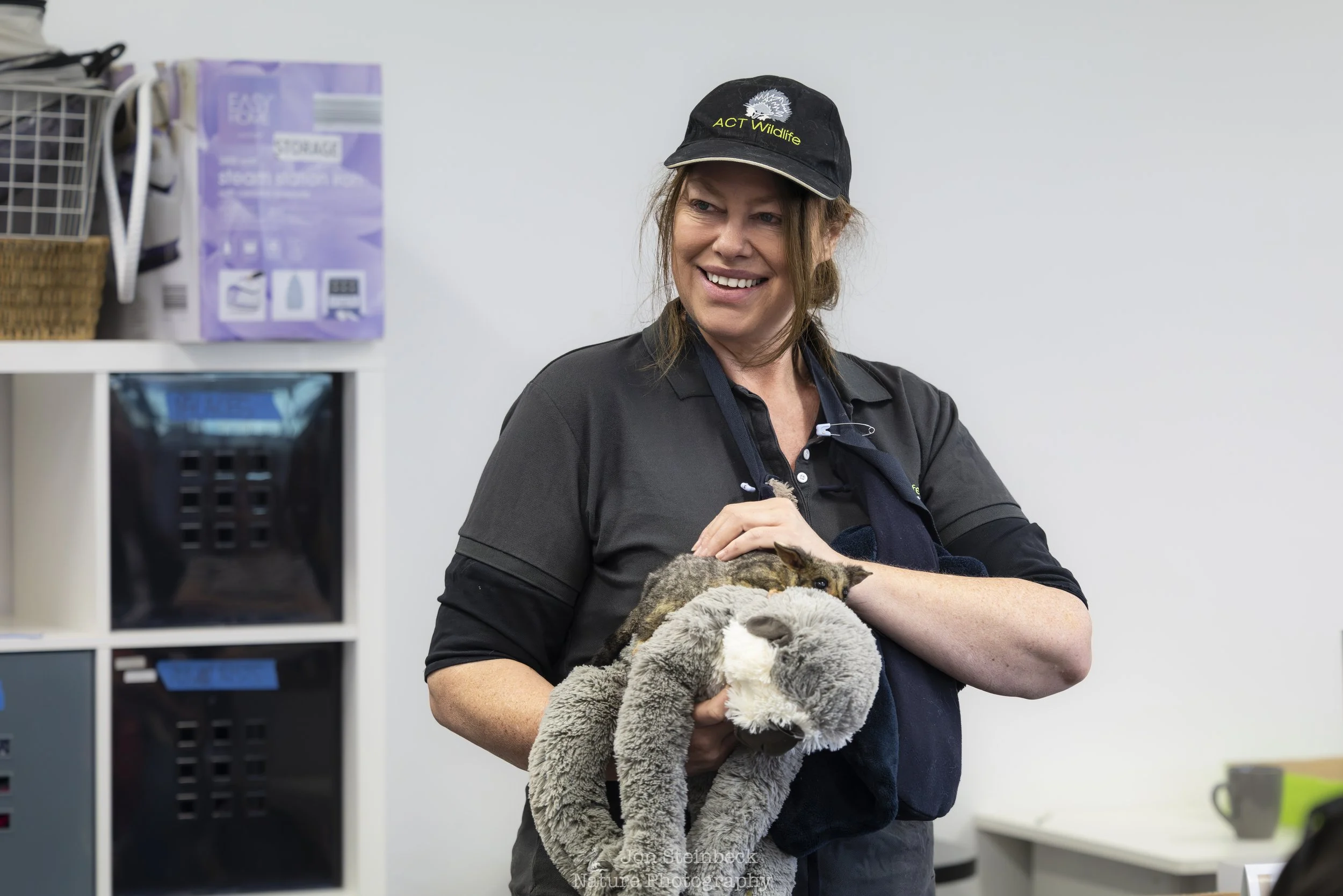
The twins, Debra and Tracey, who are two of the possum carers. They were both really lovely people, and very committed to their possums.The possums were all Brushtail Possums (Trichosurus vulpecula), a very common species, that people will possibly see and hear around their homes. Unfortunately, because they are so adapted to living in urban environments they fall victim to our pets, rodent poison, cars, electrocution, their feet damaged in roller doors, etc. You get the idea, just because they have come to live in cities, doesn’t mean that it is safe. The often have no choice to live in suburbia because we have destroyed their habitat, or built a suburb around a small area of trees that they are living in. Possums are not released back into the ACT’s urban nature reserves because the understanding is that there are probably possums there so they will be chased off. They are released into wilderness where they have more chance of finding a home range. The toy monkeys in the photographs are actually what the carers use to help simulate the lost parent. The toy monkey has fur that the possum can cling to while giving them a feeling of security.
Attendees up close with the wildlife
Canon EOS R5 Mk II with a Canon RF 70-200mm f/4L IS USM [ISO 1600, 98mm, f/4.0 and 1/200])
On the day, this was also an opportunity for attendees to touch the wildlife. Obviously, not something to attempt in the bush with a completely wild animal. Some readers might object to this, because it is not natural. However, from a different perspective, these orphans are already living a very unnatural life. They don’t really have a normal upbringing because they are sharing it with humans, not their mother. I would also highlight that the carers are very experienced and know what is harmful to the wildlife. The carers truly put their hearts into caring for these animals, often at their own financial expense, and they are not going to hurt the animals. I certainly saw no signs of stress in the wildlife, like involuntary toilet movements or tying to flee. The audience was also very respectful and gentle to the animals. I think that being that close to an animal and having physical contact as left a lasting impact on so many people.
Grey-headed Flying Fox orphaned pup
Canon EOS R5 Mk II with a Canon RF 70-200mm f/4L IS USM [ISO 1600, 200mm, f/4.0 and 1/200])
Mephistopheles, the Little Forest Bat, Australia’s smallest species of bat, with Sandra
Canon EOS R5 Mk II with a Canon RF 70-200mm f/4L IS USM [ISO 1600, 143mm, f/4.0 and 1/200])
Sandra and Peter with orphaned flying fox pups
Canon EOS R5 Mk II with a Canon RF 70-200mm f/4L IS USM [ISO 1600, 70mm, f/4.0 and 1/200])
Next up was a micro bat, Mephistopheles, the Little Forest Bat (Vespadelus vulturnus), Australia’s smallest species of bat. The trick for carers with this bat is trying to stop it crawling into small spaces. The bats need to practice flying as part of their recovery, but their small size means that they can get into very small spaces. Sandra, the carer with the Little Forest Bat, said that they had disassembled a ceiling fan in their home trying to retrieve one of their bats. There were also Grey-headed Flying Fox (Pteropus poliocephalus) pups. Despite the large colonies that people might be aware of, their numbers are in decline in the wild. And, yes, they are dummies in the pups’ mouthes. That simulates holding onto their mother’s teat in nature, and as long as the pup has the dummy in its mouth, it will be calm.
Who wouldn’t want a photographic memory of a cute baby animal
Canon EOS R5 Mk II with a Canon RF 70-200mm f/4L IS USM [ISO 1600, 70mm, f/4.0 and 1/200])
The day was a very popular event, with many people recording it on their phones. It was also a great way for those who financially contribute to see in-person, the wonderful wildlife that they are supporting.
Sadie, not really caring about the fuss
Canon EOS R5 Mk II with a Canon RF 70-200mm f/4L IS USM [ISO 1250, 200mm, f/4.0 and 1/200])
Lindy holding Sadie, who briefly opened her eyes
Canon EOS R5 Mk II with a Canon RF 70-200mm f/4L IS USM [ISO 1250, 120mm, f/4.0 and 1/200])
The final animal was a Common Wombat (Vombatus ursinus), named Sadie, who is at the stage of life when they are called ‘velvets’ because they have some fur on them. The speaker was the amazing Lindy, otherwise known on Instagram as Crazy Wombat Lady. She previously cared for possums but for the past few years has focussed on wombats. She delighted the crowd with stories of the challenges of caring for a strong burrower like wombats. Her garden now has a substrate of steel mesh to try and constrain these animals. Lindy also made the point that for release, under care wombats have to meet three criteria, they are at least 18 months old, weigh18 kg and that they hate the carer. Lindy explained that this is the wombat trying to exert independence and wanting to leave the family burrow.
Evan, who organised the day, advertising the 2027 ACT Wildlife Calendar
Canon EOS R5 Mk II with a Canon RF 70-200mm f/4L IS USM [ISO 1600, 73mm, f/4.0 and 1/200])
Evan, the social media coordinator for ACT Wildlife organised the day and also reminded attendees about the wonderful ACT Wildlife Calendar 2027 that is currently on sale. I should admit that I have several photos in it as well, and any sale helps a very worthwhile cause.
This was a first for me, doing event photography and I found it a fun experience. I also enjoyed meeting more of the wonderful people involved in ACT Wildlife as well as learning about those animals. I also hope that my photographs help tell a wider story about how people are trying to help our unique wildlife that have been injured or orphaned.
