
Alpine Dingo howling
Female Alpine Dingo howling on a foggy morning
Canon EOS R5 Mk II with a Canon RF 100-500mm f/4.5-7.1 L IS USM Zoom [ISO 400, 500mm, f/8.0 and 1/1000])
This is the female Alpine Dingo (Canis lupus dingo) that I have photographed a few times now and these images are my favourite set of her. She is so beautiful. Although that morning gave me a good reminder to not get complacent around wild predators.
On that Thursday morning, I arrived at a location, with the intent to stay in one spot and let the life of the valley move around me. It was a foggy morning, and I had seen a dingo on the walk in, which may have been this female, but it was off to my west and heading in the opposite direction to me.
The dingo laying down
Canon EOS R5 Mk II with a Canon RF 100-500mm f/4.5-7.1 L IS USM Zoom [ISO 200, 500mm, f/8.0 and 1/500])
After I arrived at my spot and placed my camera backpack on the ground, I looked around for dingoes. Fortunately, the wait wasn’t long, and this female came around the side of the rise, and stood looking at me. After a couple of minutes she laid down on the ground and stayed put. She looked at me but also at her surroundings, seemingly happy to get some sun where she was. Since she seemed comfortable there and calm about my presence, I decided to swap lenses to take some different style photos from where I was. To do so, I crouched down to access my camera backpack. It seemed like I was only crouched down for a minute, and also looking down at my bag, not up at the dingo.
Moving around me
Canon EOS R5 Mk II with a Canon RF 100-500mm f/4.5-7.1 L IS USM Zoom [ISO 400, 472mm, f/8.0 and 1/1000])
When I stood up, I noticed the the dingo was making a straight line towards me, and had covered almost half the distance separating us. I am not sure why she move towards me. In thinking about it later, I wondered if by crouching down and taking my eyes of her, I looked weak, potentially like something to hunt. Possibly, she thought that the bag was a dead animal I was about to devour and she might be able to pick at remnants. Alternatively, I had never done this before, I normally stand upright to photograph her, so maybe she was coming closer to see what I was doing and how that might impact her. I suspect that I will never know, but when I stood up again and started photographing her, she stopped in her tracks, then curved around to the west, not far away from me. I was standing still the whole time, letting her dictate the distance between us. She occasionally looked at me, but most of the time she kept her head to the front. Although, when she did look at me, the sun really caught those amazing eyes that dingoes have, which is what I was hoping.
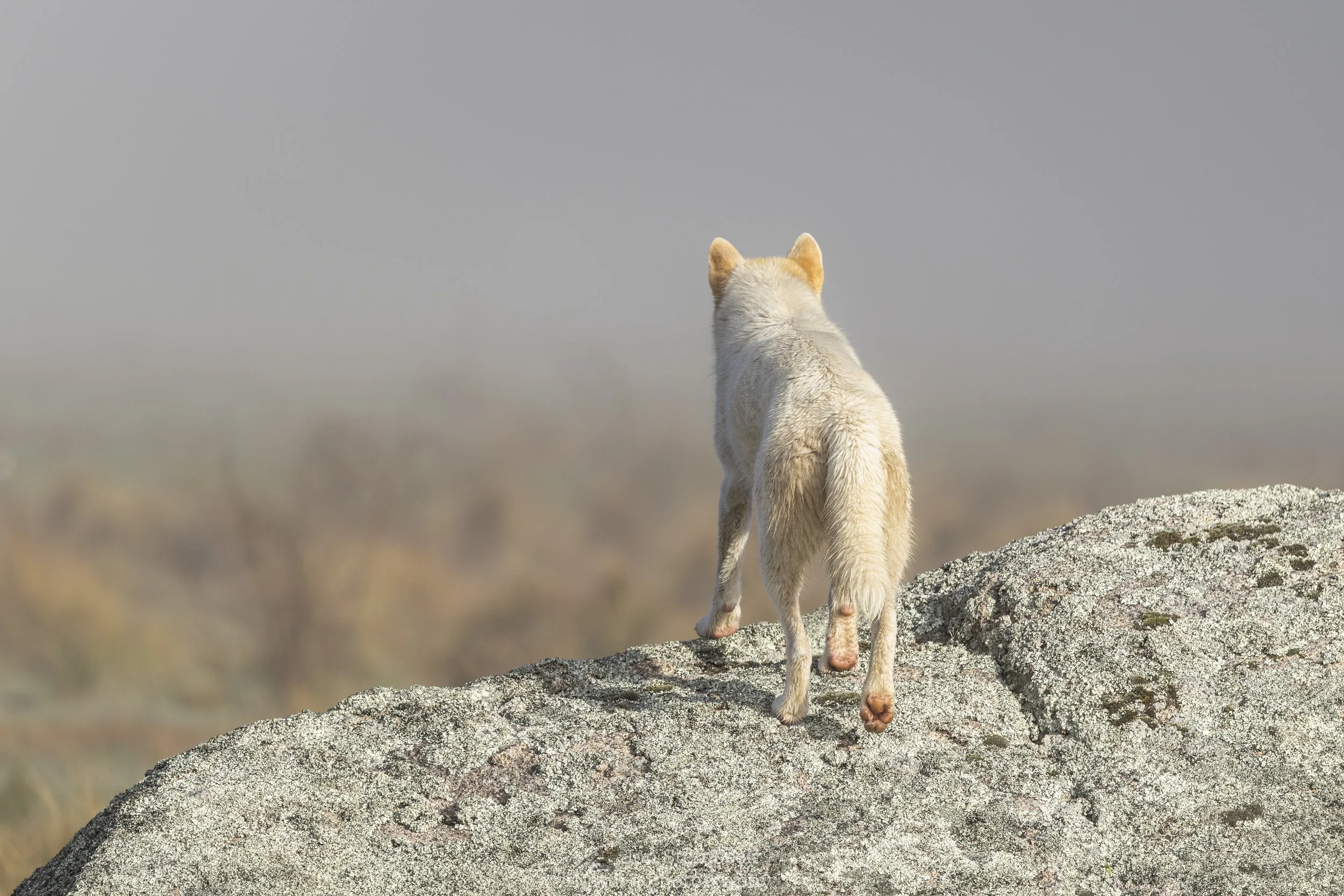
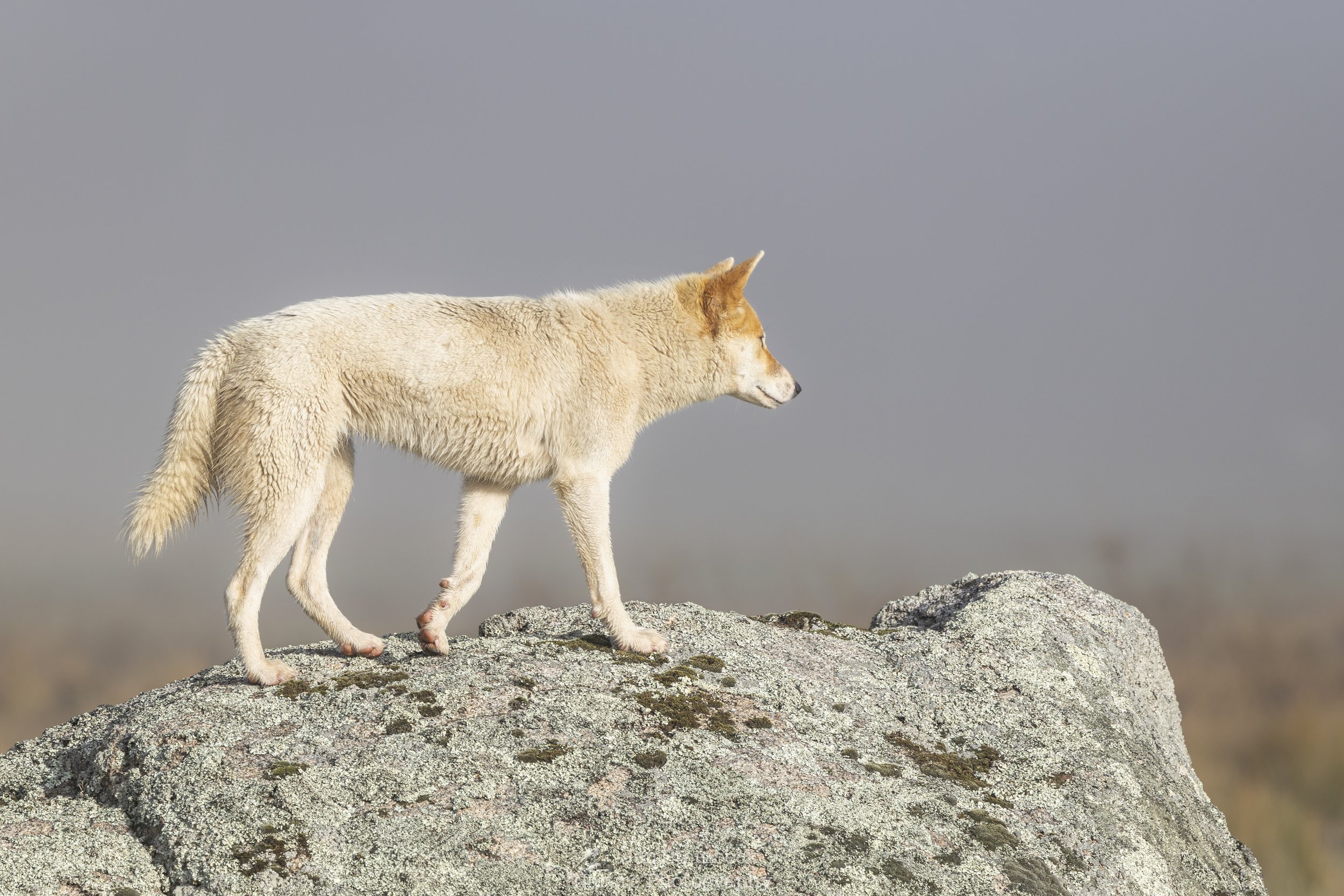
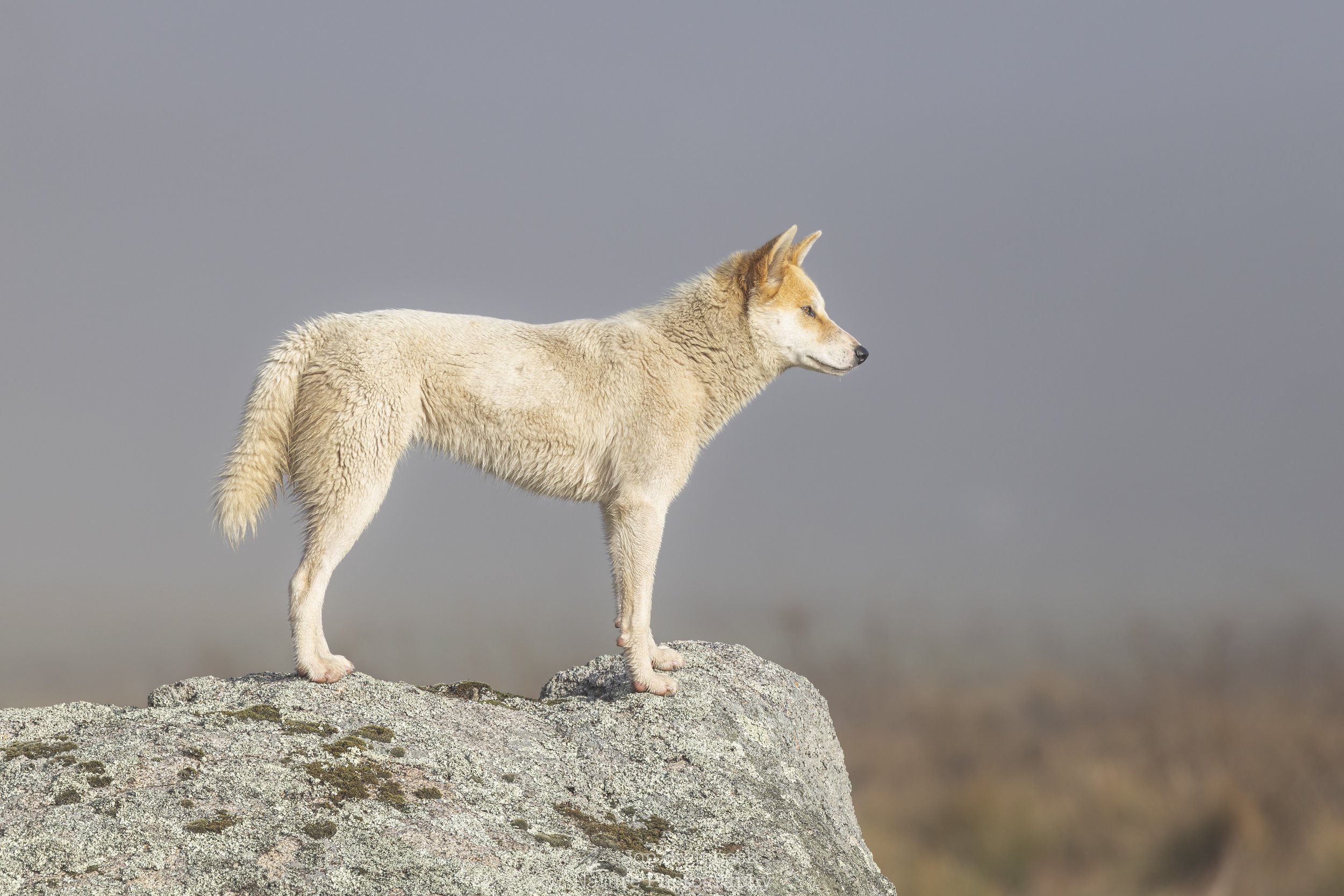
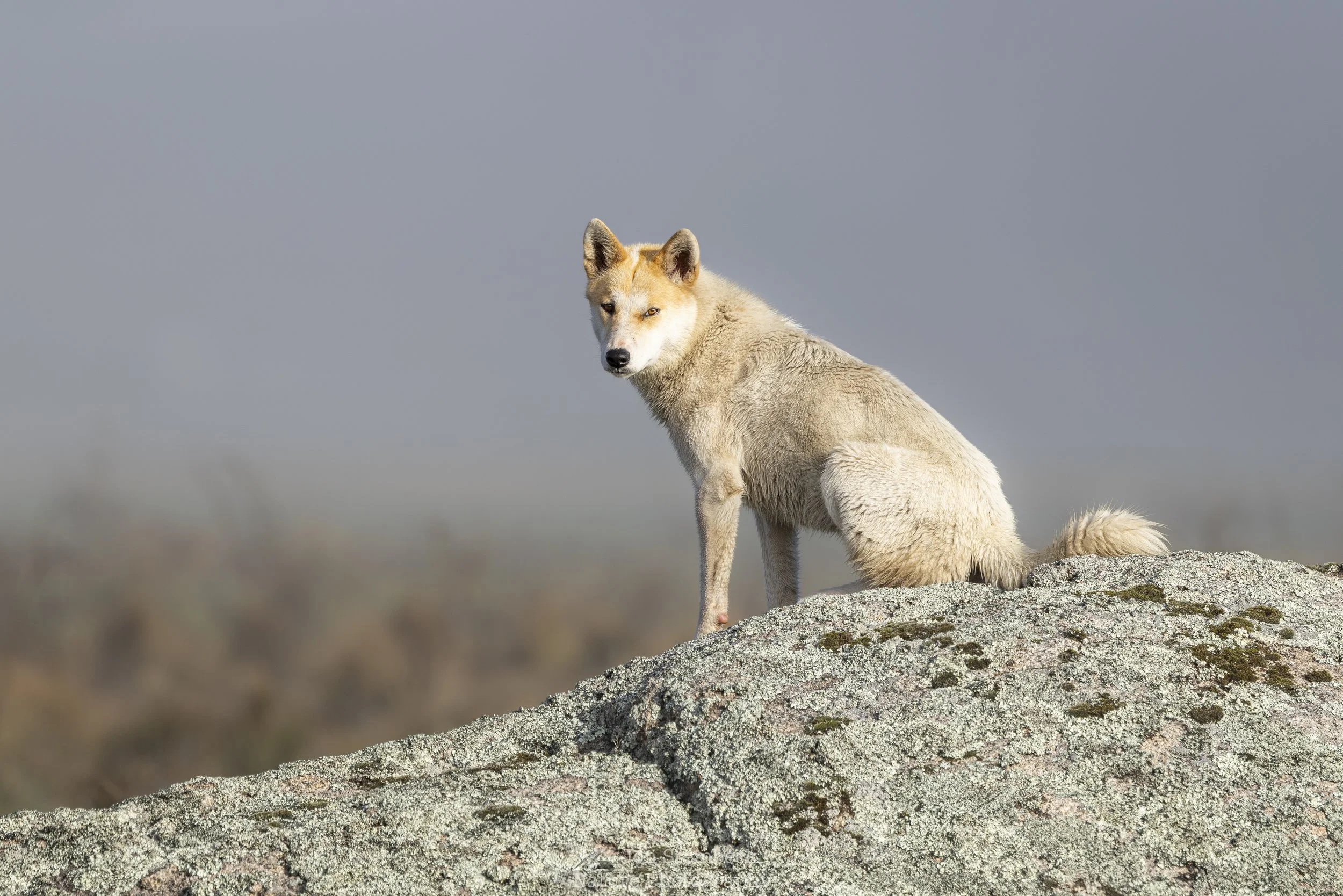
She headed to a large rock nearby, and my inside voice was shouting, “please climb the rock!” And she did. If I had been able to control her, I would not have asked her to pose any differently, she was absolutely beautiful. She would occasionally look at me, but most of the time she was looking in the opposite direction. This was when she howled, and with her location and the lovely light, all I had to do was press the shutter button. I was so lucky.
She was very interested in the kangaroos moving around her
Canon EOS R1 with a Canon RF 200-800mm F6.3-9 IS USM Lens [ISO 800, 800mm, f/9.0 and 1/1600])
She stayed on the rock for only a couple of minutes, before jumping down on the side away from me. I lost sight of her for minute or so, but then I saw her again, she was moving, still heading away from me, on a westerly heading. She chased some Masked Lapwings in circles, and I wasn’t sure if had found their chicks, or had been fooled by their fake injury display. Eventually, she headed away from them to an open spot where she lay down again, while she kept an eye on a group of kangaroos just north of her. After about ten minutes lying down, she trotted off to the north and I lost sight of her.
About an hour later, I think I saw the male that I have previously observed with her, but he was south of where she had been, and did not seem to be heading northwards.
From what I have read, some studies suggest that howling is primarily a male action, and only the alpha female howls as part of her bonding with the alpha male. So, potentially this female, when she howled, was seeking to communicate with her partner. From my perspective, she appeared to be looking for something, and I was really only of passing interest.
It had been a wonderful morning. While the next few hours didn’t include any wildlife encounters like that with the dingo, I was happy. I think the interaction also showed that the Namadgi advice about dingo encounters works. That is, stay calm, face the dingo, keep eye contact, raise your self up to look big, and keep your arms by your side and don’t shout. I am still not sure what prompted her to approach me, but it was a change in my behaviour that triggered it, not anything that she initiated. Still, the situation did leave to the sun lighting her very nicely, which made for some lovely photography of a beautiful animal.
