
Back photographing emus in Eurobodalla
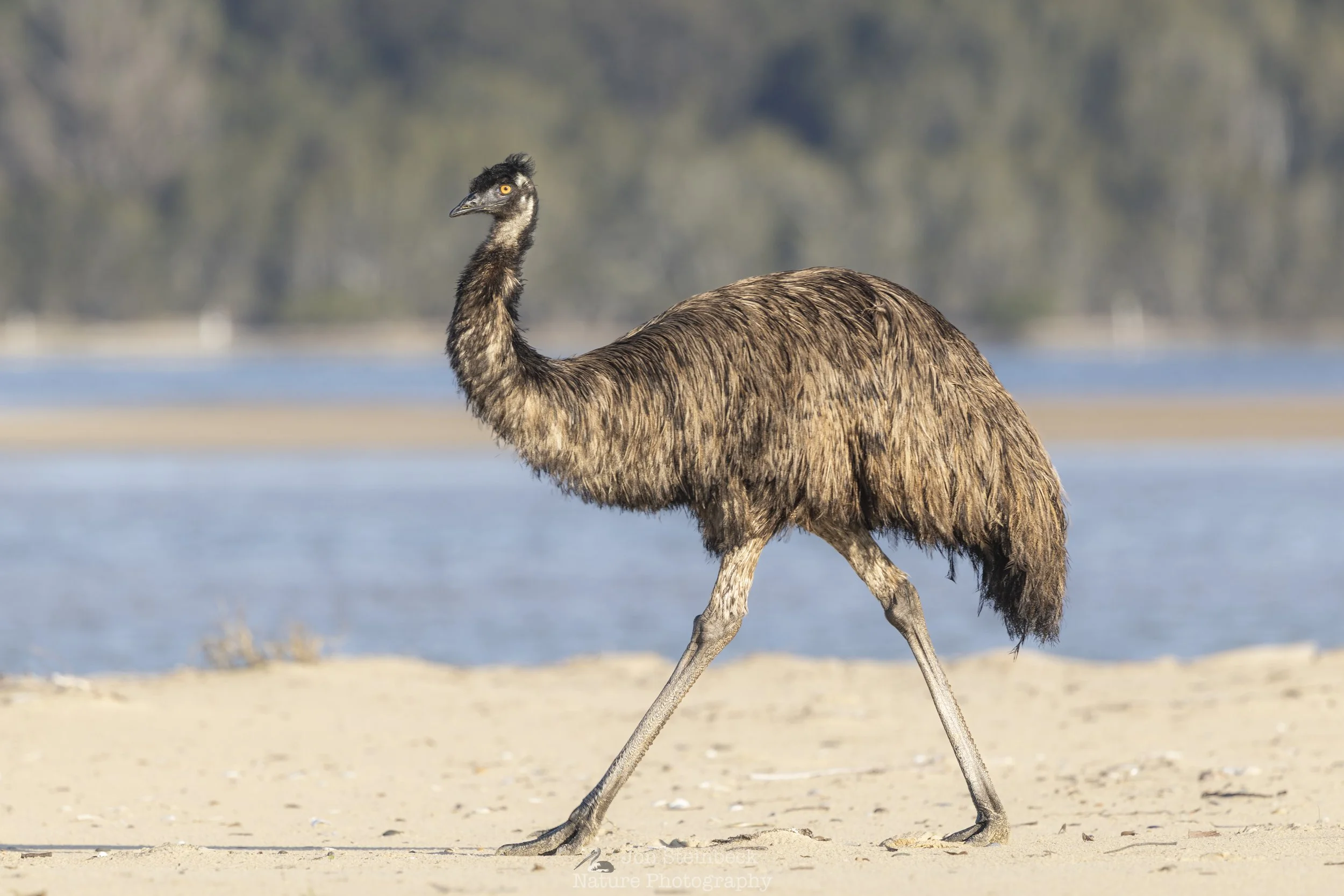
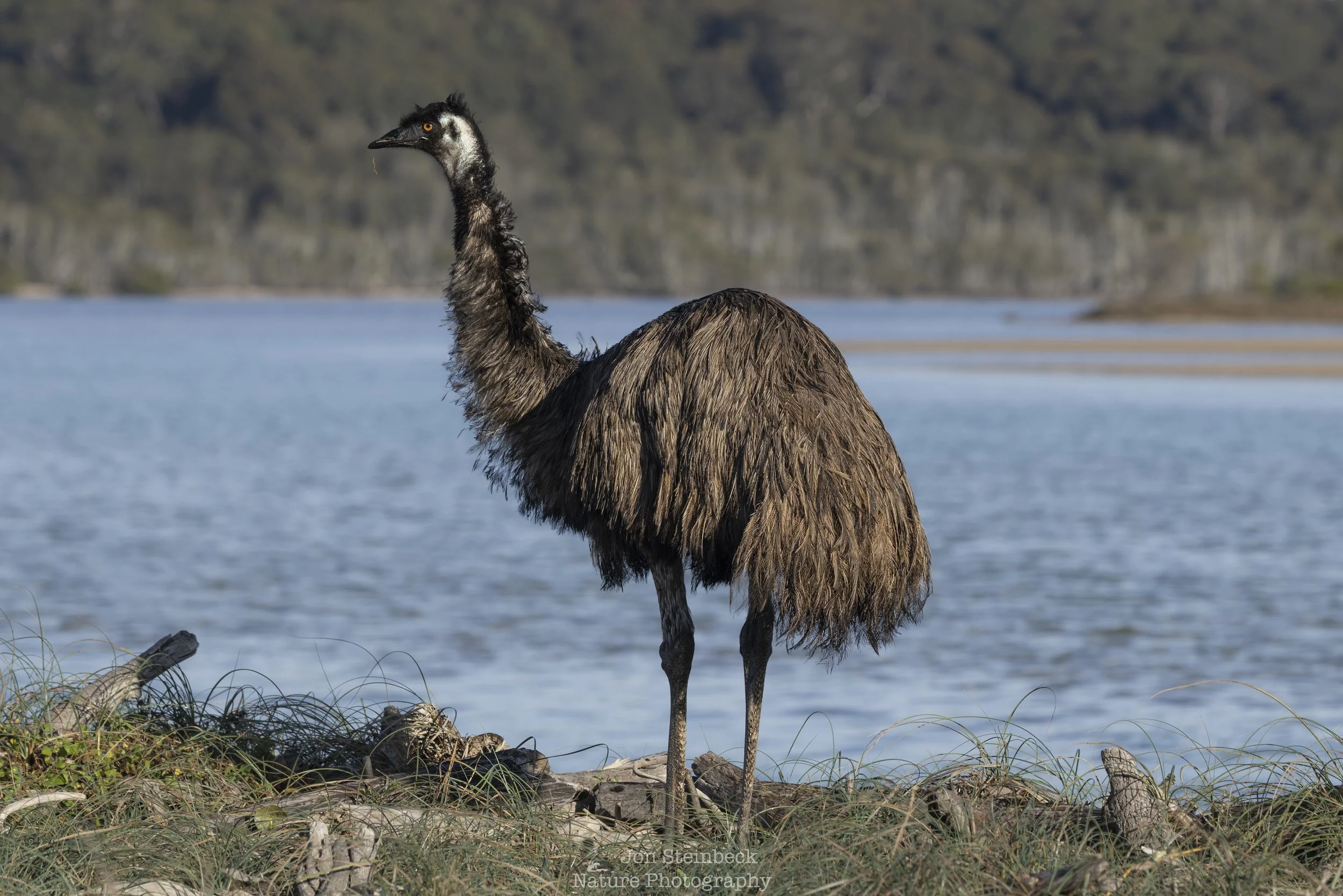
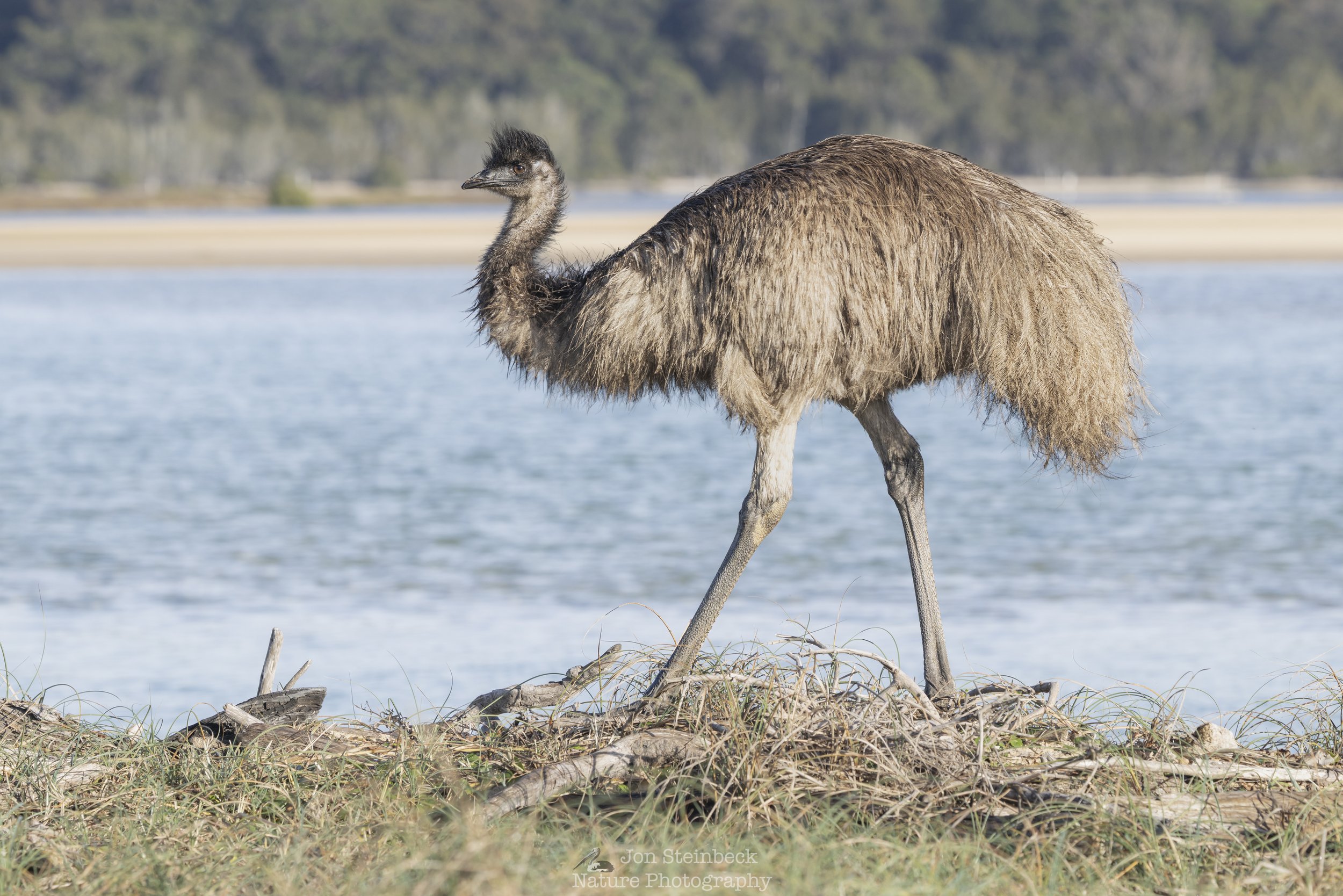
Male emu
Canon EOS R5 Mk II with a Canon RF 100-500mm f/4.5-7.1 L IS USM Zoom [ISO 160, 223mm, f/8.0 and 1/500])
In mid-June, I was back at South Tuross in the Eurobodalla National Park photographing emus. I was fortunate because the weather on the day was fantastic. The sky was almost cloud free so I had plenty of early morning light for photography. My intent was to see if I could get more pictures of the emus there, and hopefully different compositions to my trip in February. I ended up taking a number of shots and I was very happy with the results. I had a lovely morning watching Australia’s largest bird up close and I hope that you like the photographs below.
On that morning, I left my car at the locked gate and I walked into the Eurobodalla National Park at South Tuross, heading north. Looking down in the patches of sand I walked past, I could see a number of reasonably fresh emu tracks, all heading south. Despite that strong indication of where the emus probably were, I decided that I would continue north. I laughed at myself, was this cognitive dissonance, or was I listening to my intuition. My reason for heading north was that I thought that photographing emus at the end of the sand spit would be better compositionally, because they would stand out more in the open area.
I continued walking, noting more emu tracks all heading south. I passed the spot where I saw the emu earlier in the year, but this time, with no emus seen. I quietly decided that if I got a good look at the spit and there were no emus, then I would turn around and follow the bountiful evidence of emus heading south. However, a few moments later, I topped a small rise with a good view northwards and I saw two emus on the sand spit. I didn’t want to rush them, and I purposely veered east, towards the ocean’s edge so that they had plenty of room to avoid me if they wanted.
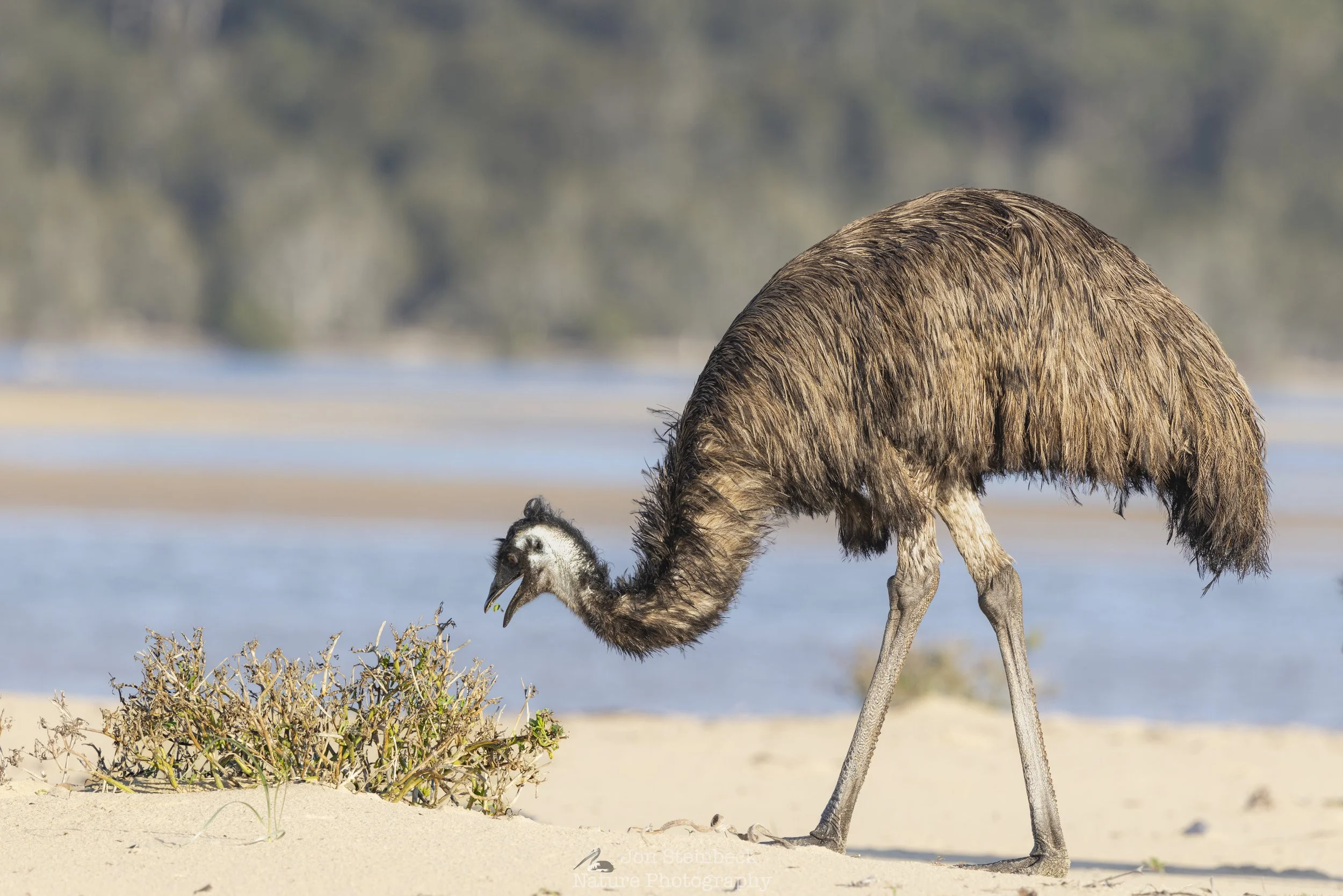
When I was closer to the emus, and had the sun lighting them at a good angle, I slowly moved closer, before I sat on the sand to start photographing. The emus kept walking in my direction, apparently not too concerned by my presence. However, after a little while, they turned and headed south. They won’t rushing and would regularly stop to eat some of the low-growing plants.
Adult male on the left and a juvenile on the right
Canon EOS R5 Mk II with a Canon RF 100-500mm f/4.5-7.1 L IS USM Zoom [ISO 320, 500mm, f/8.0 and 1/500])
Emus have a mixed diet of different plants and invertebrates. They tend to pluck at plants, taking the green parts of the plants into their beaks before swallowing them. The small animals provide the emus with most of their protein requirements. These emus kept moving, while I was observing them. Stopping for a little while in one location before walking off. They would eat from a plant by plucking at it a few times, before moving to a different plant. When they were in a location with a lot of plants and they seemed happy eating, I sat down again to photograph and watch them.
The two emus eating the same bush
Canon EOS R5 Mk II with a Canon RF 100-500mm f/4.5-7.1 L IS USM Zoom [ISO 320, 472mm, f/8.0 and 1/500])
The two emus appeared to be an adult male and a juvenile. For emus, the female initiates the breeding and will choose her mate. She will dominate the male until she has laid her eggs, which she does over a period of days. Once she has laid all her eggs it is the male who will sit on them to hatch them. During this incubation, of approximately two months, he will will not eat or drink, and will be aggressive to other emus, including his mate. She will normally leave, letting the male do the raising of the chicks. The male will lose a lot of weight while he sits on the nest, and will only drink the dew from surrounding vegetation for water. Once the chicks hatch he will look after them himself for up to six months.
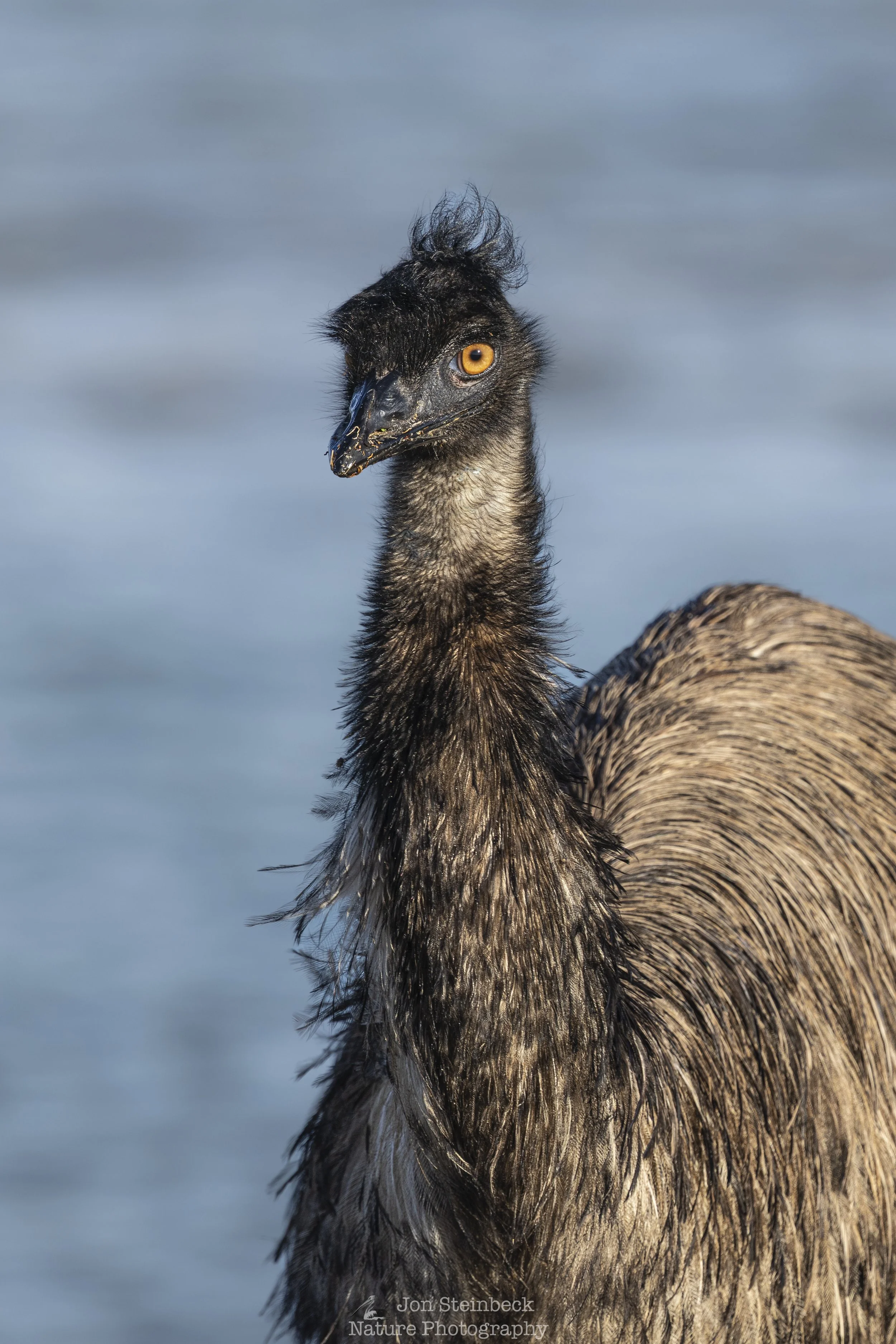
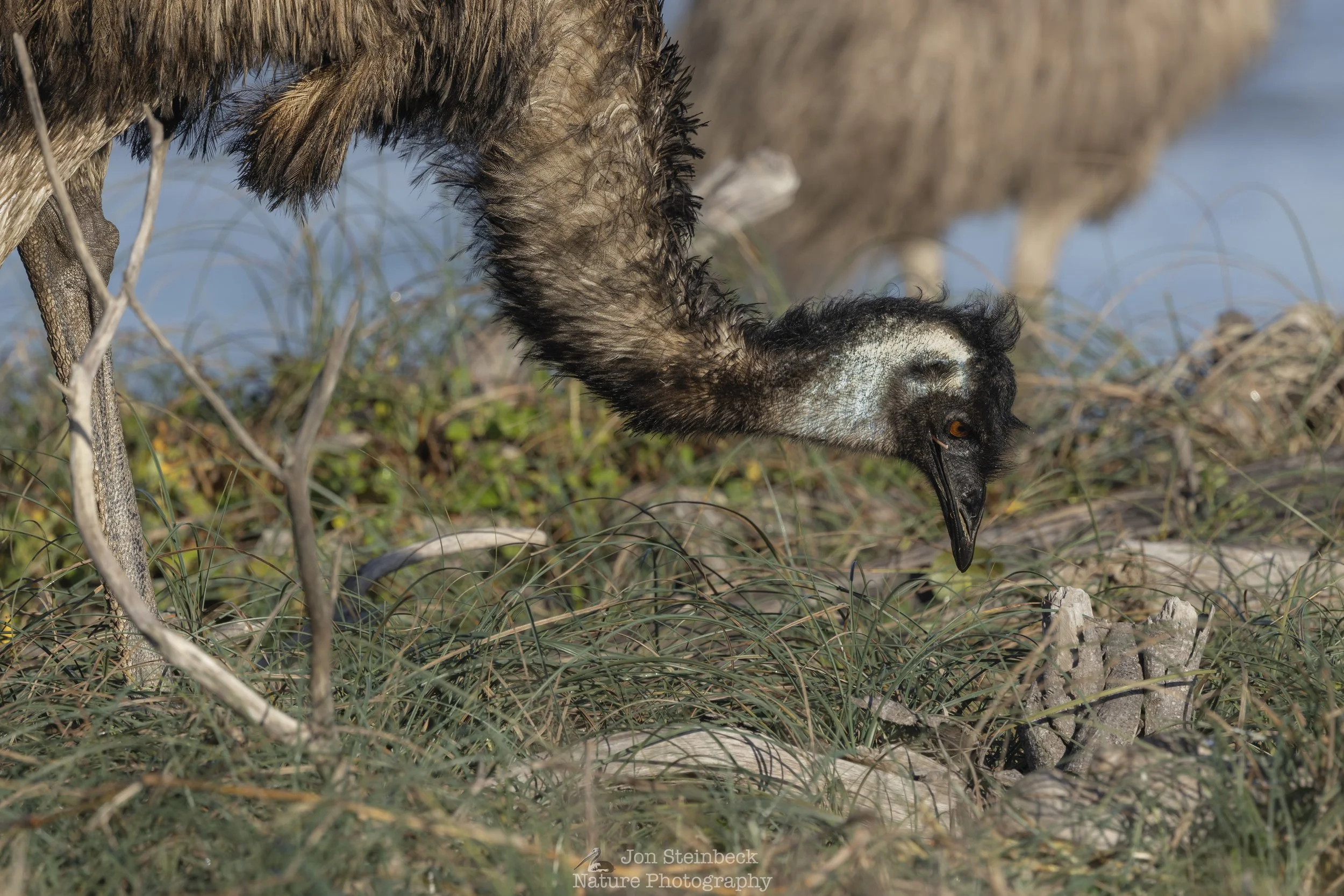
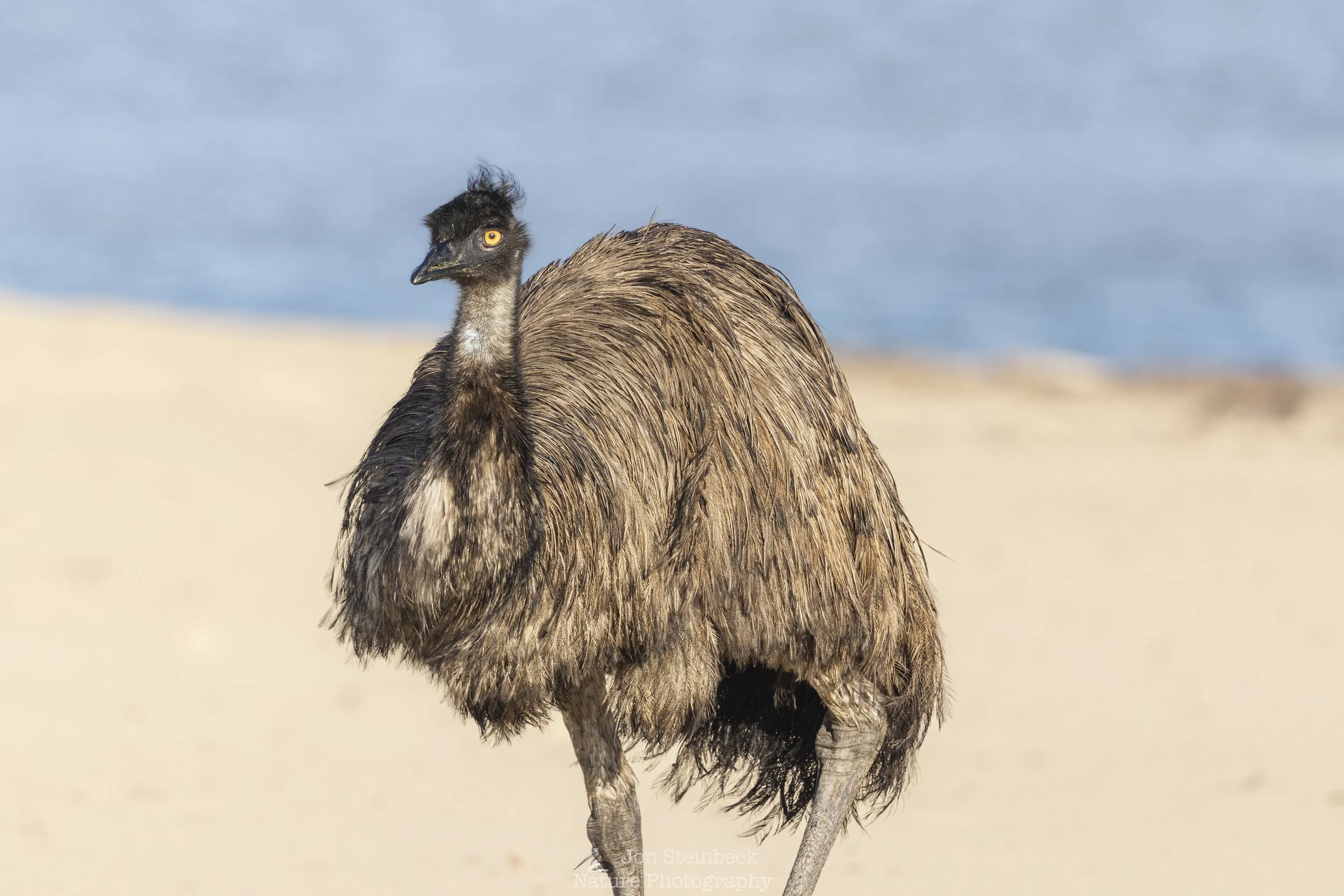
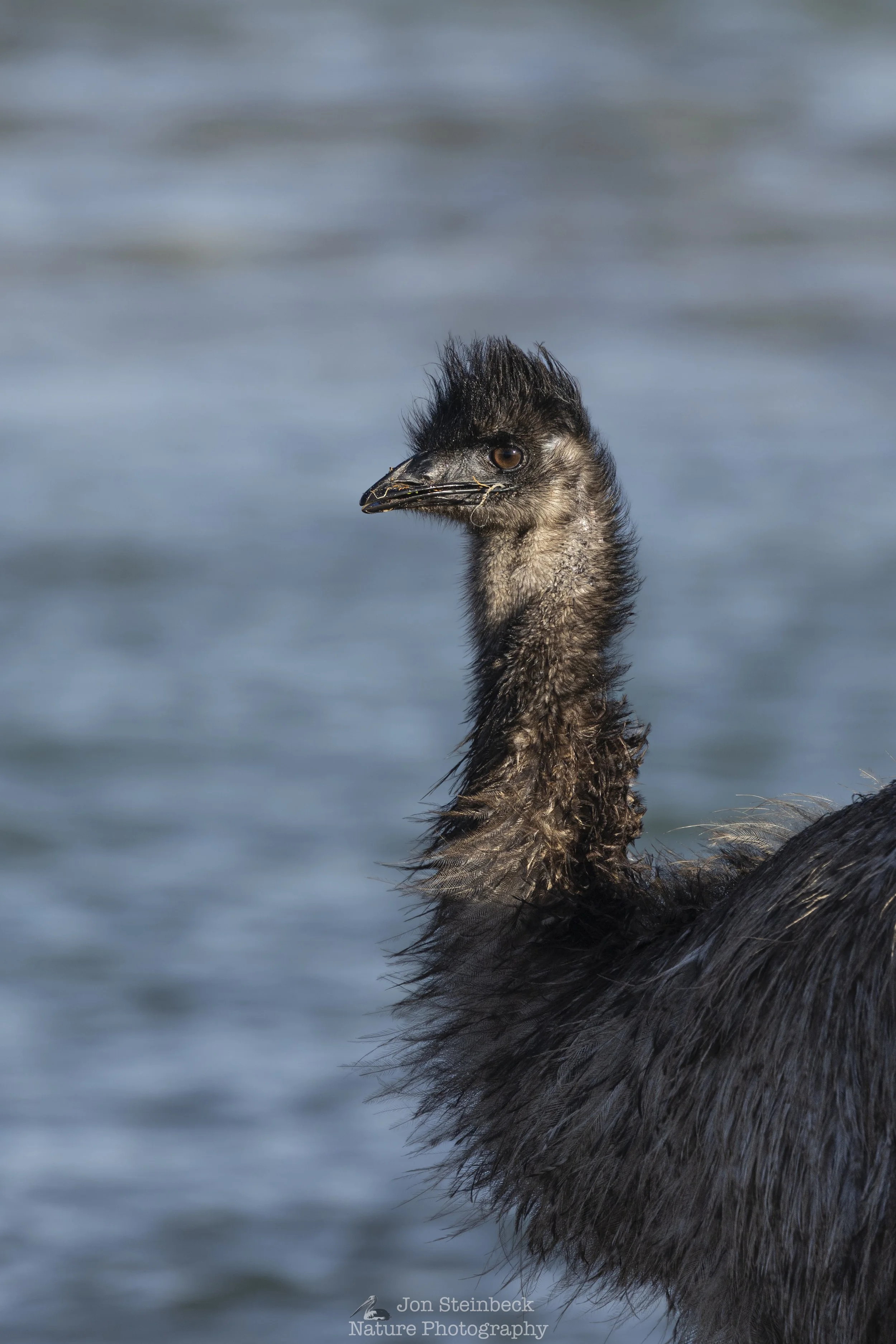
New born emu chicks can walk after a few days and have a stripy plumage. After about six months their plumage changes to the brown seen in the photos of this juvenile. Normally the chicks will stay with their father for about five or six months while he defends them and also teaches them what to eat. They may also stay for another six months after that, which is possibly what this chick is doing. The presence of a single chick hopefully means that only it was the only one of the brood that stayed with its father and not that the others fell to predation or other causes. Emus are fully grown after about a year and will be able to breed after about 20 months, or in their second breeding season cycle.
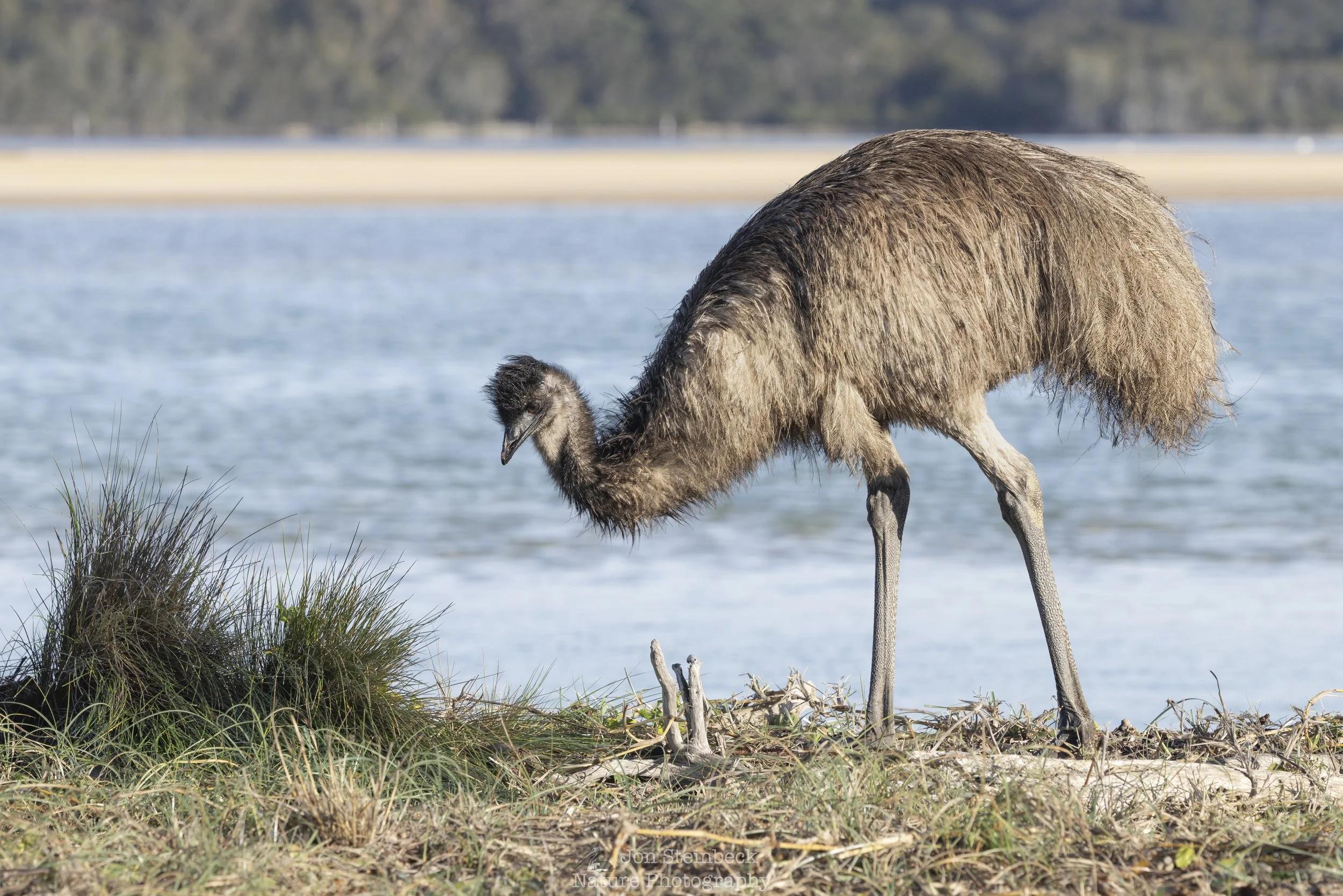
Not trying to engage in toilet humour but this was a useful photo to explain an interesting fact about birds. Birds generally have a single opening at the bottom of their body, the cloaca. This opening is used for waste excretion, procreation and laying eggs. Internally birds combine liquid and solid waste, and expel it together through the cloaca. In adult birds, excretions tend to be more solid but still moist, although a liquid one is also common, depending on their diet and access to water. In chicks and juveniles, they tend to be more liquid.
Juvenile emu excreting waste
Canon EOS R5 Mk II with a Canon RF 100-500mm f/4.5-7.1 L IS USM Zoom [ISO 500, 223mm, f/8.0 and 1/500])
It was another fantastic morning with the local emus. It is wonderful to experience these large birds at close range, watching them go about their lives. The area is a wonderful location and despite being winter, on the day, the weather was mild. I truly believe that in Australia, we are so lucky to be able to have wildlife experiences like this and it is something that we should actively preserve.
