
Photographing Alpine Dingoes at the National Zoo
Jarrah approaching me and Misha keeping her distance - two of the beautiful Alpine Dingoes at the National Zoo and Aquarium
Canon EOS R5 Mk II with a Canon RF 24-70mm f/2.8L IS USM [ISO 100, 70mm, f/8.0 and 1/100])
I want to express a big thank you to the National Zoo and Aquarium for helping me out with an assignment I am completing for my Diploma of Photography at the Canberra Institute of Technology. One of the two final folios that I am creating is on the conservation of the Alpine Dingoes in the ACT. I contacted the Zoo because I knew it had Alpine Dingoes and I also knew that the Zoo plays a key role in educating the public about the importance of dingoes. I asked them if I could photograph a keeper and a dingo. Sophie, one of the animal coordinators at the Zoo, got back to me very quickly and said that they could assist.
On the last day of August, Sophie met me on a cold morning well before the Zoo opened to take me around to the dingoes. She talked about the Zoo, and was such a great representative of one of Canberra’s key attractions. She then introduced me to Abby, the dingoes’ keeper, who was also assisted by Jess. Abby and Jess then hosted me, with Abby in particular answering all my questions, with her affection for dingoes clearly evident. Abby even grouped me with her, as a fellow “Dingo Nerd”. Most importantly, she explained some safety rules because I would be close to the dingoes for part of the visit.
From the left, Jarrah, Abby, Misha and Jess
Canon EOS R5 Mk II with a Canon RF 100-500mm f/4.5-7.1 L IS USM Zoom [ISO 160, 324mm, f/5.6 and 1/500])
The two beautiful dingoes that I spent the morning with were, Misha, a female, and Jarrah, a male. When I first met them, Abby was taking them for their morning walk, seen in the photograph at the top of this post and above. They both had their tails wagging, something that I hadn’t seen in wild dingoes. Once the morning walk was over and they were back in their enclosure, they were taken off their leads, whereupon they both explored it, sniffing occasionally at the ground. Both of them also spent time on top of their shelter in the enclosure, in particular Misha, who returned to the shelter just before I departed. My last view of her was of her lying down while keeping an eye out across the corner of the enclosure.
Misha’s journey to the zoo was very interesting. Her original owners found her as a pup in Namadgi National Park and thought that she was a dumped domestic dog, so took her home to care for her. It was only later, on a trip to the vet, when the vet said that the dog was actually a dingo that the owners realised their mistake. A DNA test confirmed that her DNA was 100% dingo and she was donated to the Zoo. As you can see in the photos below, she is a beautiful example of an Alpine Dingo, with her creamy fur mixed with some ginger. As an aside, her DNA results also showed that there are pure dingoes in Namadgi. Research from Adelaide University released this year, concluded that admixture of domestic dog DNA in Australia’s dingo population was primarily historic, and would likely be bred out over coming generations.
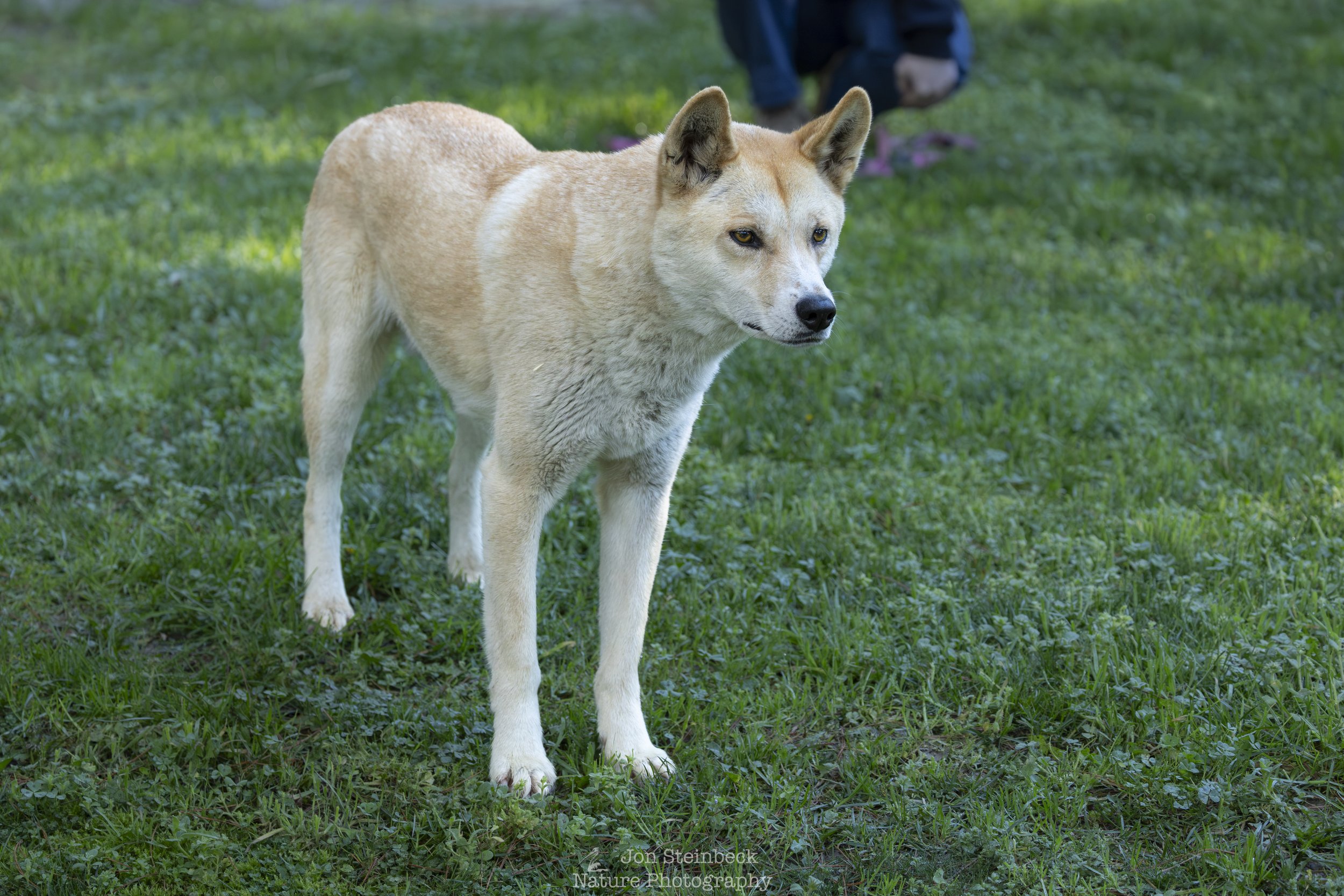
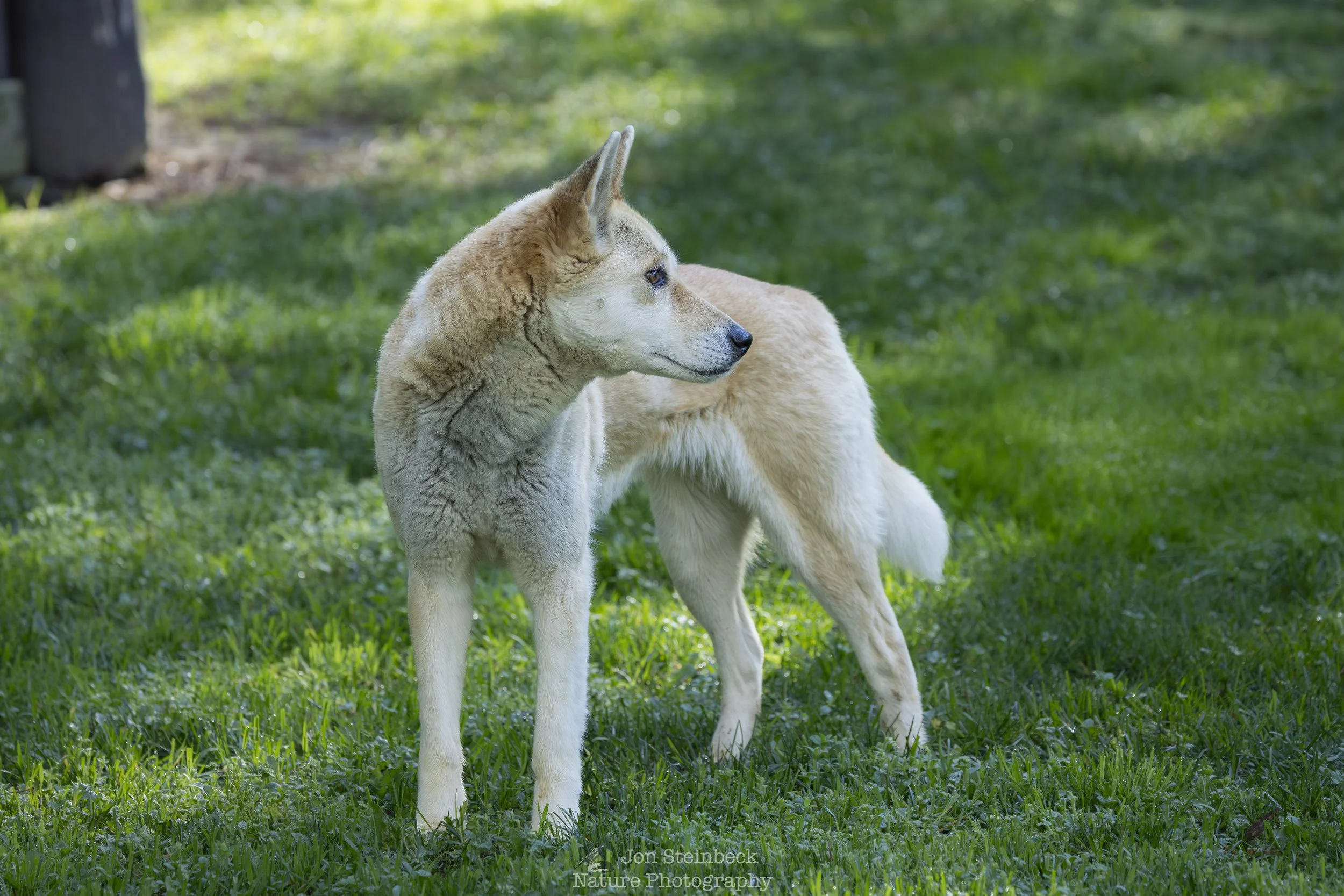
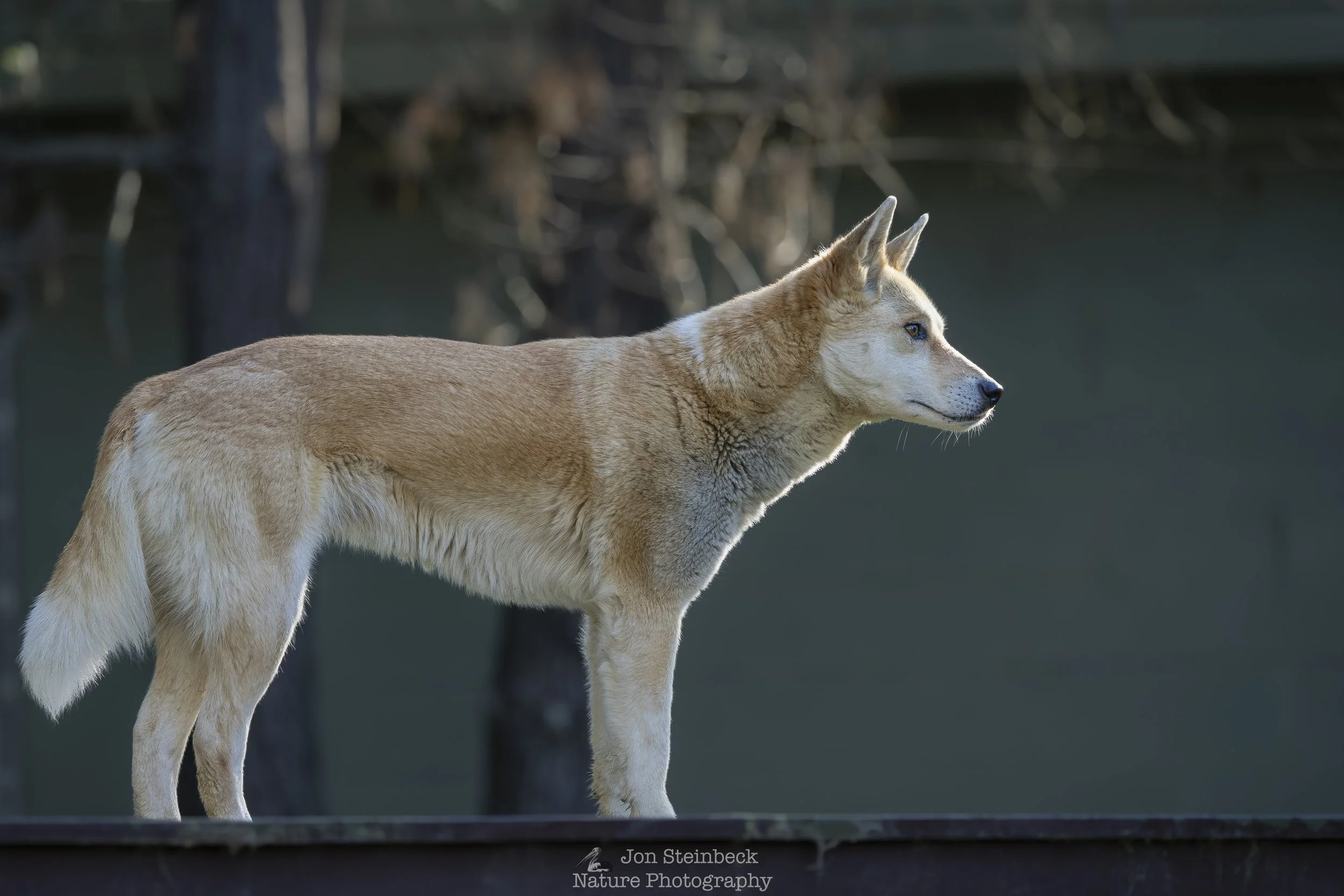
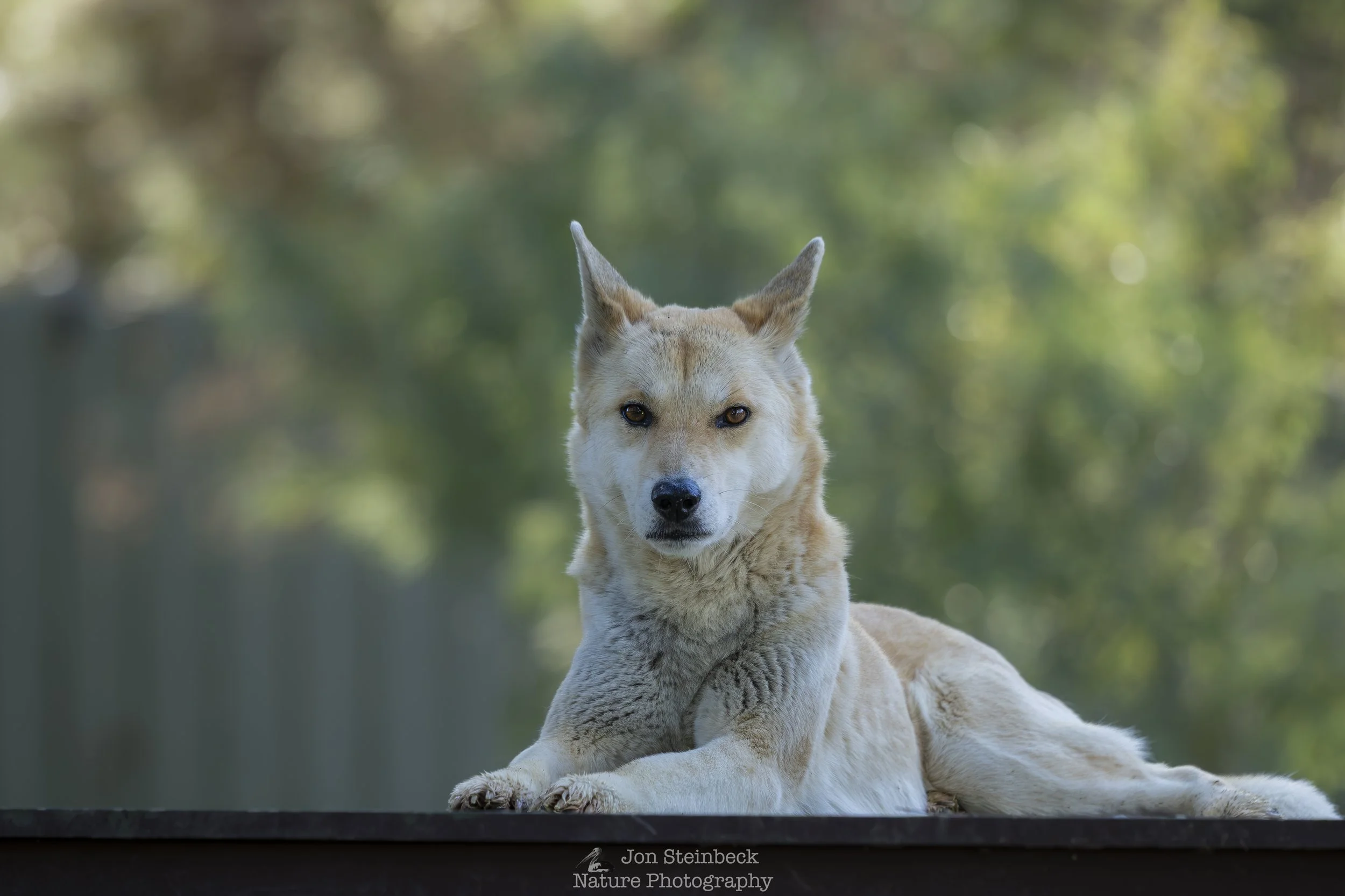
Jarrah, the male, was born in the Zoo, when there was a breeding program — there is none now. He is slightly younger than Misha from what I understand. His DNA is about 90% dingo, but I certainly couldn’t tell any difference between him and Misha.
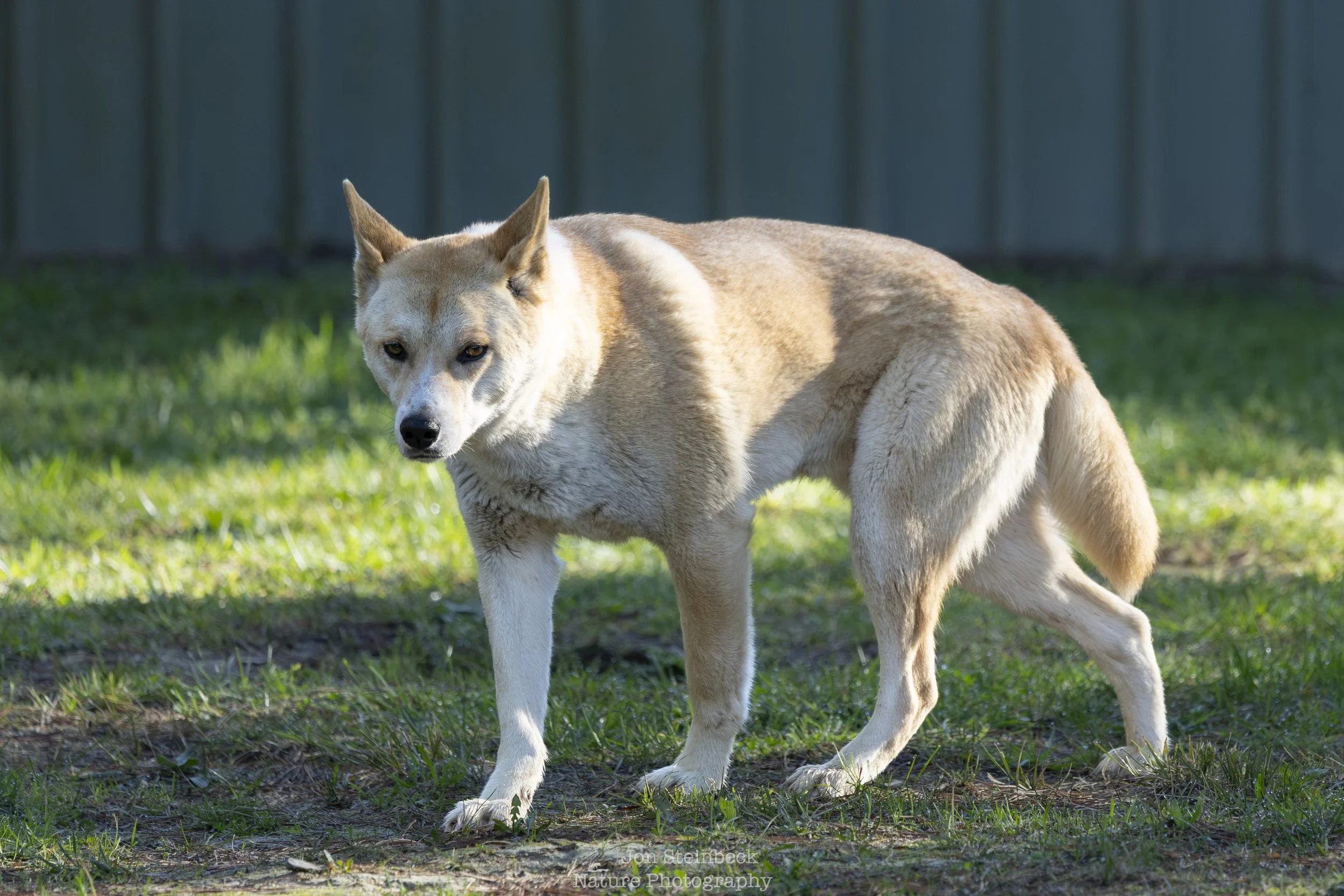
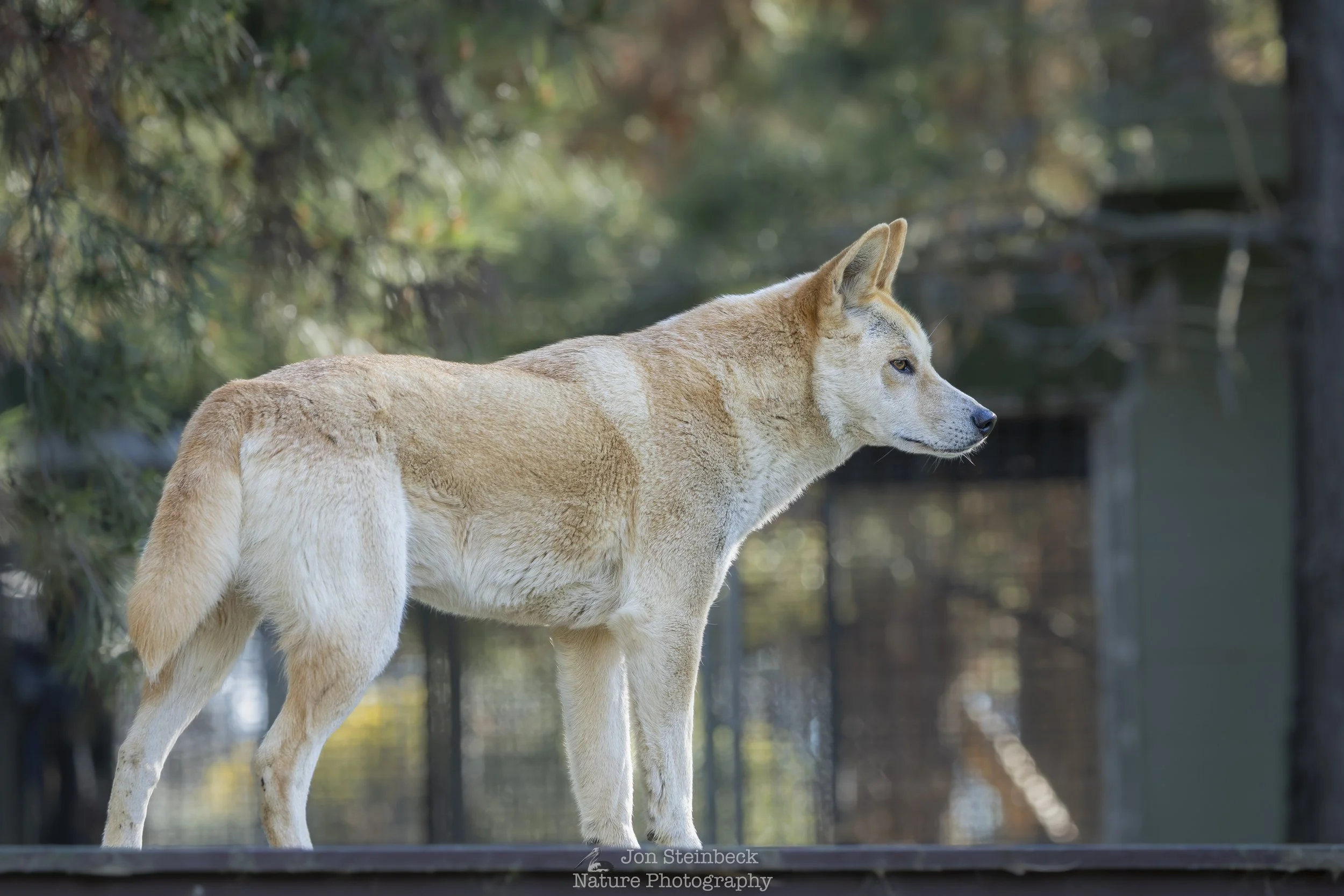
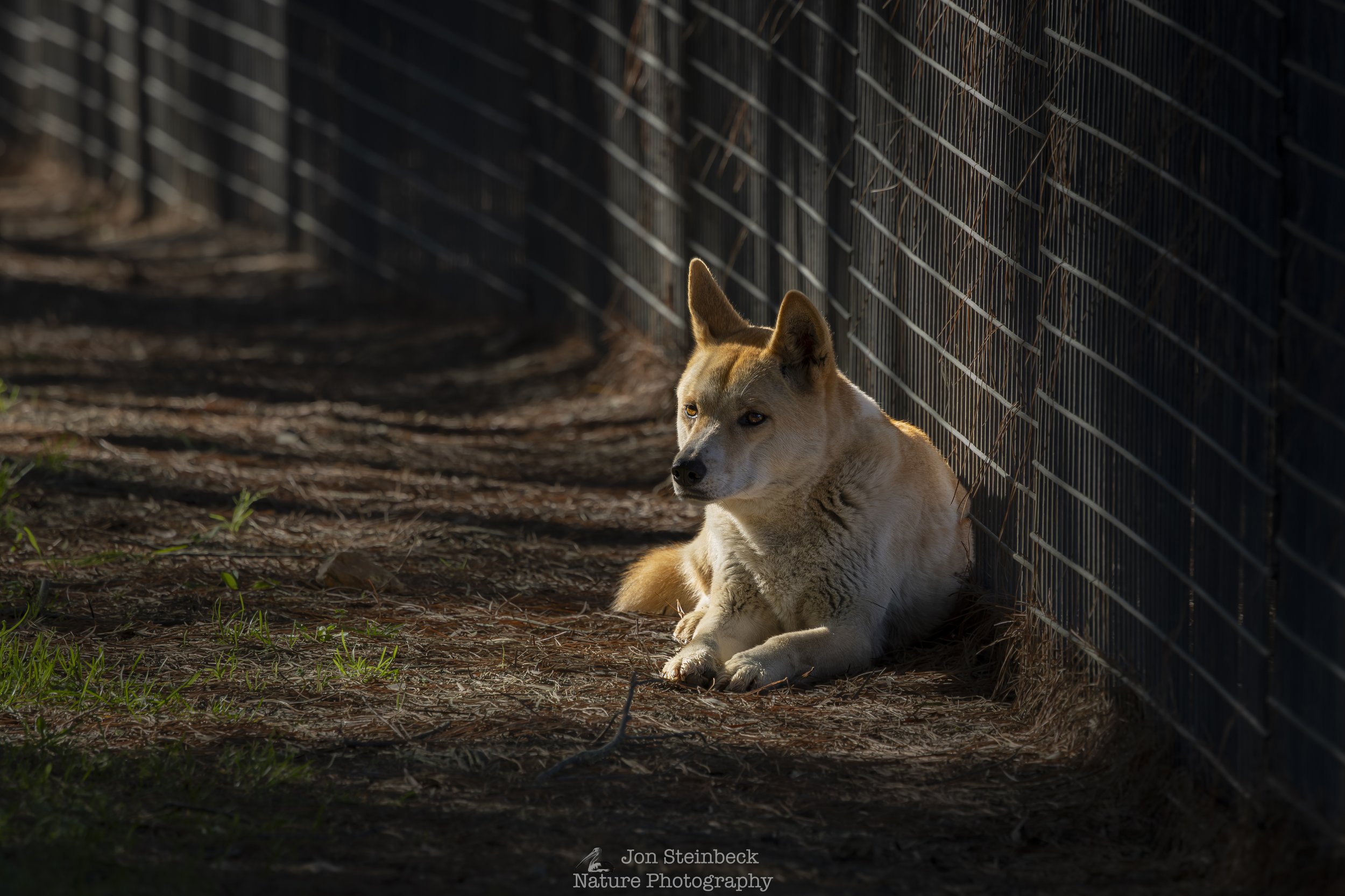
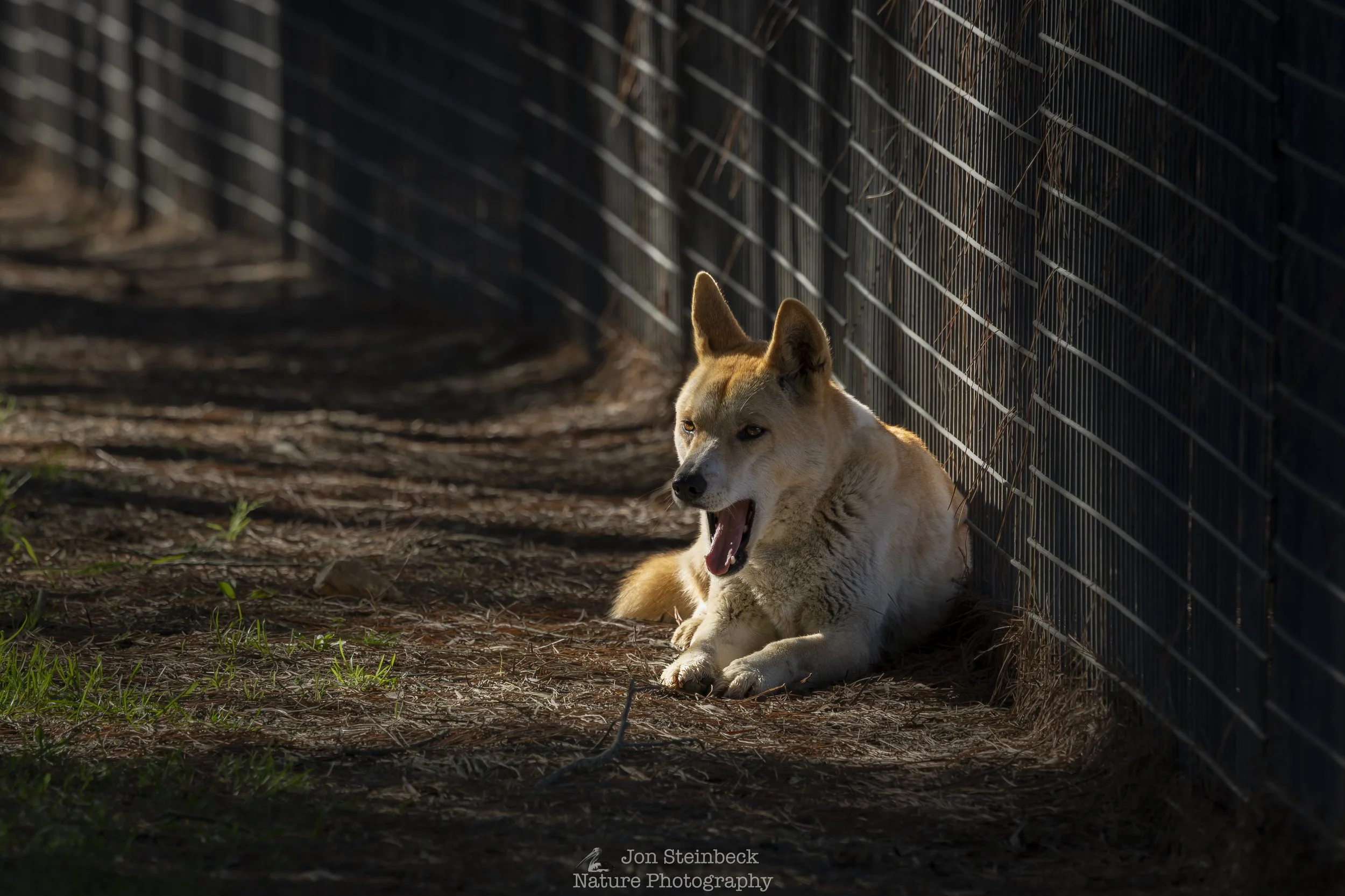
The Zoo’s education role is both direct and indirect. It contributes some of its proceeds to conservation efforts, including of dingoes, which covers education as well as other work to conserve dingoes. The Zoo’s direct education starts with the three different information boards found at the dingo enclosure, explaining different aspects about dingoes, especially about showing the importance of the species to the ecosystems around Canberra. One of the boards also highlights how the re-introduction of wolves into Yellowstone National Park in the US, actually improved the whole ecosystem because they helped suppress excessive numbers of prey species, allowing a mix of plants to emerge, encouraging the return of a wider number of animals.
Beyond those information boards and the information about dingoes on the Zoo’s website, in May, the Zoo held a seminar, called ‘The Dingo Dilemma’ that looked at the need to protect the ACT’s dingoes, while also preventing attacks on livestock. The seminar was asking the question, “is there a place for Namadgi’s dingoes?” and you can watch the seminar on YouTube.
The Alpine Dingo enclosure at the Zoo, showing the information boards
Canon EOS R5 Mk II with a Canon RF 24-70mm f/2.8L IS USM [ISO 400, 24mm, f/8.0 and 1/100])
When I was leaving, I came across this wonderful chainsaw carving of a dingo by Brandon Kroon.
Brandon Kroon’s chainsaw carving of a dingo
Canon EOS R5 Mk II with a Canon RF 24-70mm f/2.8L IS USM [ISO 320, 70mm, f/5.6 and 1/100])
The time I spent at the Zoo, far exceeded my expectations and I was very happy with the photographs. I was so appreciative of what the Zoo organised for me and I felt very excited to be so close to some beautiful Alpine Dingoes. The Zoo is just one part of a conservation effort to help preserve the majestic Alpine Dingoes. Its education role cannot be undervalued because for most people that will be the best view that they have of an Alpine Dingo. The information boards explain the issues and hopefully will prompt people to go away to find out more. We live in a world where human activity is increasingly encroaching on wild spaces, and we also learning that we can’t keep treating those ecosystems poorly. We need to find the balance, where human activity coexists respectfully with the natural world. Science shows that while dingoes will eat some livestock they also suppress kangaroo numbers and feral pests. Humans have moved on from only seeing dingoes as pests to be destroyed, we now need to plan how to conserve them for the benefit of the wider ecosystem.
Disclaimer — Participation of staff doesn’t imply National Zoo and Aquarium endorsement of any views expressed in this blog post or the photo project and its conclusions.
