
Eastern Blue-tongue on the road
Eastern Blue-tongue Lizard
Canon EOS R1 with a Canon RF 100-500mm f/4.5-7.1 L IS USM Zoom [ISO 125, 500mm, f/8.0 and 1/500])
In August, coming back up from the south coast of NSW to Canberra, I tried Araluen Road for the first time. It is a mainly dirt road, with some very narrow sections but it was a beautiful trip. Having just rounded a bend while ascending, I suddenly saw this Eastern Blue-tongue Lizard (Tiliqua scinciodes) sunning itself on the road. I will admit, that my car was actually over it when I stopped - the crash alarm on my dashcam sounded due to the suddenness. I carefully reversed back, hoping that I hadn’t run over the lizard. Fortunately, it was still fine, and surprisingly relaxed, its front legs were still resting backwards. My photography eventually made it move off the road, which I didn’t feel too bad about, because another car came past while I was taking pictures, so I am not sure how long the blue-tongue would have survived where it was.
Full view of the lizard
Canon EOS R1 with a Canon RF 100-500mm f/4.5-7.1 L IS USM Zoom [ISO 125, 176mm, f/8.0 and 1/500])
The Blue-tongue Lizard is one of Australia’s largest skink species and it is still very common. They aren’t very fast movers and generally prey on small creatures that don’t move to quickly. Their jaws are strong for their size, so they are able to chew through snail shells and insects. They will use their blue tongue as a threat display, and while they are not dangerous to humans, they can give a nasty bite. Although, in reality, humans are far more dangerous to them, with our pets that eat them and our cars that run them over. They also suffer because we poison the snails and insects in our gardens, that Blue-tongue Lizards subsequently eat.
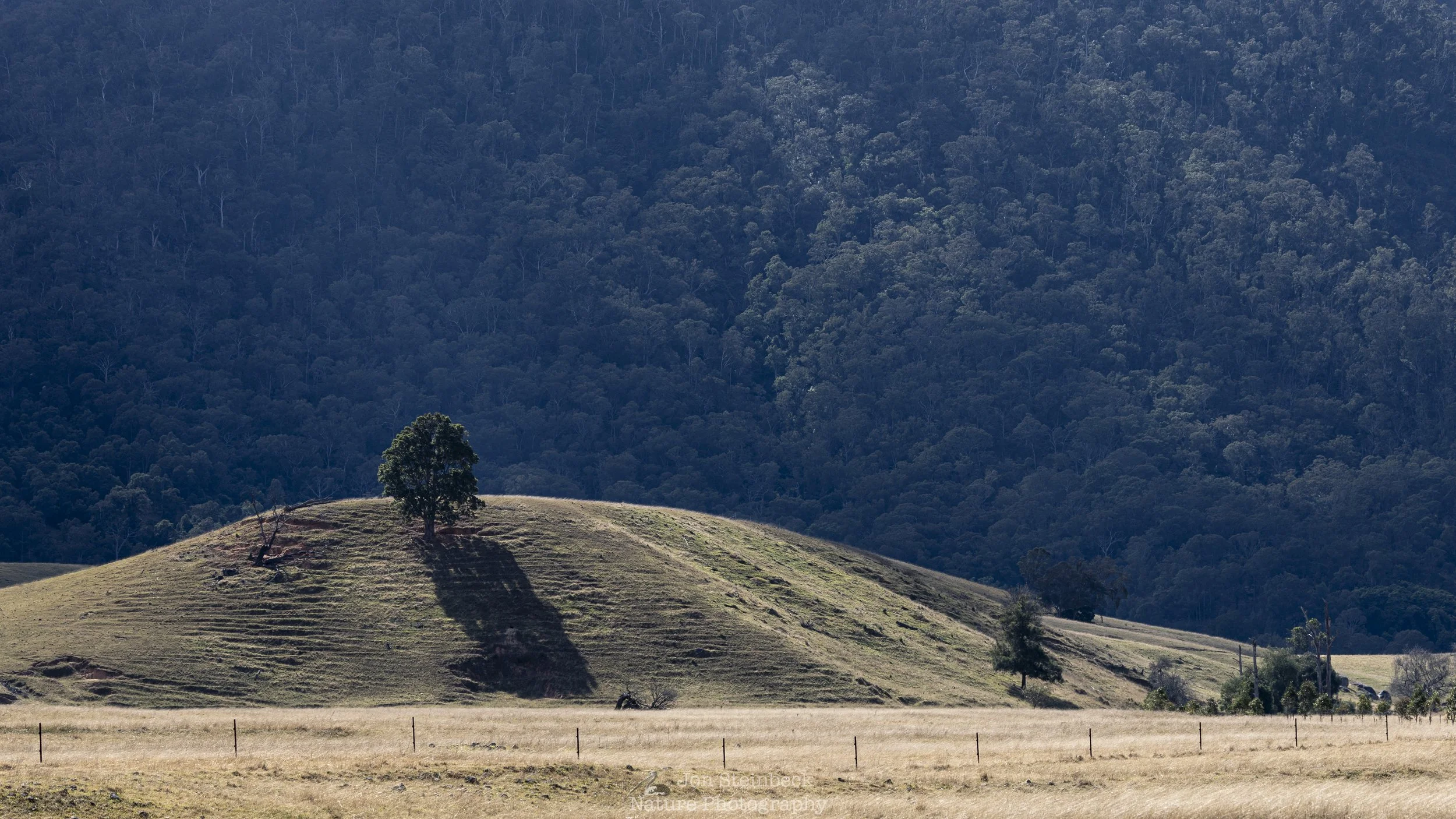
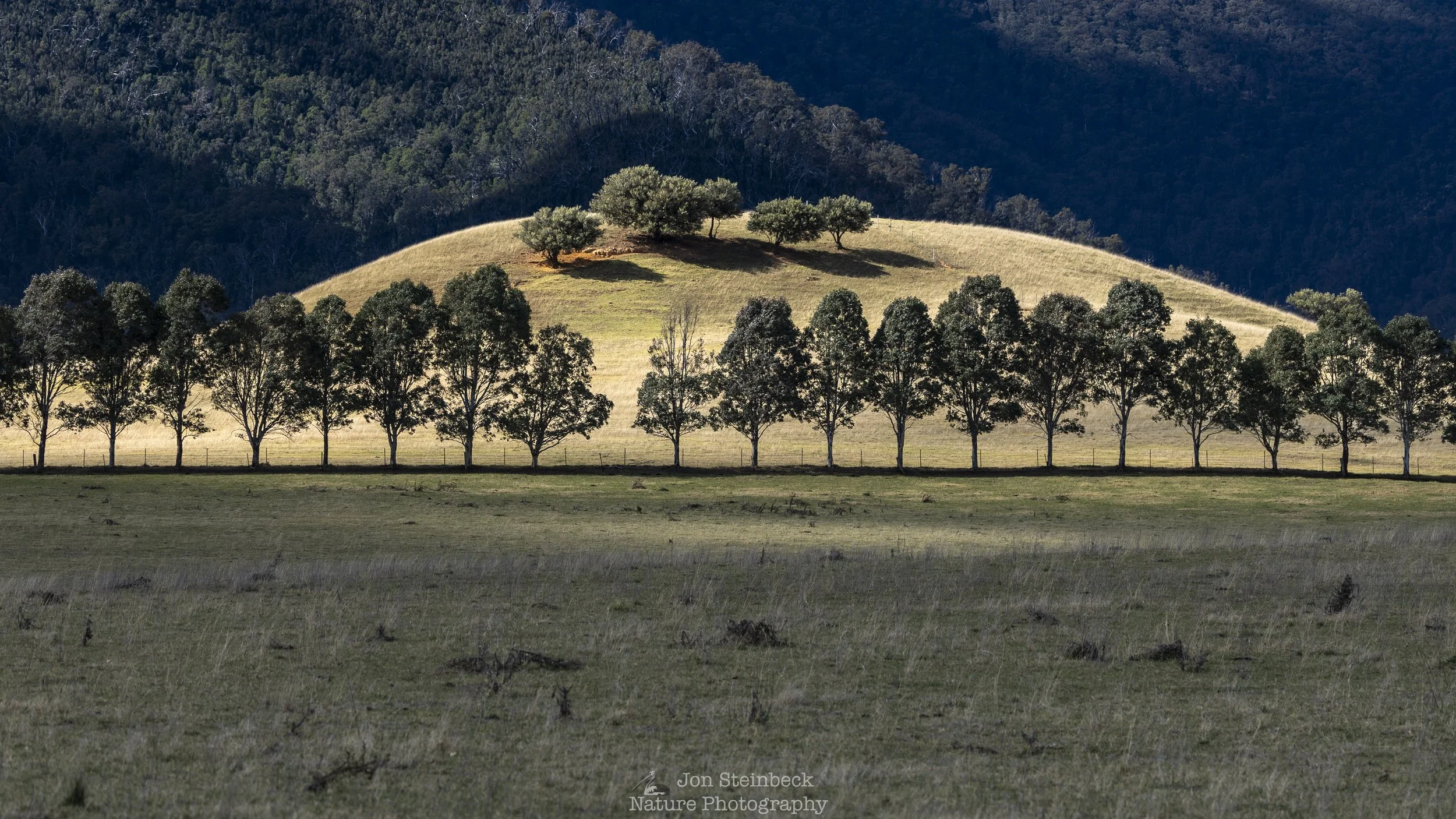
Besides the Blue-tongue Lizard, the other joy about taking the Araluen Road was seeing some magical landscapes around Araluen.
