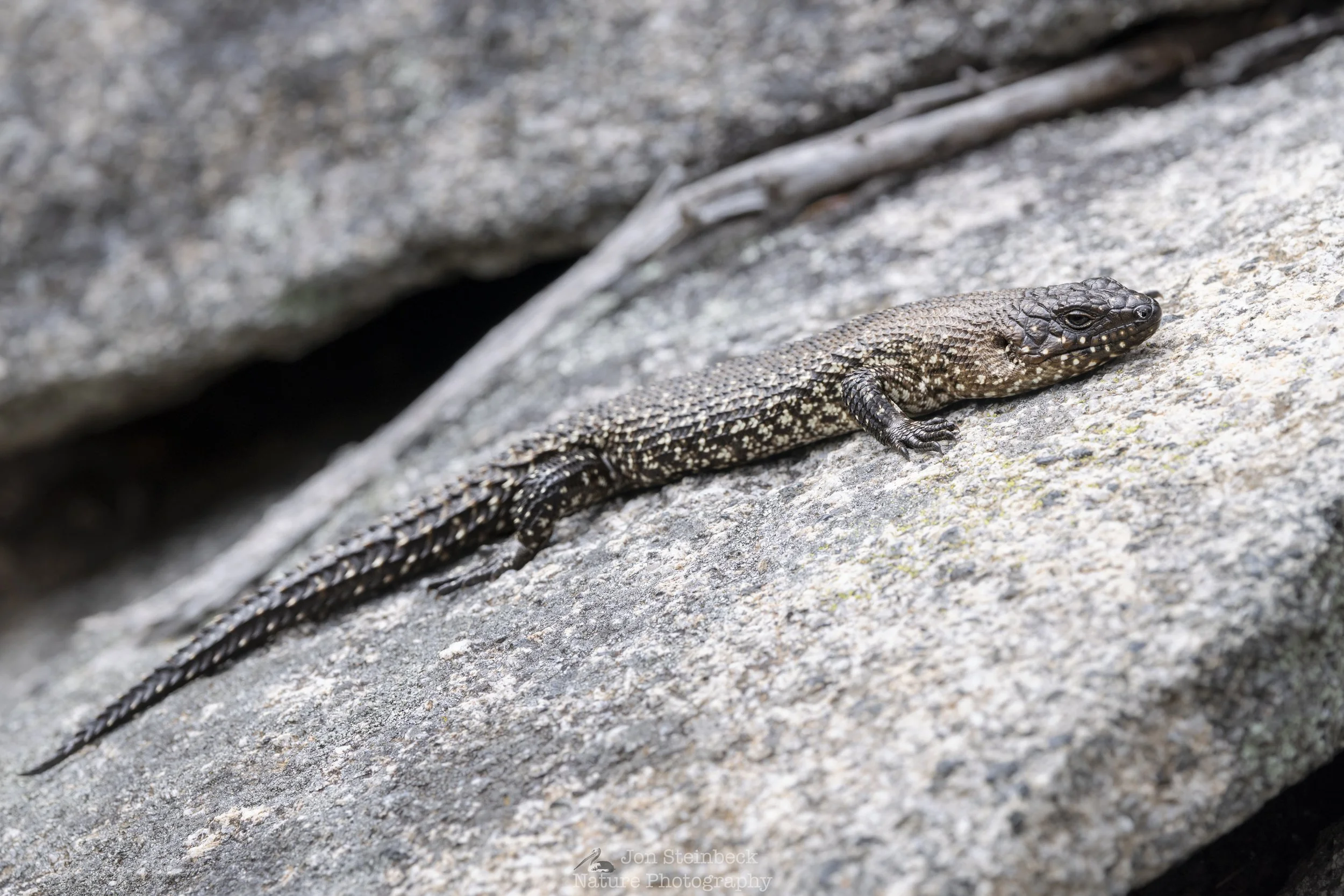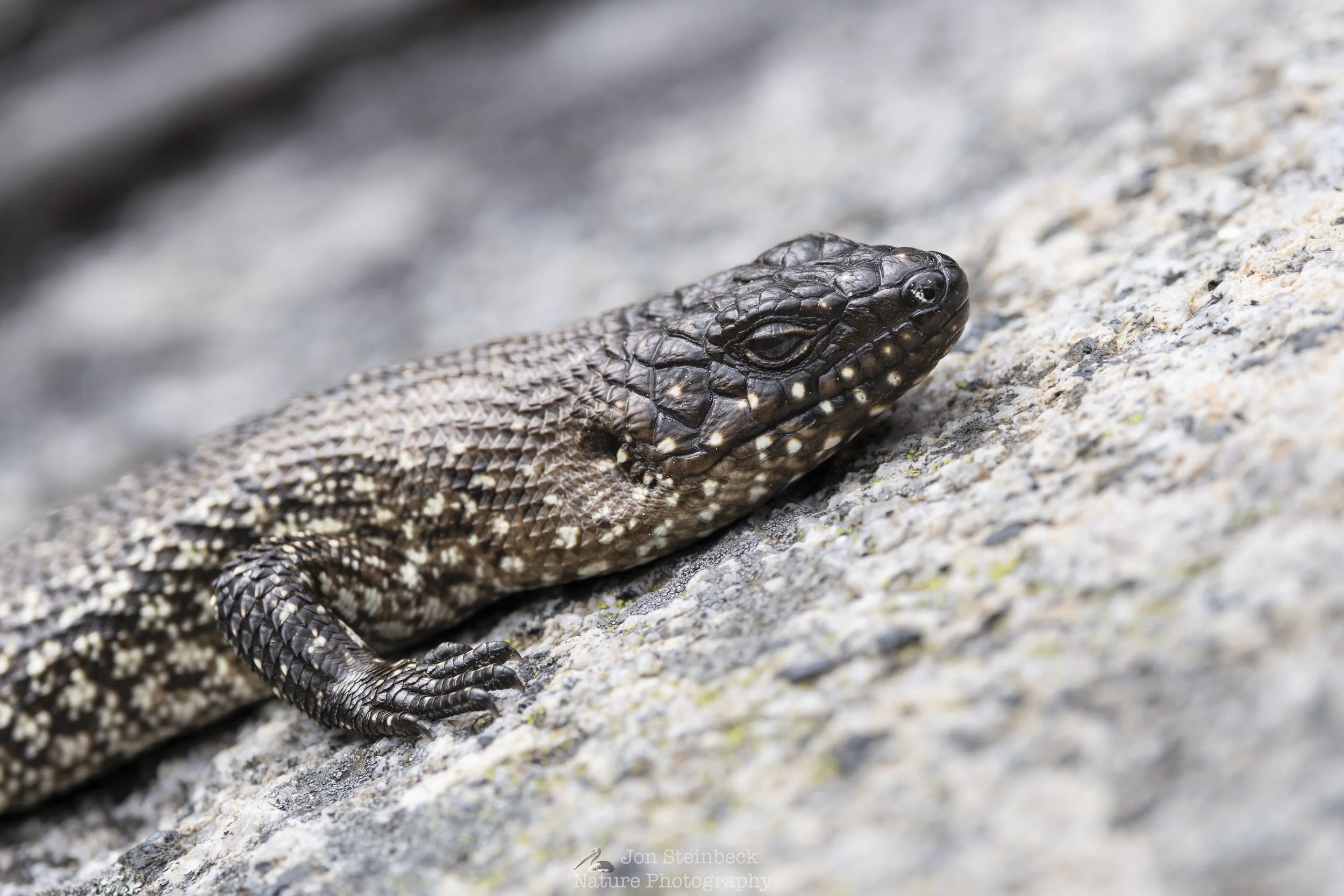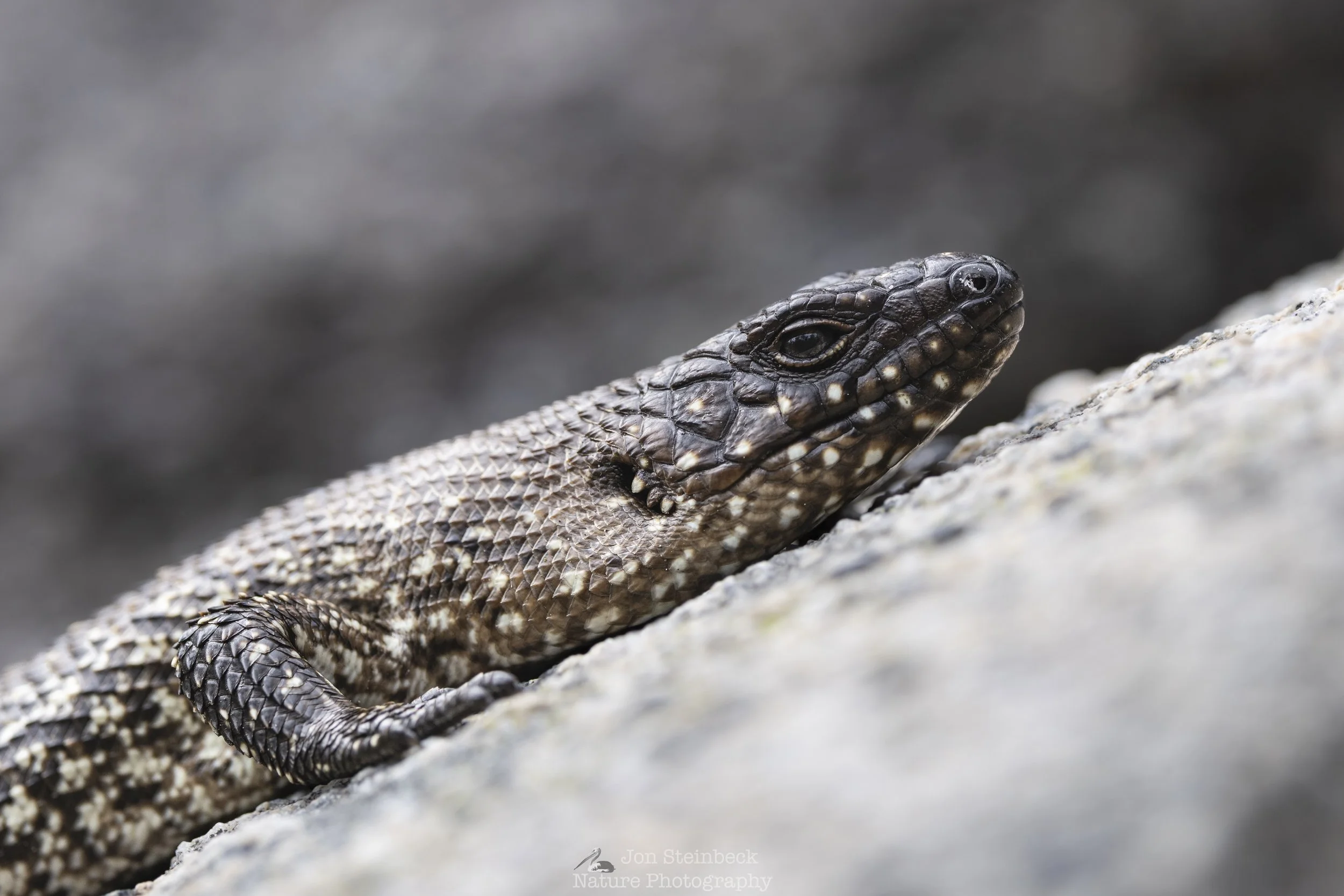
Head detail of a Cunningham’s Skink
Canon EOS R5 Mk II with a Canon RF 100-500mm f/4.5-7.1 L IS USM Zoom [ISO 400, 500mm, f/8.0 and 1/500])
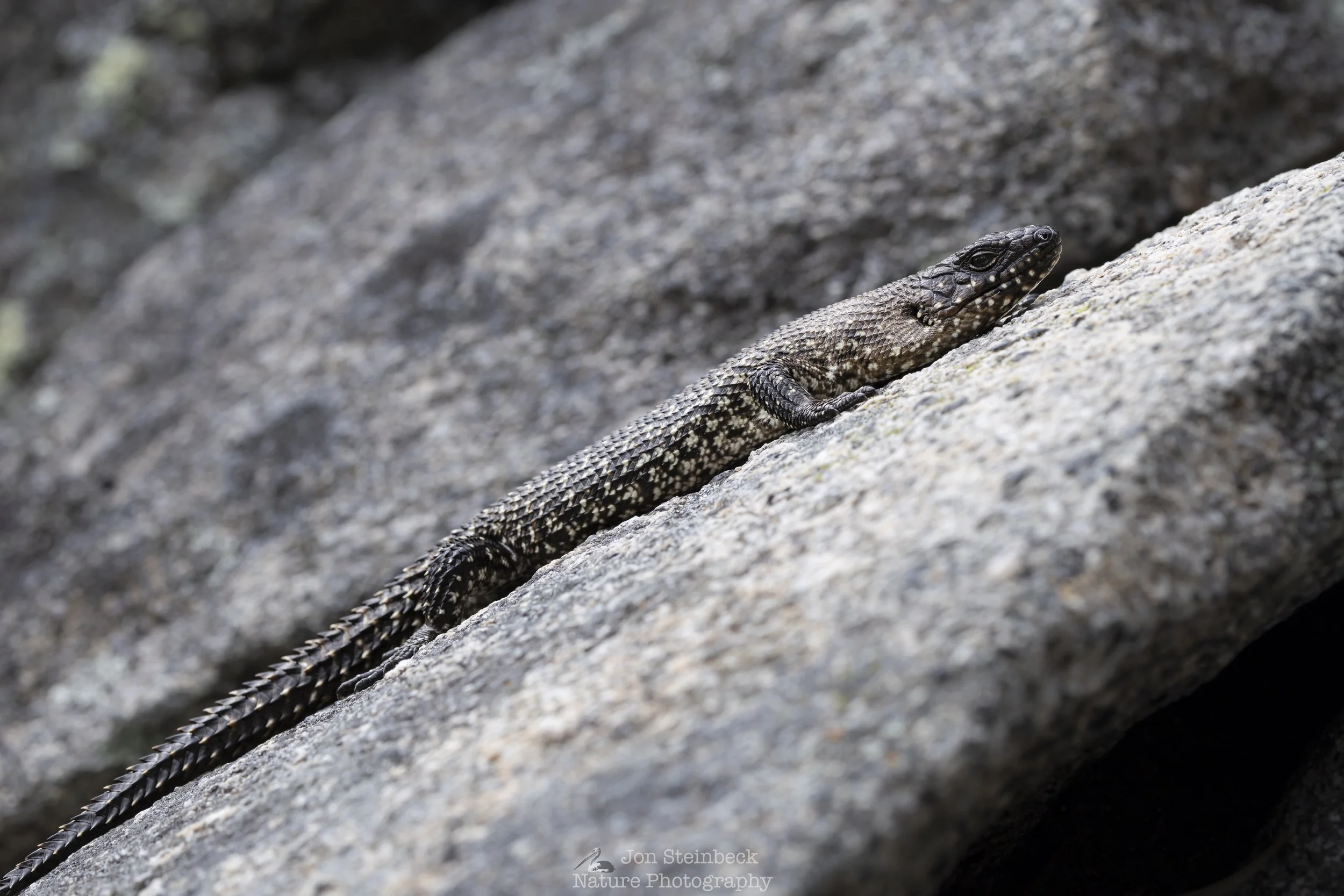
Cunningham’s Skinks (Egernia cunninghami) tend to be very skittish when I approach. They also seem to have very good eyesight, and will scurry into a rock crevice before I have a chance to photograph them. I was, therefore, very happy when I came across one that did not seem that bothered by my presence and stayed put. It was at Yankee Hat, just near the rock art, when I noticed this skink on a rock. Initially, its back was toward me, and when it noticed me, it turned to face me more head on. It stayed still, even when I approached it. I had a good chance to examine its body. Its blotched colouring and the small spikes running in lines from its neck to its tail, which it can use to wedge itself into a rock crevice. In fact, they are also called Cunningham’s Spiny-tailed Skink, because of those spiky scales.
These skinks are often seen in small groups, basking in the sun, where many eyes help in spotting approaching predators. In terms of breeding, males normally only father one litter, and while the offspring remain in a small area, genetic studies show that they avoid mating with their relatives, even when their habitat has been reduced. The female gives birth of up to 11 live young in a litter. Interestingly, studies have shown that adults may actively protect their young from predators, including from snakes and birds. There was not enough data to say if the adults were being territorial or engaging in self-defence, rather than protecting their young, but baby skinks were present when the adults attacked or chased away potential predators, rather than evading the threats themselves. These lizards are omnivorous, eating both small invertebrates and plant matter, which probably aids in their survival.
I really enjoy seeing these amazing looking lizards, and I was so happy that I encountered one that was cooperative enough to let me spend time photographing it.
How I first saw it
Canon EOS R5 Mk II with a Canon RF 100-500mm f/4.5-7.1 L IS USM Zoom [ISO 800, 400mm, f/8.0 and 1/500] three photo composite)
Some more images